Security is an indispensable premise in airport environments that requires knowledge of and strict compliance with existing regulations.
One of the most important premises in the airport environment, if not the most relevant, is security. All processes, procedures, actions or projects carried out are subject to compliance with a series of rules and protocols that guarantee a high safety standards.
One of the key elements in that environment is the people. The activity of airports involves thousands of people who, in all cases, are aware of the exceptional nature of the environment in which they work and, consequently, assume compliance with a series of requirements, both in terms of their own training and in each of the actions they perform.
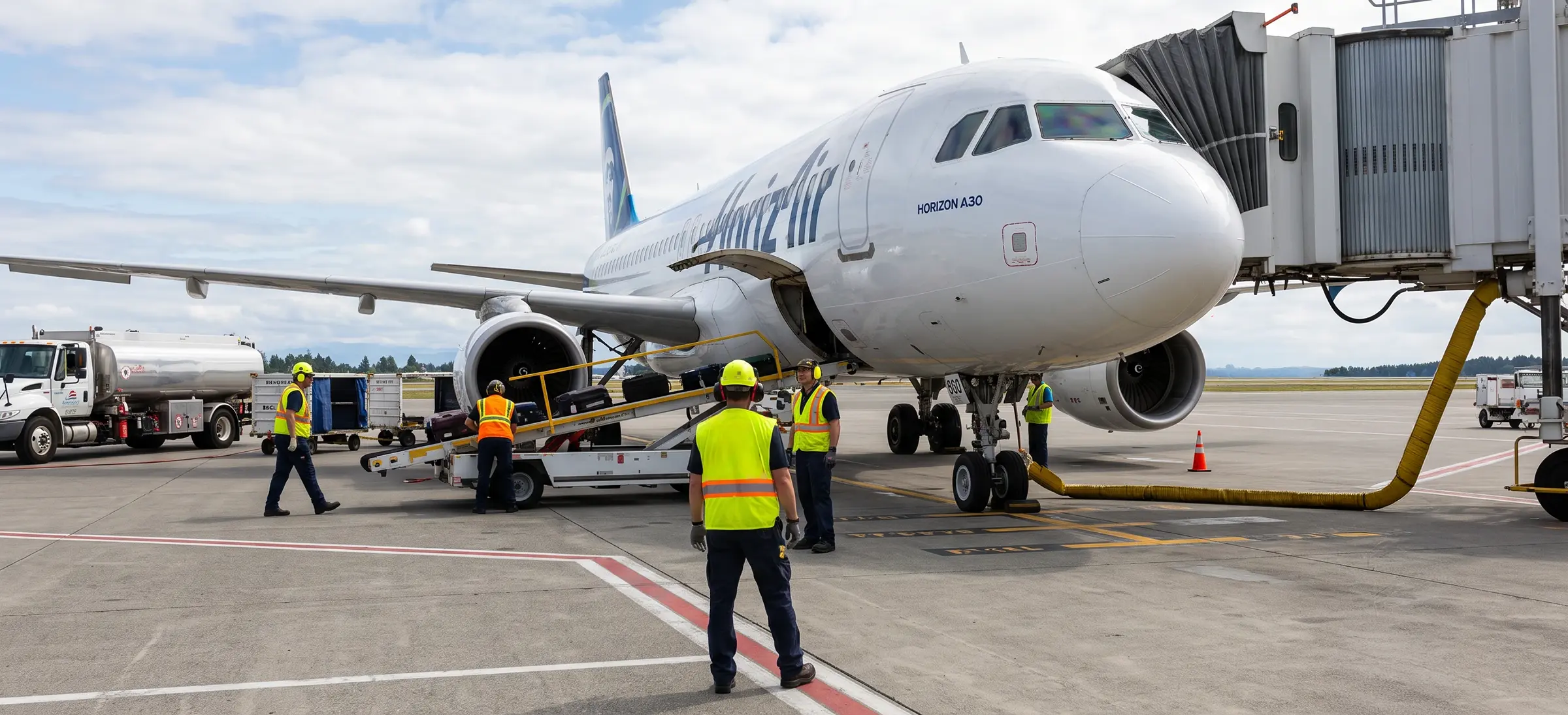
The levels of security in airport environments are specifically adapted to the tasks inherent to each job. The conditions surrounding, for example, the work of a shop supplier in the commercial area of a terminal have almost nothing to do with those of an aircraft refuelling operator.
This is why, in the international context, the need became apparent years ago, not only to adequately legislate everything related to security in the airport environment, but also to carry out specific training of all persons working in certain more sensitive areas or zones.
In this regard, international air safety agencies, as well as those in most countries, have opted to develop specific training plans.
The State Aviation Safety Agency (AESA) a few years ago, an initiative was launched that makes it compulsory to possess training in safetyThe European Aviation Safety Agency (EASA) and the other European Aviation Safety Agencies. This was initiated in coordination with the principles expressed in this context by EASA (European Aviation Safety Agency) and the rest of the European agencies.
The initiative is called AVSAF, an acronym of Aviation Safetyand was put together at the request of the airport sector. Its objective is to provide personnel with unaccompanied access to the movement area of the entire AENA airport network with standardised, quality training in operational safety.
One of the most relevant aspects is that the Diploma of Training AVSAF is personal to each worker and is a prerequisite for any activity that requires access on foot or the operation of vehicles in the movement area of an airport.
Although nowadays, in order to work at an airport, all staff must have the appropriate accreditation of aptitude in the Basic Security Awareness Course (CBA).AVSEC), oriented to the field of "Aviation Security", from 30 May 2022, if you want to enter the field of unaccompanied movement, you must also have a certificate of competence. AVSAFThe aim of the project is to develop aviation safety.
The AVSAF project consists of several courses, depending on the target group and with a specific diploma or certificate of aptitude in each case:
- AVSAF pedestrians (AVSAF_P)for unaccompanied access to the movement area of airports.
- AVSAF Drivers (AVSAF_C)for the performance of tasks involving the handling and driving of vehicles and/or equipment in the area of movement.
- AVSAF for Instructors (AVSAF_I)in order to be able to work as a trainer AVSAF.
Both the pedestrian course and the driver course can be given by those companies, such as AERTEC, which have applied to AESA to become AVSAF Training Organisation (OFA). For this purpose, AESA has minimum requirements to become an OFA, which can be consulted at this document.
The team that has carried out this training project has developed, based on the guidelines provided by AESA, the content of the different modules that make up the courses, adapting them to the different training needs.
Following the relevant AVSAF course, an exam will be conducted, which will be entirely managed by AESA and will be carried out using a Moodle-based tool. This tool will score the exam immediately and provide the result upon completion of the test. The OFAs will be responsible for verifying whether the applicant is suitable or not. If deemed suitable, they will proceed to issue the certificate for successfully completing the course. AVSAF.
It is logical that some may question whether all this training is really necessary to access restricted areas of an airport. The reality is that, in view of the current regulatory framework, it is indispensable:
The Regulation (EC) No 216/2008The Essential Requirements for Aerodromes applicable in the European Union (Annex 5Bis). In particular, paragraph B(l) of Annex 5Bis of Regulation EC 216/2008 states that:
"the aerodrome operator shall ensure that any person permitted unaccompanied access to the movement area or other operational areas is adequately trained and qualified for such access;".
The Regulation (EU) No 139/2014. In ADR.OR.D.017 and its AMC1 ADR.OR.D.017(a);(b), the essential requirement is further developed:
"The aerodrome operator is responsible for ensuring that personnel operating unaccompanied on the movement area and other operational areas of the airport are adequately trained".
"The training programme must include all personnel operating unaccompanied in the movement area and other operational areas of the airport, regardless of whether they are airport manager personnel or whether they are personnel of other organisations operating or providing services at the airport."
Ultimately, the AVSAF project will be an indispensable tool to comply with current regulations and to provide basic knowledge of safety to all personnel involved in airport operations. The objective is, as we said at the beginning, to improve safety for all.
AERTEC is an OFA (AVSAF Training Organisation) and has already incorporated the courses of AVSAF pedestrians (AVSAF_P) and AVSAF Drivers (AVSAF_C) to your training platform (see here. In it, companies that wish to can access both this and the various courses that are currently available.
The course takes place in online mode through the training platform AERTEC and in order to be able to take the AESA exam it will be mandatory to have attended the course.