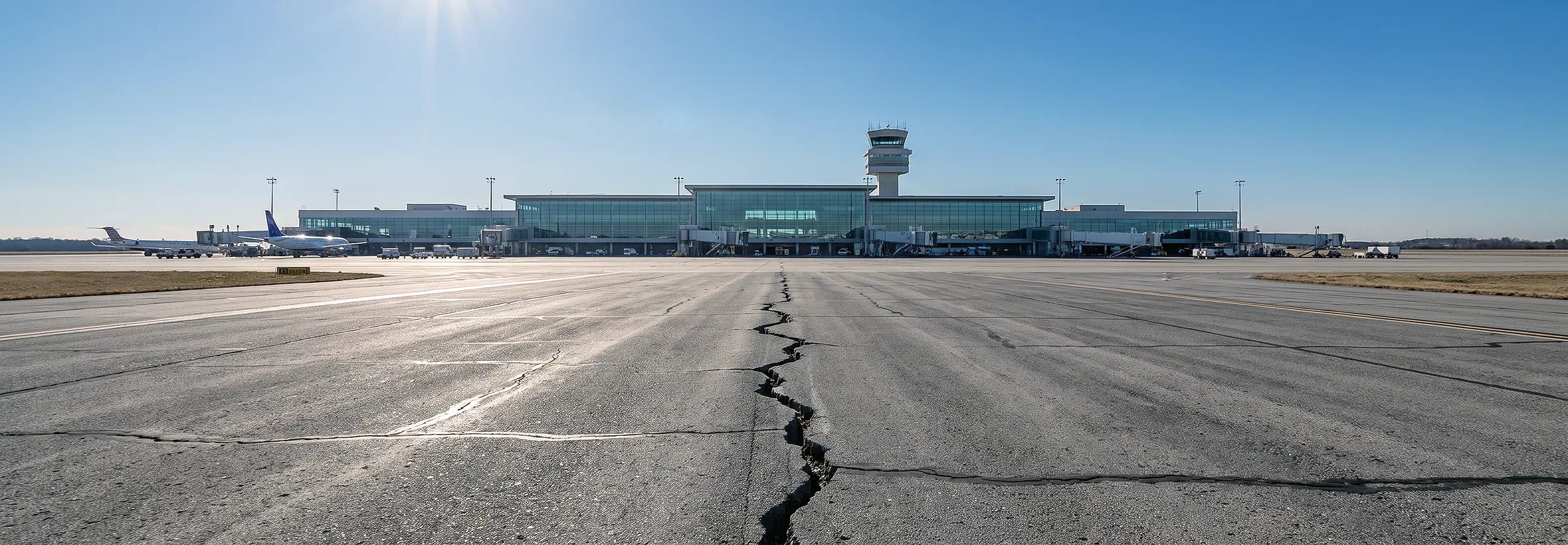
Airbus forecasts more than 43,000 new aircraft over the next twenty years. We examine what this means for airport planning and management. Digitalization and engineering will be key factors in shaping the future of airports.
The Best Ideas from a Night Flight (and an Airbus Report)
There’s something curious about long-haul night flights. You tell yourself you’ll get a few hours of sleep, but the seat seems to have other plans. So, around 2 a.m. (in some impossible time zone between Panama and Madrid), I decided to stop fighting with the pillow and open the Global Market Forecast 2025-2044 from Airbus that I’d downloaded days earlier.
It wasn't a bad decision. There are reports that you read simply because you have to. And then there are others that, when you're working on designing and planning airports, inevitably get your mind to start connecting the dots.
Around three in the morning, I came across a figure worth pausing to consider for a moment: 43,400 new commercial and cargo aircraft over the next twenty years. An impressive figure. But, honestly, what caught my attention most wasn’t the aircraft themselves, but the question that immediately followed: Where are they all going to operate?
Because manufacturing aircraft is an industrial challenge. Operating them safely and efficiently is an airport challenge.
Around four o’clock, when the cockpit had fallen completely silent and only a few of us insomniacs were still awake, I began to think that for decades the answer had always been the same: build more. More terminals, more platforms, more taxiways, more runways. However, many of the major airports no longer have that option. Environmental, urban planning, or simply physical constraints mean that expansion is no longer the simplest solution.
The capacity of the future will not depend solely on concrete.
It will depend, above all, on the intelligence with which we use the existing infrastructure.
And this is where airport engineering takes on a whole new dimension.
At five in the morning, the idea I liked best in the report probably came to me. Digitalization is no longer just about incorporating new tools; it’s about all airport stakeholders working as a single system. Airport operators, airlines, ground handling providers, air traffic control… all sharing information in real time to make better decisions.
In fact, the airport of the future will resemble less a large-scale civil engineering project and much more an extraordinarily complex operating system.
And anyone who has been involved in an implementation of A-CDM knows that achieving that level of coordination among independent organizations is often much more complicated than constructing a new building.
When they started serving breakfast—that curious meal that always comes around when your body clock is still convinced it’s two in the morning—I also thought about another interesting aspect of the report.
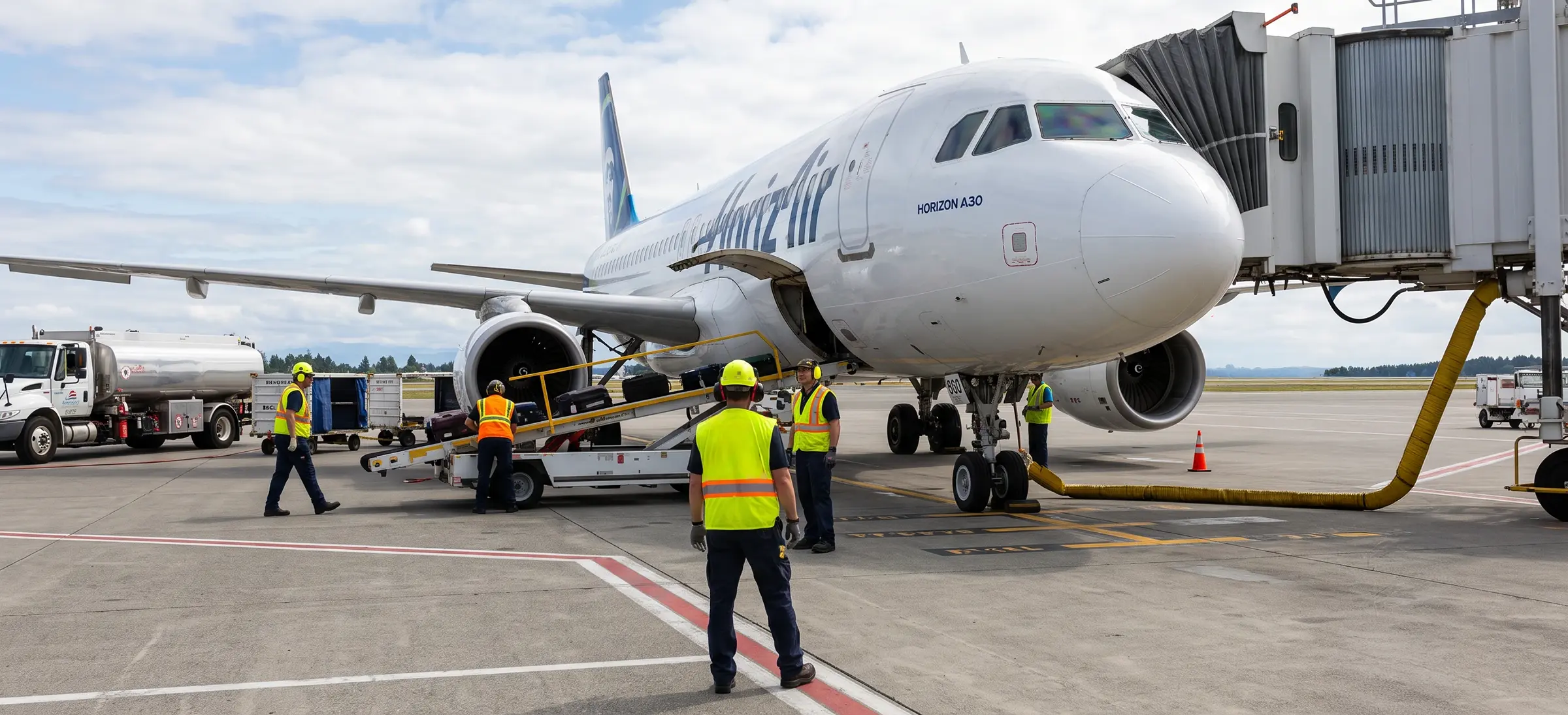
Airbus expects most of the growth to continue to be concentrated in single-aisle aircraft. In airport terms, that means thousands of additional operations every day. More turnarounds. More use of parking positions. More pressure on aprons, taxiways, and terminals.
In other words, the real bottleneck will no longer lie solely in installed capacity, but in the ability to manage increasingly intensive operations without sacrificing efficiency.
And that inevitably leads us to automation, biometrics, artificial intelligence, digital twins, and predictive analytics. Not as trendy technologies, but as tools that will enable an airport to process more passengers, more baggage, and more aircraft using virtually the same infrastructure.
As the captain announced that we were beginning our descent toward Madrid, I concluded the report with one final thought.
For many years, we have associated airport growth with expansion projects. However, I believe the next two decades will be remembered for another reason: we will learn to extract much more capacity from existing airports.
That will require better engineers, better planners, and much deeper technological integration.
And it will likely also require accepting that an airport’s success will no longer be measured solely by the size of its terminal or the number of its runways, but by how intelligently it is able to manage each operation.
In the end, I didn't get much sleep on the flight.
But I have to admit that I've rarely had such a productive all-nighter.
Key related topics: Aviation, Airport Planning, Airport infrastructure design