In the industry automation capability of processes largely depends on the number of products that need to be manufactured, as well as the similarity between the different varieties of these.
The automation of verification processes reduces times, costs and minimises errors.
In the aeronautical sector, specifically concerning the electrical systems and equipment that make up each aircraft, the great a variety of configurations and the small number of systems to manufacture they do not allow the automated manufacture of such equipment, therefore their manufacturing processes are subject to a higher probability of errors due to human failure.
Therefore, the Verification processes and quality controls they play a primary role, even more so when we focus on the field of defence, where each aircraft has a unique configuration determined by the client's specific requirements.
This creates the need to provide greater reliability and efficiency in the verification processes of the electromechanical equipment that make up aircraft., thereby reducing costs and time spent in identifying manufacturing or design faults, which often represents a bottleneck in the production chain.
To carry out the verification tests for aircraft control units, a list of the set of tests to be performed is required. In each test the values are defined that they take the signals that would be sent to the equipment being tested. In this way, the signals that the equipment will receive from other systems, sensors, etc. are simulated.
In addition, the tests must detail the operations or movements on elements such as switches, breakers, or pushbuttons that the operator must perform with each step of the test to check the correct functionality of the equipment.
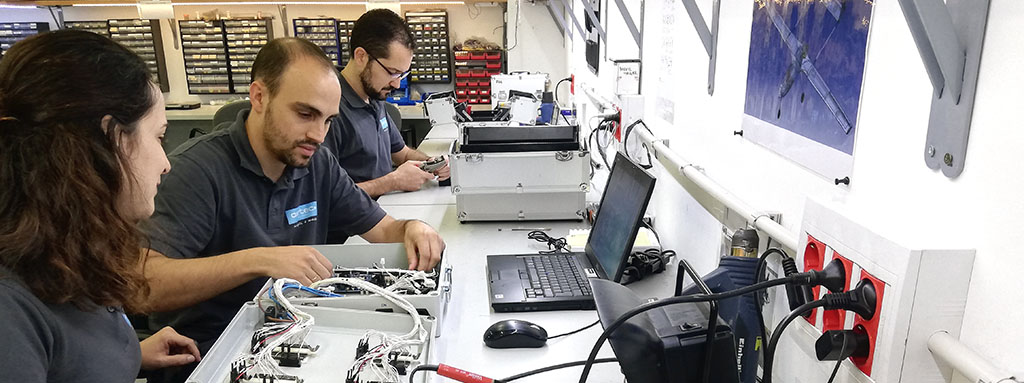
This file will outline the electromechanical tests that must be performed on the equipment. to verify its correct functionality, for which ATE (Automated Test Equipment) equipment is used, which is capable of interpreting the language of the test file to electrically excite the equipment with electrical signals in the form of voltages and currents and measure the response.
Up to now, these electrical tests have been carried out manually, interpreting the electrical diagrams of the equipment. This involves a significant cost in time and in hours for the setup of the tests themselves.
From design files, The automatic programmer automatically generates all electrical and functional tests to carry out on that equipment in a matter of seconds.