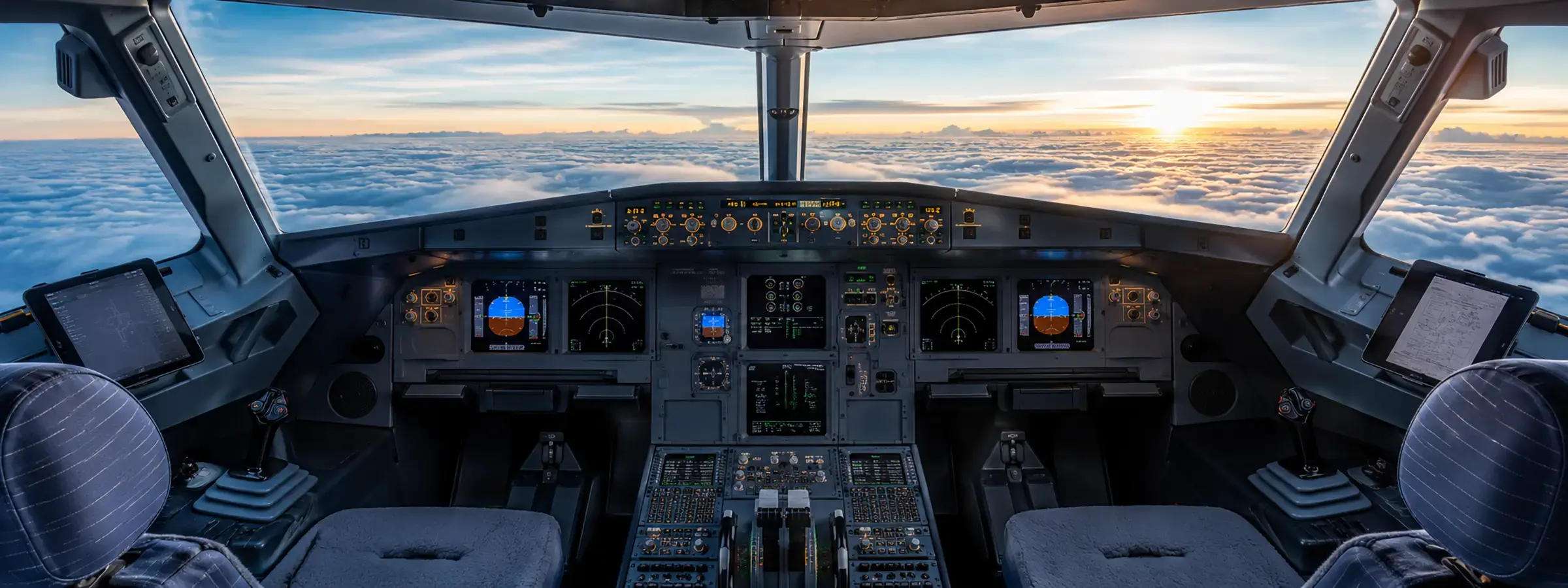
The development of electronic and data management systems is one of the key aspects of AERTEC’s involvement in SAETA II, which cements its position as a strategic industry.
The Ministry of Defence, together with Airbus and Turkish Aerospace (TA), has presented the industrial programme for the Integrated Combat Training System (ITS-C), designed to replace the Spanish Air and Space Force’s ageing F-5 fleet. The core of the programme will be a fleet of 30 aircraft derived from Turkish Aerospace’s Hürjet, which, in its ‘Spanishised’ version, will be designated SAETA II. The programme, led by Airbus as the prime contractor, involves a 60% contribution from the domestic industry.
AERTEC is part of this Spanish industrial consortium , contributing key technology for avionics systems . Specifically, the company develops six variants of systems and data management computers, designed to integrate various subsystems with the highest level of criticality, in order to ensure safety and aviation certification.
AERTEC develops qualified products for aeronautical systems, whilst retaining full Spanish intellectual property rights over the technology. These are dual-use technology solutions, designed for international programmes and clients, which the company adapts to national initiatives, such as SAETA II, and to future strategic programmes. This approach enables a high degree of autonomy and contributes to technological sovereignty in certain areas of defence.
As Pedro Becerra, Director General of Aerospace & Defence at AERTEC Solutions, highlights: “These developments build on the reuse of technologies previously developed in other programmes, thereby reducing technological risks and speeding up implementation times. The ability to modify and update these systems independently is a key factor in ensuring their continued relevance in the future.
The programme schedule is divided into two phases: the first will begin in 2028 with Turkish Aerospace delivering an initial batch of 21 aircraft to the Air and Space Force, one of which will be a prototype for the integration of avionics and mission equipment by Airbus. In addition, development and manufacture of a ground training system will commence, which is scheduled to become operational for the 2029–2030 academic year; the second phase, between 2031 and 2035, involves converting the entire fleet to the final Spanish configuration. Other Spanish companies involved in the project, under the leadership of Airbus, are : GMV, Sener, Grupo Oesía, Orbital and Indra.
Key topics related to this news item: Aerospace systems