Politicians want it. Businessmen want it. The media write about it. Almost all the forces of life want it. turn its airport into a Hub. But do they really know what it is and can they contribute to making it happen?
The origin of the term comes from the expression "hub-and-spoke", which is a way of modelling a network where most of the paths pass through one or more central nodes. There are few connections between the peripheral points of the network, while the central points account for most of the activity. This is a very efficient network for managing traffic, as it allows for more connections at a significantly lower cost, while increasing the links and frequencies between all points (although they do not necessarily have to be direct transfers).
The future of air transport is bright, and with it the future of major airport hubs.
In essence the term Hub is used in the airport world to refer to precisely that, to a large passenger and freight distribution centre.
The expansion of this transport model began in 1978 in the United States as a result of the deregulation of air traffic in that country and the lifting of restrictions on airlines that had been in force up to that time.
For an airport, being an Hub has significant advantages: greater connectivity and therefore more attractive to attract new airlines and routes; increase in operations and, therefore, of income; provision of a certain spare capacity in the event of any contingency; more influence positive impact on the regional economic environment by offering more communications to businesses; improvement of the area's economy, by generating more jobs and ancillary services...
However, being Hub or not to be does not depend on the airport itself or local politicians, but that there are airlines willing to centralise activity at their facilities. It is the airlines that make it possible for an airport to become their Hub. An airport, no matter how much it may wish to do so, without airlines committed to this model, will remain a conventional airport, with point-to-point services.
There is hubs of different sizes. Any airport, even those with not particularly high traffic, can function as a Hub if a particular airline decides to use it as an interconnecting point for air routes. For the airline this means the concentration of operations and consequently significant financial savings.
However, what most of the world's airports aspire to do is to become megahubs, i.e. hubs that move hundreds of thousands of passengers daily. Among the megahubs There are some airports where traffic is mainly domestic, as is the case of many airports in the United States (Atlanta, Chicago, Los Angeles, etc.), India (New Delhi, Bombay) or China (Beijing, Shanghai-Hongqiao). Others, on the other hand, have become colossal hubs for interconnecting international flights, such as Dubai, Heathrow or Hong Kong.
In general, each Hub is mainly operated by an airline (or an alliance) which accounts for a high percentage of operations and which gives the airport this status. In some cases this dependency relationship is particularly significant.
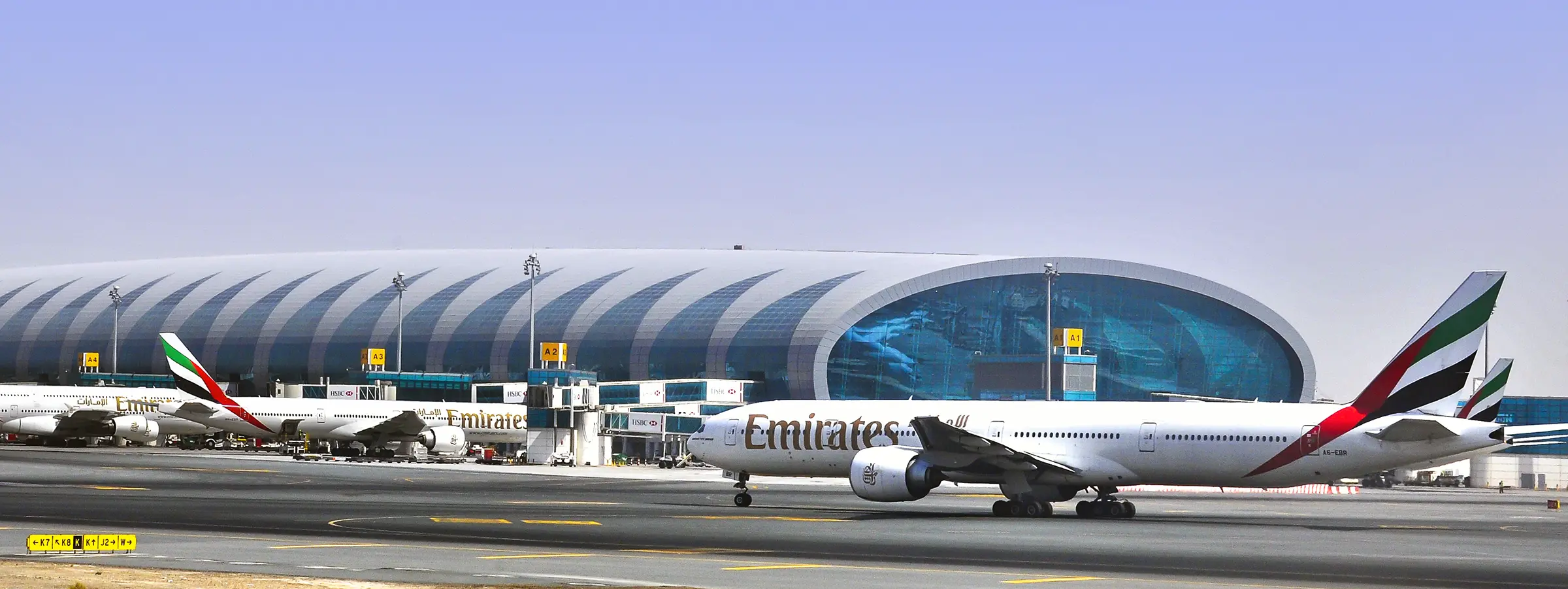
As an example, at Hartsfield-Jackson airport in Atlanta, Delta Airlines operates 80% of all flights. At Houston, United Airlines also accounts for the same percentage of operations. In the case of Charlotte-Douglas, US Airways accounts for 85% of the flights. In the Middle East, Emirates (with dedicated terminals and runways) is the main airline operating at Dubai airport, as is Etihad at Abu Dhabi and Qatar Airways at Doha.
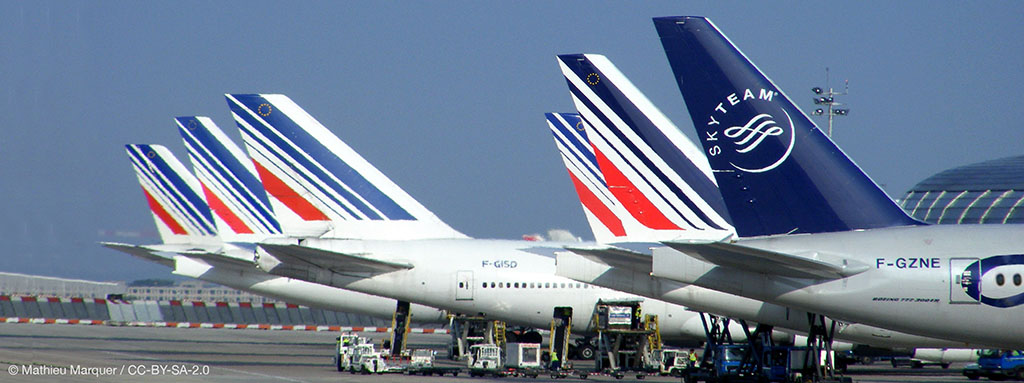
In Europe this trend is less evident due to the fact that the hubs are often linked to the airline alliances (Star Alliance, Sky Team, Oneworld, etc.) who decide which airports they will use as hubs for their partners. Even so, there are some very obvious cases such as the hubs from Lufthansa (Frankfurt), British Airways (London-Heathrow), Air France (Paris-Charles de Gaulle) or KLM (Amsterdam-Schiphol).
The future of air transport is bright and, with it, so too are the major airport hubs, albeit with certain nuances. It is foreseeable that more and more airports will operate as major hubs, with new names being added to the list in all parts of the world. It cannot be otherwise given the forecasts. The megahubs Asia's airports will continue to grow above average and, most especially, those of the Middle East (with double-digit annual increases in air traffic). Apart from the advantages of their location, there are other fundamental parameters such as their enormous financing capacity and the almost non-existent restrictions for airport expansion, located in the middle of the desert and therefore without the environmental and/or territorial impediments that any expansion project can encounter in places such as Europe (not to mention the slowness and administrative obstacles).
Over the next few years air traffic to grow by an average of 4.5% per year. Forecasts for 2035 point to a doubling of the number of aircraft in service. Airports know that they must not miss the opportunity to grow because there will be a real demand and, therefore, a certain opportunity to increase their business. Due to their characteristics, the hubs The airport model seems to be the one that will most effectively capitalise on this growth.
If a region wants its airport to become an airport of choice for the Hub What it has to do, in addition to being clear that its geographical location is appropriate, is to encourage the right conditions for airline business. This will make it sufficiently attractive to airlines, who will ultimately make it happen. This includes financing facilities, quality facilities and services, low labour unrest, less bureaucracy or possibilities for expansion, but, above all, keeping local politicians as far away as possible.