On 1 January 1914 the first commercial flight programmed in history. It ran for 38 kilometres and 20 minutes between two Florida cities, St Petersburg and Tampa. It carried a single passenger. Forty years later, regular intercontinental flights over distances of more than 9,000 km began to be made. The first was scheduled by SAS in 1954, between Copenhagen and Los Angeles.
When the straight line is not necessarily the shortest distance.
Flights over distances of more than 10,000 kilometres are now commonplace. The longest intercontinental flight was for many years, until 2014, the one operated by Singapore Airlines between New York and Singapore, which covered a distance of 15,350 kilometres with an average duration of 18 hours and 50 minutes with an Airbus A340-500.
The most commonly used aircraft on these routes are currently the Airbus A380 and the Boeing 777, in some of their versions. In order to operate these types of flights, the aircraft require a ETOPS certificationwhich we will discuss in detail in a future blog post. The crew, on the other hand, must also be qualified for this type of flight.
Since the opening of airspace over Siberia after the Cold War and the upgrading of Russia's air traffic control system, most of these flights use transpolar routes (above the 78th parallel), which allows them to save many thousands of kilometres and, consequently, flight hours. Antarctic routes are much more sporadic, although the 71st parallel has been used on occasion, such as the Sydney-Johannesburg route.
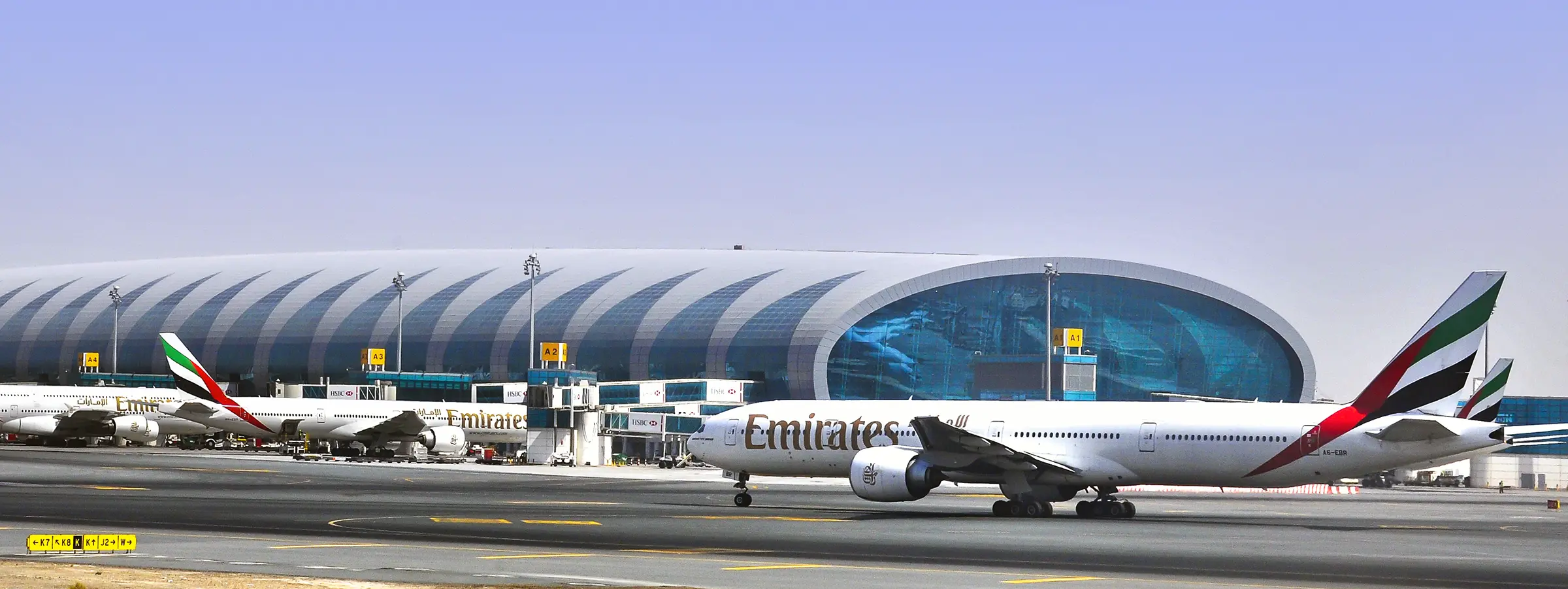
These are certainly routes that plane lovers will enjoy, especially if they fly on one of Emirates' Airbus A380s equipped with several suites, bars, gym, lounge areas and personalised leisure facilities.
Every day, thousands of people take some of these flights lasting more than twelve hours. The fun begins on the flight itself. If you have travelled on one of them, it is sure to have been an experience worth recounting. In our case, we hope you enjoy this infographic, which we invite you to download and share.