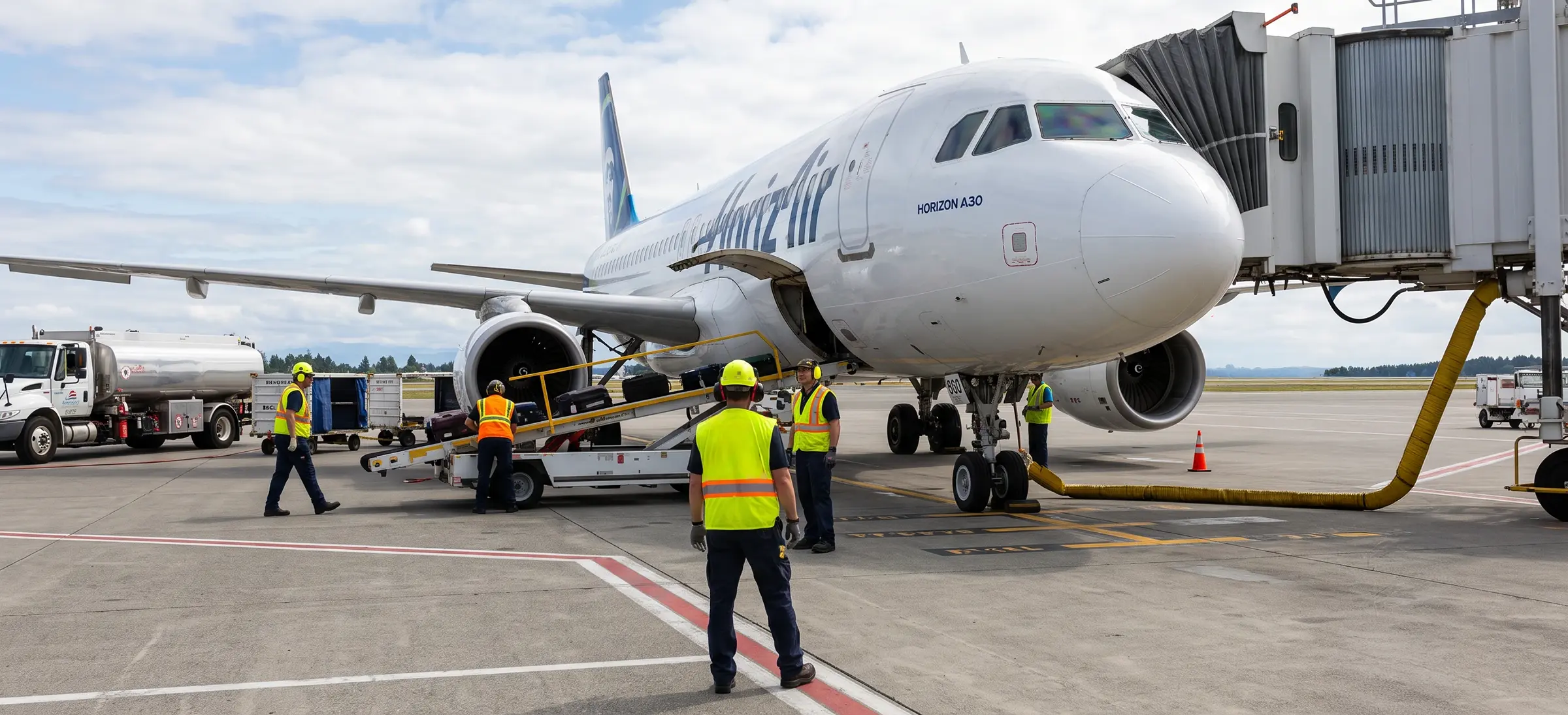
Baggage traceability has evolved from being an operational improvement to becoming an essential element of efficiency, security, and the passenger experience.
Every year, millions of pieces of luggage travel through the global air transport network. Although the incidence rate has decreased significantly in recent decades, baggage handling remains one of the most complex processes in airport operations. To improve traceability and reduce losses, delays, and handling errors, the International Air Transport Association (IATA) implemented Resolution 753, a standard that is now part of the industry’s standard operating procedures.
What is IATA Resolution 753?
IATA Resolution 753 (Baggage Tracking) stipulates that airlines must be able to record and share information about the location of baggage during major changes in custody throughout its journey. Its purpose is to ensure complete traceability of each piece of baggage, making it easier to locate at any time and improving coordination among airlines, ground handling companies, and airport operators.
The resolution also requires that this information be shared among airlines when flights involve connections or different operators, thereby promoting more efficient and transparent management.
The Four Key Steps in Baggage Tracking
Resolution 753 defines four key points at which the status of baggage must be recorded:
- Baggage Check-in, when the passenger checks in their luggage.
- Loading onto the aircraft, verifying that the correct baggage is loaded onto the scheduled flight.
- Transfer between flights, when a piece of luggage is transferred from one flight to another during a connection.
- Arrival and delivery to the passenger, confirming that the luggage has reached its destination and has been made available to the traveler.
Each of these events generates information that provides near-real-time tracking of baggage and facilitates the investigation of any incident.
Technology for Traceability
The implementation of Resolution 753 has spurred the adoption of new technologies at airports. Traditionally, tracking was done using barcode tags and standardized messages such as the Bag Source Message (BSM), which uniquely identify each piece of baggage.
Currently, many airports supplement these systems with automatic tag readers (ATR), handheld data capture devices, and RFID (Radio Frequency Identification) technologies, which allow baggage to be tracked without the need for direct visual inspection.
These solutions are typically integrated with management systems such as the Baggage Reconciliation System (BRS) and baggage handling systems (BHS), providing a comprehensive view of the process and improving the ability to respond to any incident.
Benefits for the Entire Airport Ecosystem
Baggage traceability offers both operational and commercial benefits. For airlines and ground handling companies, it leads to fewer incidents, greater process efficiency, and better coordination during transfer operations.
For airport operators, this represents an opportunity to offer services with greater added value through infrastructure capable of capturing and sharing reliable information in real time.
Passengers also benefit directly from greater transparency regarding the status of their luggage, a reduction in the number of lost bags, and faster resolution when issues arise.
A well-established standard for aviation
More than just a regulatory requirement, IATA Resolution 753 has become a key element in the digital transformation of air travel. The combination of automatic identification systems, information-sharing platforms, and technologies such as RFID makes it possible to develop processes that are more efficient, secure, and passenger-focused.
Against the backdrop of continuous growth in air traffic, having complete baggage traceability is no longer a competitive advantage, but rather a fundamental requirement for providing a modern, connected airport operation that is prepared for the challenges of the future of aviation.
Key related topics: Baggage Tracking and Location and Airport Operations