Analysis of Regulation 2015/187 on new security measures for the screening of cabin baggage at European airports.
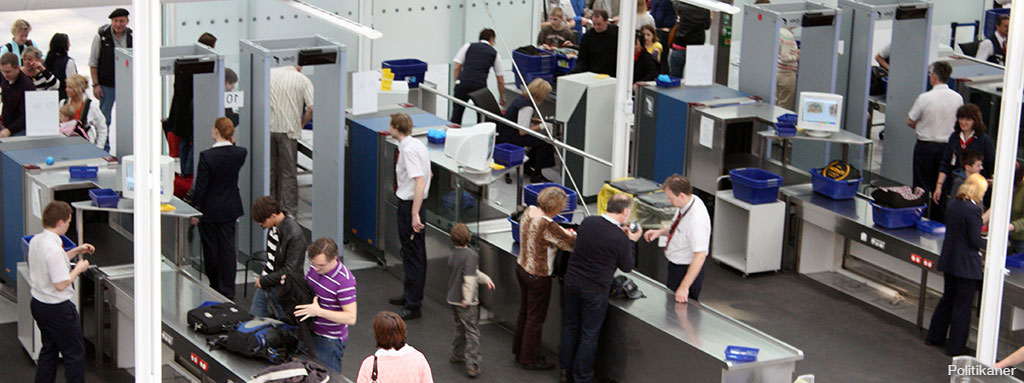
As every year, summer is the time chosen by more and more people to spend their holidays. A large number of them choose to travel by plane. And this summer 2015 is precisely what it is going to be, the first in which they will have to deal with the new security measures. which came into force at European airports on 1 March. Let's look at some of the details.
In the previous post we published in this blog, entitled «New security measures at European airports».», In this issue, we commented on the changes introduced by the new Regulation 2015/187 for the screening of hand luggage and how they are going to aimed at facilitating the process of passing through the security checkpoint., provided that airports have adequate detection equipment.
The summer of 2015 will be the first year in which the new security measures, which came into force at European airports on 1 March, will be implemented.
After a more detailed analysis of the new Regulation, we can see that it is not easy to understand as it presents certain inconsistencies or lack of definition in terms of the nomenclature of the standards to be met by EDS equipment (explosive detection equipment).
In summary, the European Civil Aviation Conference (ECAC), under the Common Evaluation Process for Safety Equipment (CEP), classifies EDS and LEDS machines according to their performance into 3 rules (o “standards”in its English version and “norme”(in French): standard 1, standard 2 and standard 3.
On the other hand, for liquid explosive detection equipment (LEDS) the following are defined 5 types of operation:
Type A
The LEDS equipment inspects individual containers and requires them to be opened in order to take a sample.
Type B
The LEDS equipment inspects individual containers without the need to open them for sampling (the original seal remains intact). The LAGS containers must be removed from the baggage.
Type C
The LEDS equipment inspects multiple containers without the need to open them for sampling (the original seal remains intact). LAGS containers must be removed from baggage.
Type D
The LEDS equipment inspects multiple containers without the need to open them for sampling (the original seal remains intact), without the need to remove the LAGS containers from the luggage.
Type D+
In addition to Type D operation, the LEDS equipment is capable of screening LAGS containers along with complex electronic devices such as laptops inside luggage.
In the following link you can consult all LEDS and EDS equipment that comply with CEAC performance standards as of May and June 2015 respectively: https://www.ecac-ceac.org//activities/security/cep_of_security_equipment
Turning to the new Regulation 2015/187, it mentions that EDS equipment for cabin baggage screening must comply with C1, C2 or C3 standards:
«12.4.2.7 All EDS equipment designed for cabin baggage screening shall comply with a minimum of C1.
12.4.2.8. All EDS equipment designed for the screening of cabin baggage containing laptops and other large electronic devices shall comply at least with the C2 standard.
12.4.2.9 All EDS equipment designed for the screening of cabin baggage containing laptops and other large electronic devices and liquids, aerosols and gels (LAGs) shall comply with a minimum of C3.
And it is here that the first doubts arise, since this nomenclature appears for the first time in this Regulation, In the previous Regulation 185/2010 as well as in the successive regulations that have amended it and in the list of equipment certified by ECAC, the standards are simply indicated as standard 1, 2 and 3 respectively without including any letter.
So what exactly are the rules referred to in Regulation 2015/187? We could assume that the Regulation refers to the fact that the EDS equipment shall be of type C and standard 1, 2 or 3 in each case. However, doubts arise again here, as operation type C allows for screening of LAGS in several containers as long as they are removed from baggage, regardless of the standard of the LEDS equipment; however, the new Regulation refers to type C for electronic devices and only mentions screening of LAGS for equipment complying with standard C3.
Furthermore, the wording of point 12.4.2.9 seems to indicate that electronic devices and LAGS may remain inside baggage, This would require LEDS equipment of type D+, and not C3 as indicated in the regulation.
All this leads us to suppose that some correction or clarification should be made shortly to this regulation, which seems to have been drafted in haste without stopping to review everything previously regulated.
Links to the standard in English and French:
FR- http://eur-lex.europa.eu/legal-content/FR/TXT/PDF/?uri=CELEX:32015R0187&from=CS
EN – http://eur-lex.europa.eu/legal-content/EN/TXT/PDF/?uri=CELEX:32015R0187&from=CS
Ricardo Carrera
Manuel T. Rodríguez