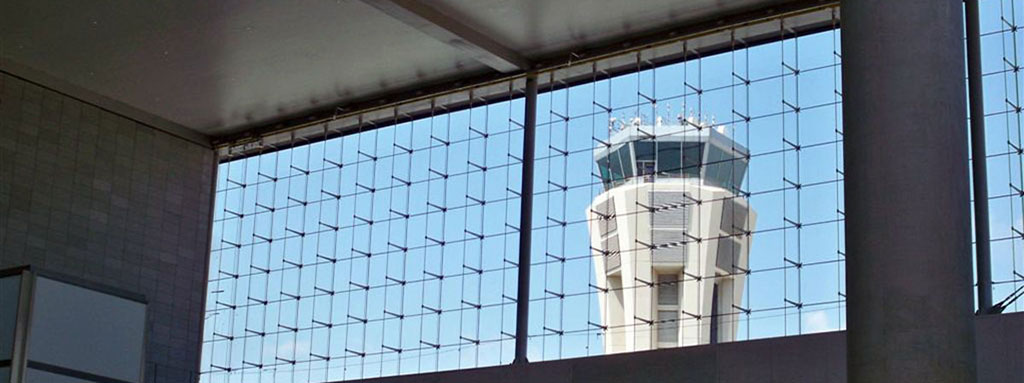
Strictly speaking, a control tower is nothing more than a structure whose purpose is to position the eyes of an air traffic controller at a certain height. From that height, the approach and departure ends of the runway served must be seen, clearly and without obstruction, fundamentally.
Control towers have become true hallmarks of the airports to which they belong, and even of the cities in which they are located.
Is that all? And, in that case, why are they often considered complex buildings, difficult to conceive and resolve?
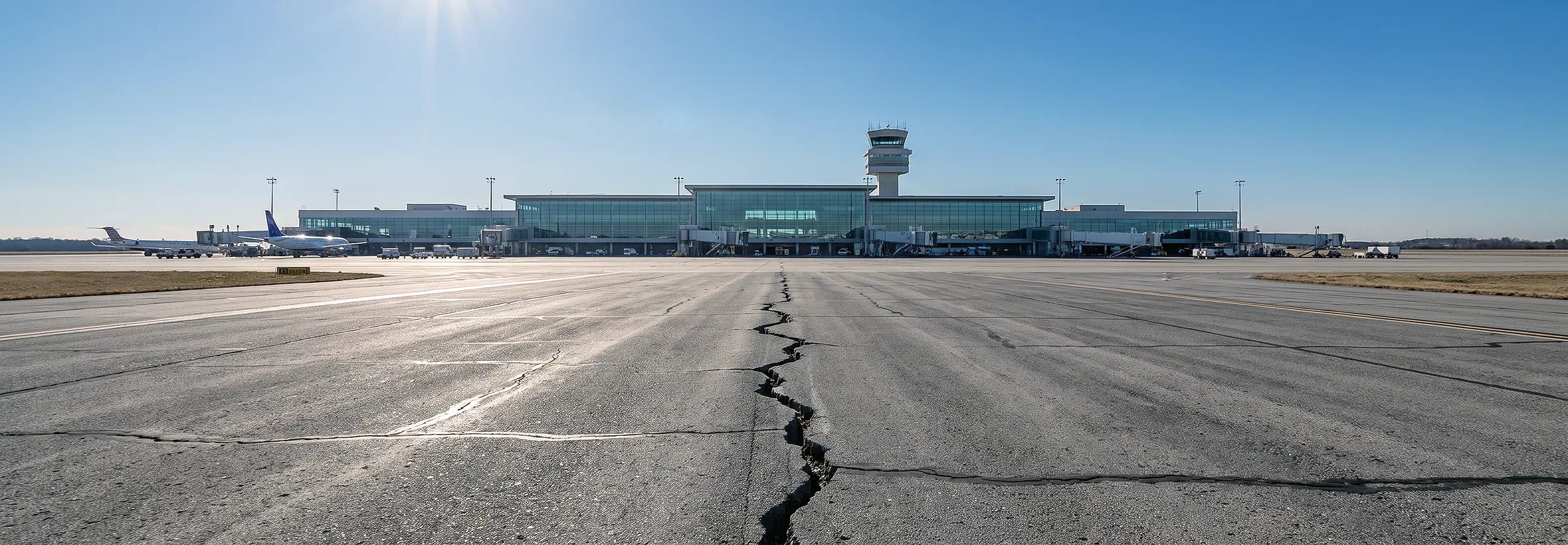
First of all, by your situation and the relationship it has with the airfield of the aerodrome on which they are located. Their exact position is given by a rigorous feasibility study which guarantees the visibility of aircraft approach manoeuvres, take-off and landing, as well as transit along taxiways to the parking apron. However, this building, being tall by definition, cannot interfere with the obstacle limitation surfaces of the runway itself. Therefore, it must always be considered a difficult balance between proximity to the airfields and respect for their limitations, both physical and radio-electrical.
Air traffic control tower Tremendously precise building. The opposite is expensive and, therefore, not rigorous.
Secondly, the towers must be stable and secure. And I'm not just referring to structural concepts or intrusion control, though those are important too, of course. I'm referring, above all, to a service stability.
It is the facilities of an air traffic control tower that are truly complex. To the usual facilities of an “office” building, we must add all the Air navigation equipment what must necessarily be duplicated, be redundant. And this is because, above all else, a tower cannot be left without power. It must have dual power supplies, generator sets, UPS, and, in general, a Plan B even Cin case such an eventuality arises both within and outside the airport grounds.
Air traffic control tower Robust, redundant building. The opposite is not safe and ultimately endangers the safety of many people.
Finally, an air traffic control tower must be unique and iconic. Nowadays, terminal architecture has become monotonous and immediate. Large metal structures support enormous curtain walls which make up practically all airports today, in a competition to achieve the most successful technological challenge. At the same time, control towers have been transformed into true Hallmarks of airports to those they belong to, from the cities in which they are situated. Security, robustness, precision, etc. are conditions as unavoidable for solving them as carefully placing them in the location that houses them. After all, they are nothing more than another programme, which must also respond to the traditional and old game of the relationship between the artefact and the place that receives it. And of course, it is not easy to fulfil all of the above and, moreover, to find a sensible singularity that it doesn't turn into a mere design whim.
A control tower must single, unique. The opposite is to turn it into “Non-Architecture” and who would then understand it as a reference that lodges itself in the collective memory of millions of users?