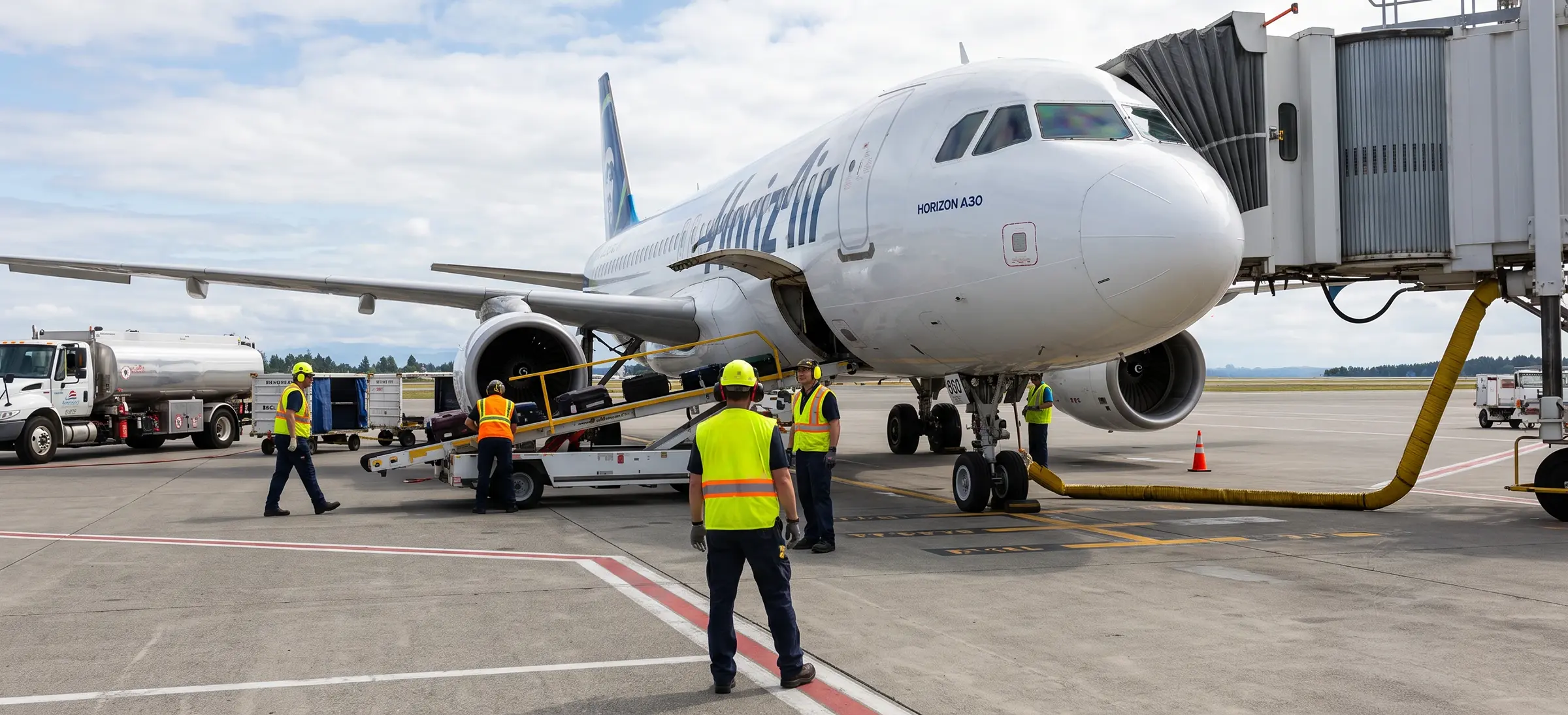
The USA vision for airport terminals simultaneously focuses on providing the best operational service and achieving the best economic outcome.
On May 21, 1927, American pilot Charles Lindbergh completed a journey of more than 5,700 kilometers after piloting his The Spirit of St. Louis for 34 hours. He thus became the first aviator to single-handedly unite the European and American continents. In addition to the obvious epic component of this feat, the journey also had an economic background. Eight years earlier, Louvie-Juzon, the owner of the Hotel Lafayette in New York, offered a prize of $25,000 to the adventurer who would manage to fly from New York to Paris.
Eighty years later, in April 2007, during a data collection at the Franco-German military base of Leluc in France, whose objective was to collect information that would help a team from AERTEC in designing a maintenance hangar for helicopters. Tiger At the Almagro base, I met the German pilot Franz Sluter. Commander Sluter explained to me that the program “Tiger", The project, a joint initiative by several countries to design and manufacture a European combat helicopter, was almost 12 years old at the time. After that period had passed, the device was still not operational; it was still in the testing phase.
During that pleasant conversation, the commander compared the program Tiger with its American namesake, the initiative from which the attack helicopter had emerged Apache. Basically, the difference lay in—Sluter explained to me—in the approach taken with both initiatives.
The European helicopter was part of a strategy for consolidating the European industry of the manufacture of such devices and sought to strengthen the commercial ties between the countries involved. At the same time, the project aimed to generate a significant number of skilled jobs within the company. EU. With this approach, it is not difficult to understand that almost 3 years later the helicopter still had not entered combat.
In the program Apache, by the contraryArio, the American government commissioned three prestigious companies to carry out a detailed and specific task. It imposed a limited time frame for them to submit their design proposals, setting out a series of very clear requirements. Finally, it chose the approach that best suited their needs. Once the decision was made, the only objective was to manufacture the prototype and have it airborne as soon as possible. Thus, 3 years later, the helicopter Apache It became part of every combat mission on the ground that required aerial cover.
These two examples, separated by almost a century, illustrate the point perfectly. How air transport and the aviation business have been understood—and are still understood in part—on both sides of the Atlantic. Even space colonization today is led by major American companies that surpass the state program in terms of budget and objectives, which is leaving the all-powerful NASA behind.
Similarly, in the early days that marked the characteristics of the typology of the main infrastructure that supports this activity, exactly the same thing happened with the airport terminals. Let’s see why.
The American model
Indeed, the development of air transport in the new continent, and by extension of its airports, was led by private interests and the pursuit of economic profit. This is a way of proceeding that reflects some of the differences between the first American terminals and those in Europe.
In the mid-last century, partly due to this heightened and early awareness of business, Many American terminals were built following a modular model., This flexibility was manifested in two different ways:
- In the terminal building in its entirety, leading to models of decentralized terminals that could serve a specific airline.
- Only in the processes that take place on the air side, Basically, the shipment. In this case, there was only one processor with different satellites, preferably longitudinal ones.
The first concept includes the airport in Kansas City and the one in Dallas, both of which were remodeled in the second half of the 20th century following this pattern. Their main objectives were, on the one hand, achieve the maximum possible modularity, By promoting progressive growth and, on the other hand, reducing as much as possible the distances that passengers have to travel from the “ground-side facade” to the boarding gate.
An example of the second model is the airport in Atlanta, which has a central processor and several longitudinal satellites where the boarding areas are located. This model is the one that large traffic-concentrating platforms, known as hub & spoke (concentrate and distribute).
However, the building that best illustrates this way of doing things is the Trans World Flight Center in the John Fitzgerald Kennedy International Airport from New York (also known as “T5”), designed in the fifties for TWA by the Finnish architect Eero Saarinen. In fact, JFK Airport is characterized precisely by having several terminals that are owned by airlines. Buildings designed and financed by the airlines themselves.
The TWA Flight Center was one of the first buildings whose design acted as a draw to attract customers, passengers. Eero Saarinen It designs the terminal while maintaining its functional aspect, but incorporating a novel commercial component.
Thus, from an operational point of view, the T5 is one of the first terminals to feature electronic panels, a megaphone system, luggage collection bands, and closed walkways for passengers. The intention was Maximizing the benefits of airport processes. But at the same time, its emblematic bird-shaped image, whose design sought to cover the entire space with the minimum possible material, incorporated obvious elements of minimalism. references to the corporate identity of TWA, which was used to exploit the market opportunities. And, of course, it featured commercial spaces and a wide and varied selection of bars and cafés.
The “made in USA” airport terminals have been around since the beginning. buildings intended to provide functional support for the operation. But at the same time They also provided “economic support” to the companies that conceived them. And they paid. Very early on, these companies realized that the business wasn't just about flying.