One of the aspects that most catches our attention about the airports When we visit them for any reason, it's the space itself. Generally, airports tend to create spacious areas with the aim of being comfortable for passengers. Likewise, the airside or air traffic control area usually has about fifty times more surface area than that occupied by the airport terminal. When we talk about the size of an airfield, we are always talking about hectares. And many of them.
In many cases, the vast expanse of abandoned airports is redeveloped for multiple civilian uses.
We are used to seeing these facilities full of people, both travellers and workers. There is also constant movement of aircraft and vehicles of all types (ground support, security, emergencies, airlines, etc.).
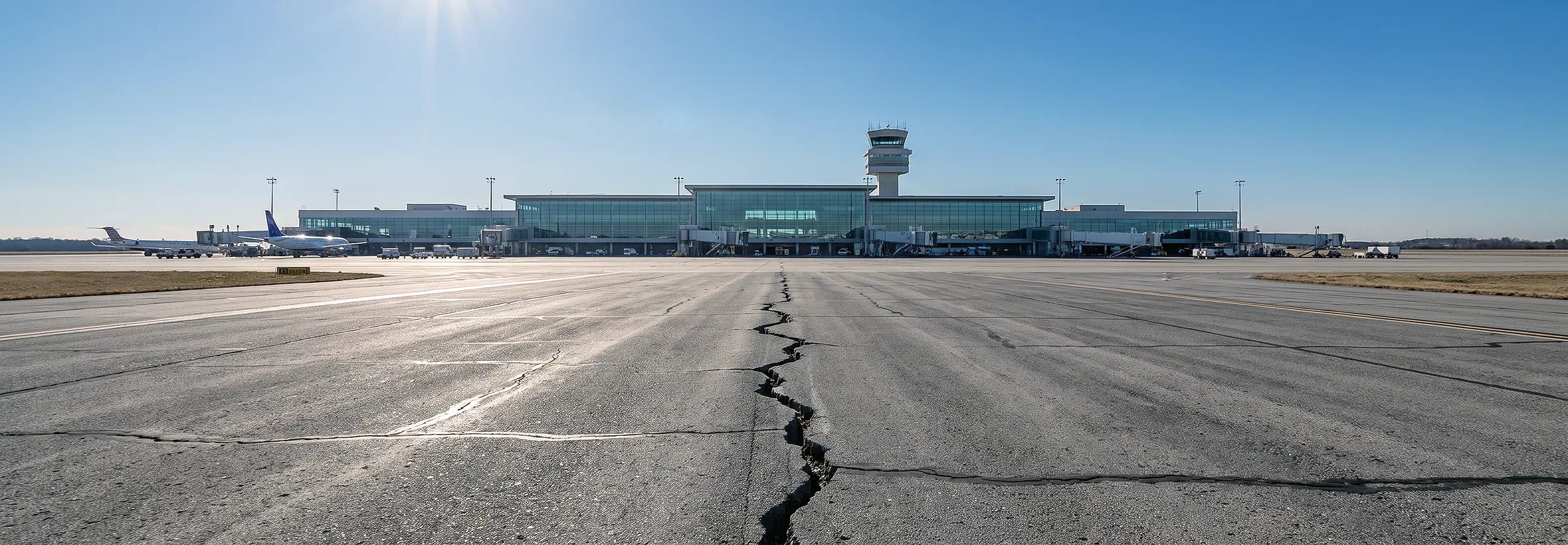
However, there are places in the world where we can find completely empty... and abandoned airport facilities.
There are airports that, for various reasons, such as lack of use, Yes need for growth and to the lack of space, are forced to move to new facilities many miles away. Anticipating these scenarios is part of the job of aeronautical consultancyto develop long-term master plans that prevent an airport from becoming obsolete before it reaches the end of its useful life. This leads to the inevitable closure of old facilities or, in the best-case scenarios, to A new life for the old airfield. Let's look at some of these cases:
The Kai Tak Airport, Hong Kong, opened in 1925, making it one of the most spectacular – and dangerous – in the world. Who hasn’t seen images of planes descending between the towers of this Asian city? It finally closed in 1998, with its land being redeveloped into parks, rental buildings, a cruise terminal and a cargo area. Some of its old facilities and part of what was the runway can still be seen. The redevelopment of these spaces, like the construction of new airports, demands a Airport infrastructure planning that integrates the urban, transport, and environmental needs of the surroundings.
The Mirabel Airport, in Montreal (Canada), Opened in 1975, it was initially conceived as the largest in the world, with an area of almost 400 square kilometres. It never lived up to expectations and lost market share to the better-located P.E. Trudeau Airport. Finally, since 2004, it has operated as a cargo airport, but is no longer used by passengers. It has also been a film set, as in the case of “The Terminal”.
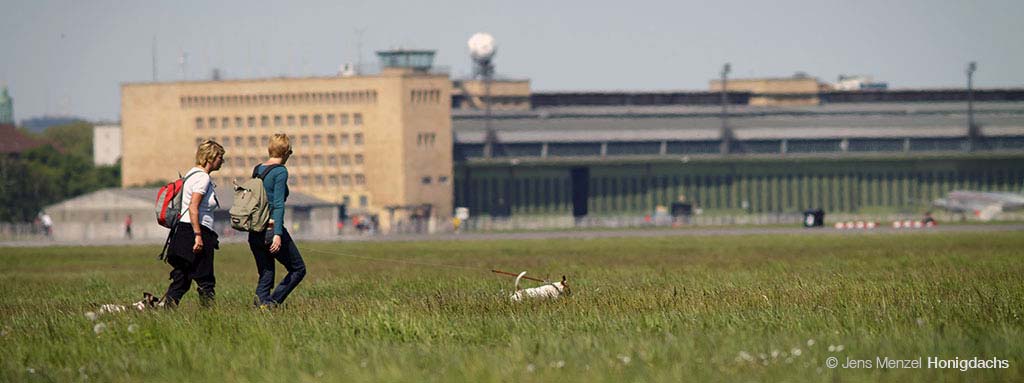
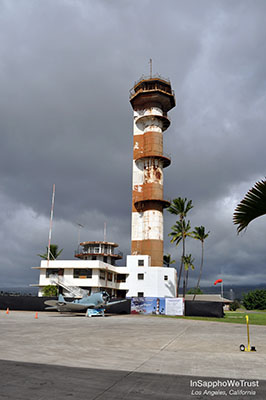 The Tempelhof airport, in the centre of Berlin (Germany), It became the largest building in the world and played a key role after the Second World War with the airlift that saved the German capital from the Soviet blockade. It closed in 2008 and today has been transformed into a vast public park, while its buildings are used for concerts, festivals, rallies, and events of all kinds. Not only was it not abandoned, but it enjoys as much life as when it was an airport. This summer of 2015, its enormous terrace has opened for tourist use.
The ancient Quito Airport (Ecuador), to the north of the capital, had to migrate to a new location, choked by urban sprawl. In its place, as in the case of Berlin, a large public green space called “Bicentennial Park” was created, where all kinds of events are held.
The Nicosia Airport (Cyprus) It succumbed to time and neglect after its closure in 1974, following the Turkish invasion. An abandoned plane in the middle of the runway and a ruined building are testaments to the passage of time and an uncertain future.
The Yasser Arafat International Airport, in the Gaza Strip, It had one of the shortest lifespans, as a consequence of the war. It opened in 1998 and closed in 2001. Currently, the ruins of what was the terminal still stand, along with a multitude of craters where the apron and runways once were.
The El Toro Air Station (Irvine, California, USA) It ceased to be used as an aerodrome in 1999. Its extensive airport facilities stopped being used as such, although that was only a step towards reconverting the area into a huge park and residential areas. In the meantime, it has also been an important asset for the Hollywood film industry, being used as a set for films such as “Independence Day” or “The Iron Sergeant”.
The list of abandoned airports, or those repurposed for a new lease of life, is long. Some stories are truly curious. We invite you to learn more about some of these facilities in detail, the information for which you can find at the following links:
Abandoned airfields in Europe: www.forgottenairfields.com
Abandoned airfields in America: www.airfields-freeman.com