One of the keys to eliminating the Achilles' heel of airport waiting and queuing is not to reduce security checks or requirements, but to make processes more efficient and faster.
In the past, airports were conceived as a mere all infrastructures and facilities which were intended to serve as a base for air transport. This has changed. Airports, while maintaining their core mission, are now competing to provide facilities geared towards the best passenger experience. Everyone likes to travel and it is a fact that the most comfortable way to do this over long distances is by plane.
Both new airports being built around the world and projects to improve existing airports include the following passenger at the centre of their concerns. Everything revolves around making the journey as comfortable as possible. But that's not all. Airports are aware that the more time a passenger spends on their premises, the more likely they are to consume and spend, which is an additional incentive for the bottom line. If, in addition, it makes them happy with the experience on offer, so much the better. They will repeat, if they can.
In most cases passenger-oriented improvements focus on terminal facilities. Luxurious VIP lounges, gardens, waterfalls, cinemas, play areas, gyms, swimming pools, relaxation areas, restaurants, shops... everything is designed to make your stay at the airport a memorable experience.
However, such magical experiences are sometimes overshadowed by the poor experience of the waiting times or, in other words, queues. There are certain points in the travel process that are often subject to sometimes cumbersome delays. Almost always, and even more so in this day and age, the underlying reason is security.
We all agree that security at an airport must be very high. This must be taken into account both in terms of the processes involved in the conduct of the flights themselves and in terms of the conditions under which people enter the country, where applicable.
One of the keys to eliminating this Achilles' heel in airport excellence lies not in reducing security checks or requirements, but rather in make processes more efficient and faster. It may not be feasible to generalise measures, but it is possible to do so for those who meet certain requirements. Moreover, new technologies allow us to have many resources at our disposal for this purpose. And more and more every day.
In the United States, for example, Customs and Border Protection launched in 2014 a application for mobile phones and tablets which aims to speed up the entry of passengers from other countries into its territory. With this application, the user must create a profile with passport information, including name, nationality, gender and date of birth. Then, depending on the airport of destination and the airline used, a questionnaire must be completed and a selfie. The passenger then receives a QR code which is scanned by the customs officer. Passage through the immigration window is almost immediate.
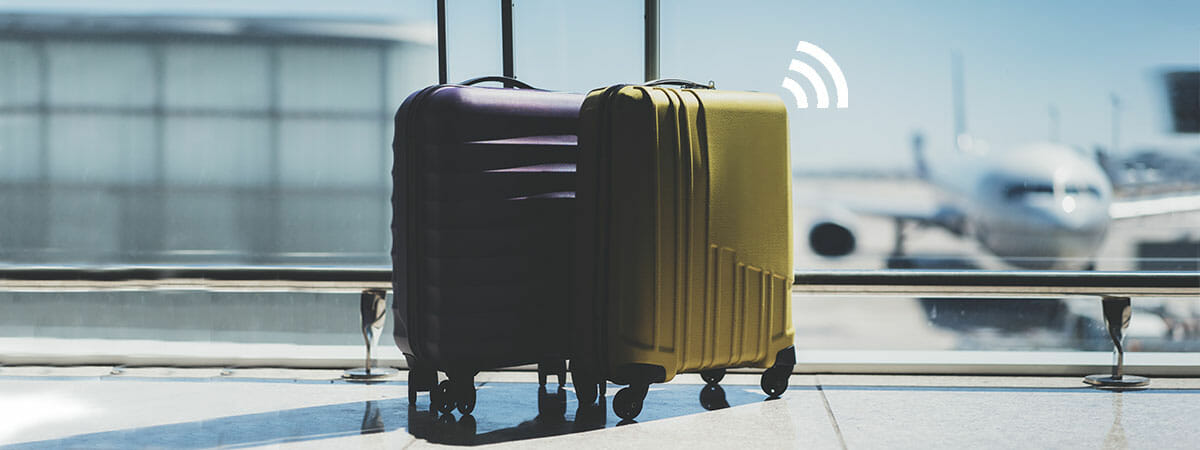
At Austin airport, and progressively at a dozen other airports, they began a few months ago to control the mobility of passengers via the WI-FI signal emitted by their mobile phones. Thanks to this and the use of predictive models, available resources can be managed in advance in order to avoid congestion at airport checkpoints. As a result, action can be taken more efficiently and waiting times can be reduced.
More recently, the Orlando airport has implemented a system of real-time analysis of security checkpoints, This will allow for the decongestion of queues and a rapid response in the event of unexpected incidents.
Several airports are also on the verge of implementing personalised warning systems on their mobile terminals to previously identified passengers who join the service. In this way, as in the previous ones, the processes can be speeded up while at the same time providing passengers with additional comfort as they do not have to keep an eye on the information screens.
There are many technological, training or organisational resources, already available, that have yet to be implemented to achieve greater operational efficiency and improve the passenger experience. Not all of them depend on the airport itself, but in some cases they also require the passenger's collaboration. All of us, managers and users, are involved. After all, who wouldn't like to avoid queuing?