The space race is a risky business. The recent unfortunate explosion of the Falcon 9 rocket manufactured by SpaceX is another example of this. It is the second time in a year that Elon Musk has lost a rocket. However, this setback is not going to stop him. Not Elon Musk. Nor his team.
We are entering a new era of space exploration. A new commercial aerospace sector is being born.
Nowadays, such a disaster can seem like a drama. Indeed, it is. It is going to be harder to find customers and insurers. Not to mention investors, who will be cautious. However, it will be more difficult to find customers and insurers, in the long run this setback will seem like a trifle.The same is true of other obstacles that man has encountered along the way when he has tested his limits.
SpaceX is testing innovative technologies and new materials and procedures. If anyone thinks that success comes without failure, they are far from the truth when it comes to what innovation entails. The Wright brothers crashed many gliders before the Flyer I made its historic first powered flight at Kitty Hawk in 1903. And today, SpaceX is making history, as the reusable rockets constitute an essential step forward in making spaceflight cheaper.
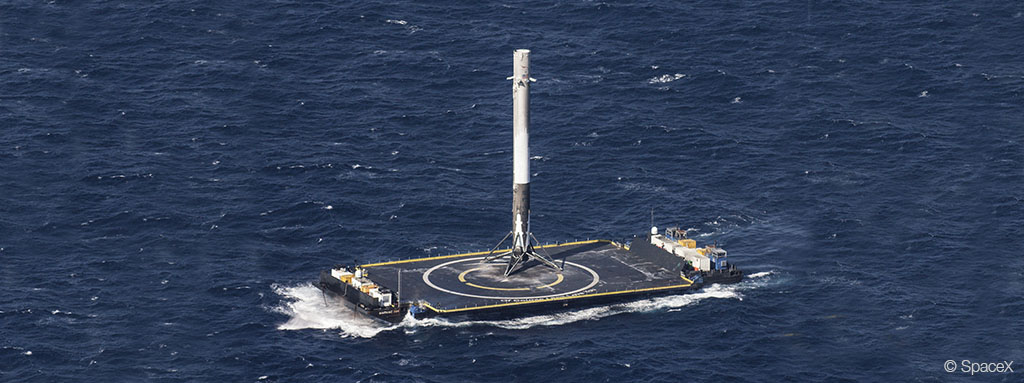
In 2016, SpaceX has managed to get six rocket boosters to land successfully. One of them landed softly on a surface above ground on 18 July. As one of SpaceX's engineers commented, vertical landing of a rocket after space travel is equivalent to throwing a pencil off the Empire State Building and trusting it to land vertically on a mouse pad on the other side of the building.. And this is certainly no easy feat. The rocket enters the atmosphere at hypersonic speed and, with the help of steering grid fins, re-entry thrusters and large amounts of navigation control, manages to land softly on the landing pad. And standing upright. It's absolutely amazing.
This accident is going to add a lot of pressure to SpaceX's launch schedule. They were already behind schedule and this accident will cause even more delays. NASA relies on Falcon 9 for its cargo resupply missions, and there are many commercial satellites in the queue for launch. However, there is nothing to fear. They are sure to recover soon and get highly reliable, reusable rockets up and running.
We are entering a new era of space exploration. A new commercial aerospace industry is being born. I am convinced that this unfortunate event will not interfere with SpaceX's vision:
"revolutionise space technology, with the ultimate goal of making it possible for people to live on other planets".
Well done, colleagues. Thank you for your hard work. You are about to transform space exploration forever.
Update 1: On 19 February 2017, another success in Space X's career was confirmed. On that day, a Falcon 9 rocket, carrying a Dragon cargo spacecraft, blasted off for the ISS. Liftoff took place from the legendary ramp 39-A at Kennedy Space Center. Just over seven minutes later, the first stage of the rocket (named B1031) successfully landed at its scheduled landing site, the LZ-1 pad a few kilometres away.
Update 2: On 30 May 2020, a Falcon 9 rocket and Crew Dragon capsule were launched from Pad 39A at Cape Canaveral on the first manned mission to space by a private company, SpaceX, and successfully docked with the ISS-ESI some nineteen hours after reaching orbit. A milestone in the history of the space race.