continuous chain of industrial revolutions. constant evolution in the manufacturing of products that satisfy our daily and everyday needs (food, clothing, machinery, vehicles, etc.). Since then, little by little, most of the products we consume today have gone from artisanal to Mass production in industries. As a consequence, nowadays, although sectors of employment that require this ancestral craftsmanship still exist, the industrial dominates over the artisanal.
The media and testing systems, as well as the industry surrounding them, are an important tool for mitigating potential future damage and losses.
In any production process, the aim should be to create a product with the best functionality at the lowest possible cost. It is common knowledge that cost, among other variables, is usually determined by the raw materials used, labour, the depreciation of the necessary infrastructure and machinery for production, etc. In short, the cost of a product is usually a mathematical calculation of greater or lesser complexity, but a calculation nonetheless. However, sometimes, ensure the functionality of a product It's not as trivial as a mathematical operation.
To guarantee such functionality, appropriate checks are carried out during the production process to demonstrate that the product serves the purpose for which it was manufactured. In other words, that it functions correctly in all the situations for which it is specified. To this end, functional tests are established or defined in industries with the aim of preventing a product from reaching the market with any defects. Therefore, it could be said that a Functional Test It is the process composed of a set of actions that allow the verification of a functionality of the product in question.
Depending on the product, functional testing can be carried out directly on it (autotesting). However, sometimes it may be necessary to an external medium that runs the test, that collects data from the test itself (telemetry), that simulates final product behaviours to test components separately, etc. Said external means are defined as Test Media or Systems.
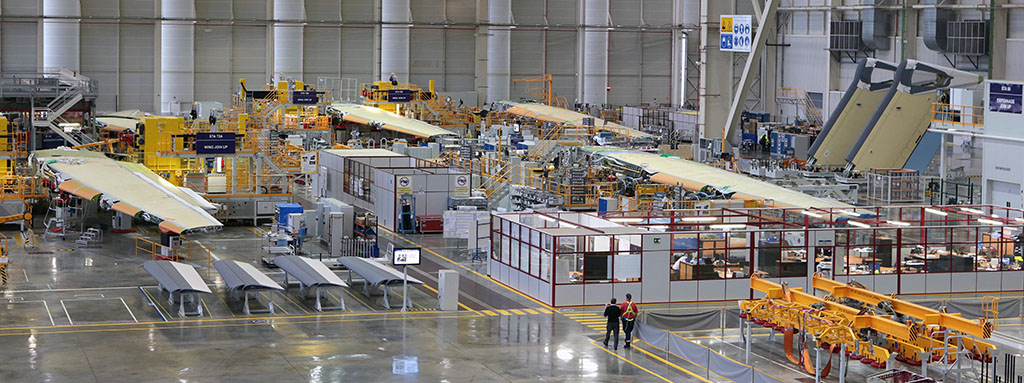
Specifically, in the aerospace industry, Numerous functional tests are defined to test the different systems of an aircraft. As mentioned, each functional test may require specific test equipment to carry out the check on the aircraft system in question. In many cases, aircraft share systems, and the means to validate them often coincide. But generally, the use of one means or another, It will depend on each aircraft and its specific configuration. For example, the means necessary to validate a civil Airbus A330 differ from those for the Airbus A330 MRTT, despite them being the same aircraft but with a different configuration. Therefore, each will have specific means for its specific systems. The comparison with RPAS is even more notable, where the means used for their validation are specific and, in some cases, handmade and adapted for this type of aircraft.
On an aircraft, there are numerous types of test media or systems; depending on the system that needs to be tested, they can be electrical, mechanical, hydraulic, or pneumatic; depending on their complexity, they can range from a multimeter to measure insulation on an electrical harness, to the most complex bench used to pressurise the aircraft. They can also be autonomous and specific media for testing isolated systems, or computer-assisted automatic test systems capable of validating hundreds of electrical signals at once.
In these complex cases, where fluid mechanics calculations, electrical circuit design, computer application design, communication interfaces, etc., are required, the need for engineering applied to these systems becomes evident. For this reason, companies that develop products requiring the validation of complex functionalities (such as those of an aircraft) usually have engineering departments and specific suppliers for the manufacture of these systems.
History shows that, in a production process, failing to test a product properly will always lead to some sort of incident which, at best, will result in financial losses for the company. To give an example, a few months ago a world-leading smartphone manufacturer released a faulty handset that caught fire during normal use. Subsequent investigations revealed that the cause was a fault in the manufacturing process of the lithium-ion batteries. The incident caused substantial losses for the company; its share price fell by 8%, and analysts estimated losses of around 15,000 million dollars. It is worth noting that, as a countermeasure to restore user confidence, the company released an advert showcasing the various processes used to test the devices’ durability and performance, as well as the methods and systems employed in these tests.
In conclusion, as defined in the title of this article, evidence items are involved at the end of any production process; However, the industry associated with them does not usually receive the same consideration as the one that manufactures the final product. Costs are often reduced in this sector because it is commonly believed that the design is perfect and that manufacturing adheres to the design. But with facts like those in the example, it becomes evident that the means and testing systems, as well as the industry surrounding them (their engineering and manufacturing), are an important tool for mitigating potential future damage and losses.