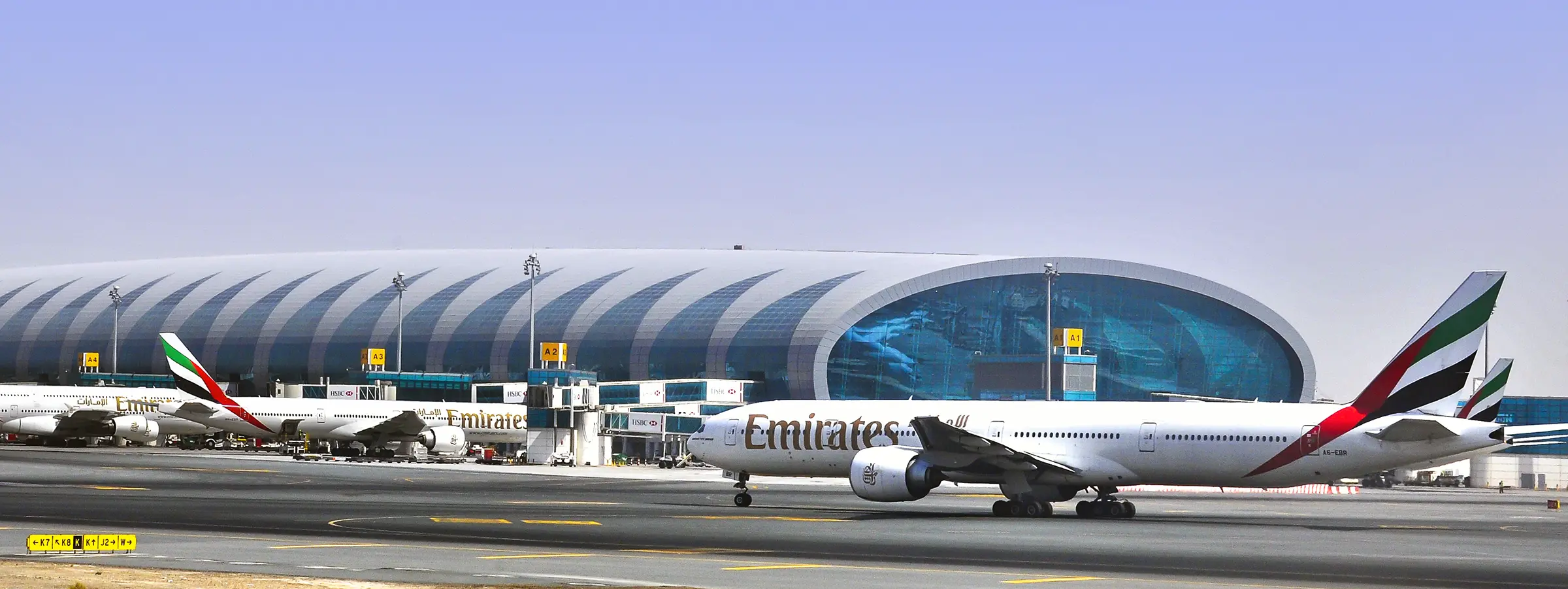
The balance between energy efficiency and the growing demand for flights continues to be a significant challenge. Hydrogen, with its high energy density and zero polluting emissions, is emerging as a key element in addressing current environmental challenges.
On more than one occasion, when addressing the worrying reality of climate change, there is talk about the role aviation plays in greenhouse gas emissions. Despite enormous advances in the efficiency of air transport (designs, engines, aerodynamics, etc.), the sector faces an increase in emissions due to increase in demand for air transport. This context underscores the imperative need for radical innovations. One of the opportunities that many put on the table is the use of hydrogen as a potentially suitable solution for aviation. Its use as an energy vector represents an opportunity to significantly reduce carbon emissions in this sector, which is so relevant to the global economy.
Emissions from air transport have shown an upward trend, although the increases are relatively modest. According to recent data from the IBA, CO₂ emissions in the commercial aviation sector averaged 144.2 grams per seat-mile (approximately 267.06 g per seat-kilometre) in February 2022, with an increase in carbon intensity per seat of almost 0.3%. This marginal increase is partly due to a reduction in the number of new-generation aircraft in operation and a decrease in the length of flight legs.
On the other hand, the International Energy Agency (IEA) points out that despite evident improvements in fuel efficiency, they have not been enough to counteract the growth in energy demand in recent years. Between 2010 and 2019, fuel efficiency improved by an average of 1.8% per year, but demand grew at a rate of more than 5% per year. To remain on track with the net-zero emissions scenario, efficiency will need to improve at a rate of 2% per year until 2030.
These data highlight the complexity of the challenges ahead in tackling emissions in the aviation sector, where The balance between energy efficiency and the growing demand for flights continues to be a significant challenge.. Llegados a este punto, los aviones impulsados por hidrógeno emergen como un elemento a tener en cuenta en el rompecabezas de la aviación sostenible. El hidrógeno, con su alta densidad de energía y cero emisiones contaminantes, se perfila como un elemento clave para abordar los desafíos medioambientales actuales. A medida que exploramos este emocionante terreno, nos adentramos en un mundo donde la aviación no solo conecta a las personas, sino que también es cada vez más respetuosa con nuestro planeta.
Fundamentals of Hydrogen as a Fuel
The Hydrogen is regarded as an energy carrier because of its ability to store and transport energy generated from other sources. Unlike fossil fuels, which are primary energy sources, hydrogen must be produced beforehand, generally by electrolysis of water (an energy-consuming process). In terms of energy density, hydrogen has a significant advantage: per unit of mass, offers nearly three times the energy of conventional jet fuel. However, its low volumetric density presents challenges in terms of storage and distribution. Regarding emissions, hydrogen combustion produces only water vapour, making it an attractive option for reducing greenhouse gas emissions in aviation, although its current production largely depends on non-renewable sources. The transition to hydrogen as a fuel in aviation, therefore, critically depends on the sustainability and efficiency of its supply chain.
Design Challenges and Active Constraints The use of hydrogen as a fuel implies different design challenges and active constraints compared to aircraft powered by conventional kerosene. These differences are mainly due to the higher specific energy of hydrogen (energy per unit of mass) and the unique storage challenges.
Energy Density and Weight of Hydrogen Although the energy density of hydrogen is approximately four times lower than that of kerosene, its energy per unit of mass is almost three times greater. This means that, for the same amount of energy needed to fly, the weight of hydrogen required is only one-third of the weight of kerosene required.
Energy Consumption in Long-Haul Flights: It is anticipated that hydrogen and a lower take-off weight could result in lower energy consumption for long-haul flights compared with kerosene. However, for smaller aircraft and short-haul flights, this may not be the case due to the complexity and performance of hydrogen storage.
Maintenance and Operating Costs Due to their added complexity, hydrogen tanks and fuselages are expected to have higher maintenance and acquisition costs. The integration of the tank with the fuselage adds new design challenges, which may result in a decrease in direct operating cost for long-range aircraft, assuming hydrogen is on par with kerosene in terms of cost per unit of energy.
Volumetric Density of Hydrogen and Storage: Hydrogen has an extremely low volumetric energy density at ambient temperature and pressure. To reduce the required volume, hydrogen can be compressed as a gas or cooled to convert it into a liquid. For example, the volume needed to store the energy that a Boeing 777-200ER carries in kerosene would be equivalent to approximately 500 fuselages if stored as hydrogen at ambient temperature and pressure.
Compressed Hydrogen Storage Compressing hydrogen to high pressures is a way of increasing its density for on-board storage. Compressed hydrogen tanks operate at ambient temperatures and require less active management than liquid hydrogen (LH2). However, these tanks require high-pressure-resistant designs and have low gravimetric efficiencies.
Cryogenic Hydrogen Storage (LH2): Cryogenic storage of hydrogen offers advantages over compressed gas storage, such as higher density and the possibility of storage at near-ambient pressures. However, this requires significant insulation and careful fuel system design, especially for larger commercial transport aircraft, which are weight-sensitive.
Distribution and Infrastructure
The FlyZero Aerospace Technology Institute report underlines the crucial importance of Develop suitable infrastructure for the production and management of hydrogen at airports, as an essential step towards the transition to hydrogen-powered aviation.
A vital component in this infrastructure is the logistics for liquid hydrogen delivery (LH2) to airports. This logistical challenge could be addressed by transporting LH2 to airports using specialised trucks or via dedicated pipelines. Once at the airport, LH2 would require secure and efficient storage systems, followed by a properly protocolled and safe transfer process to aircraft.
In terms of safety, handling LH2 has its peculiarities. One favourable aspect is that, in the event of a spill, LH2 vaporises rapidly and the resulting gaseous hydrogen, due to its low density, rises and disperses into the atmosphere, significantly minimising the risk of fire. Although hydrogen fires reach higher temperatures compared to kerosene fires, hydrogen does not form puddles, thus eliminating the risk of prolonged ground fires, a hazard present with kerosene. Consequently, the thermal radiation generated by a kerosene fire can be more dangerous in the long term than that of a hydrogen fire, despite the former's lower temperature.
An alternative for hydrogen supply at airports is to receive gaseous hydrogen (GH2) which would then be liquefied on-site. This setup allows for greater flexibility in fuel management, as GH2 can be stored at more manageable temperatures and pressures before being converted into liquid hydrogen (LH2) for use in aircraft.
Compressed hydrogen tanks operate at ambient temperatures, which reduces the need for active management compared with liquid hydrogen (LH2). These tanks can remain in use for extended periods without needing to be vented or refilled, simplifying fuel management on aircraft. However, compressed hydrogen requires heavy, pressure-resistant tanks to ensure safety. These tanks have low gravimetric efficiencies, ranging from 1% to 10%, although they could reach between 10% and 20% with advanced design and manufacturing techniques.
Tank Materials and Pressure: Storage tanks must be manufactured from materials that can withstand high pressures. For a simple comparison, the pressure in compressed hydrogen tanks can be up to 700 bar (approximately 700 times atmospheric pressure at sea level). This pressure is necessary to maintain hydrogen in a densified state that facilitates its storage and handling.
Permeation Losses One challenge with hydrogen storage is the permeability and embrittlement of materials. Permeability occurs because hydrogen molecules are very small and some can pass through the tank walls. Reasonable permeation rates for LH₂ tanks in launch vehicles allow for losses of approximately 0.25% of the tank’s volume during ascent and insertion into orbit.
The hydrogen production directly at airports, combine the development of a hydrogen production infrastructure at the same airport, with the potential implementation of electrolysers that convert water into hydrogen and oxygen using electricity, preferably from renewable sources to optimise sustainability. This configuration involves not only the creation of facilities for hydrogen generation, but also the necessary systems for its storage and distribution to aircraft. This on-site production option offers significant advantages, such as reduced costs and emissions associated with transporting hydrogen to airports, and provides greater flexibility and control over fuel supply, aspects that are critical in the airport context where reliability and efficiency are paramount. However, establishing such an infrastructure would represent a significant investment.
Reducing the Carbon Footprint: When the electricity used to generate hydrogen comes from renewable sources, the process of producing hydrogen locally becomes more sustainable, contributing significantly to reducing the carbon footprint. This sustainability is further enhanced if surplus renewable energy – which would otherwise go unused – is utilised and stored in the form of hydrogen. This approach not only increases the efficiency of the energy conversion process but also maximises the use of available renewable resources, effectively transforming surplus energy into a valuable asset for energy sustainability.
In-Flight Efficiency and Comparative Performance
Propulsion Methods: The primary methods for converting hydrogen into thrust are gas turbine combustion and hydrogen fuel cells. Gas turbines, already in use in commercial aircraft, can be adapted to burn hydrogen by modifying the combustion system and fuel supply.
Preference by Aircraft Type Fuel cells are usually the dominant option for small, short-range aircraft, while hydrogen combustion is more feasible for large, long-range aircraft.
Gas Turbine Efficiency: Hydrogen gas turbines have a higher specific power than other propulsion methods, making them suitable for larger and more powerful aircraft. For example, the fuel cell propulsion system for an aircraft the size of a Boeing 737-800 is approximately three times heavier than the equivalent gas turbine system.
Development and Testing of Hydrogen Combustion Engines: Companies such as CFM, Rolls Royce and Pratt & Whitney are modifying existing turbofan engines to run on hydrogen, with plans to test these engines on aircraft demonstrators in the coming years.
Benefits of Hydrogen Combustion in Gas Turbines: Burning hydrogen in gas turbines can reduce the temperature of the hot gas entering the turbine, thus extending its lifespan and decreasing the frequency of maintenance. Furthermore, hydrogen stored as a liquid onboard an aircraft provides a large heat sink, allowing engine designers to explore creative ways to increase performance.
Specific Fuel Consumption (TSFC): The TSFC, a crucial metric in aircraft design, indicates the fuel mass flow rate required per unit of thrust produced by the engine. Hydrogen provides almost three times more energy than the same mass flow of kerosene, making direct TSFC comparisons between fuels with different energy densities inappropriate.
Fuel Cell Operation and Design Hydrogen fuel cells, particularly proton-exchange membrane (PEMFC) and solid oxide (SOFC) types, have unique characteristics and challenges in their operation and design. These include water management, ohmic losses, and limitations in the rate at which reactants can reach reaction sites.
Thermal Management and Fuel Cell Design Thermal management is a key challenge, particularly for low-temperature PEMFCs, which must dissipate a significant amount of heat. Bipolar plates, which make up the majority of the stack's volume and weight, are optimised to deliver reactants to the electrodes, manage cooling, and limit weight.
PEMFC Operating Pressure and Performance: Increasing the operating pressure of PEMFCs can improve their performance, but with diminishing returns. Challenges include
Upon concluding our analysis of hydrogen integration in aviation, we highlight the significant role it can play in the transition towards more sustainable aviation. This approach represents a considerable step forward, directly impacting the climate crisis. While promising, the path to effective implementation of hydrogen in aviation is complex, filled with technical and operational challenges that require attention and innovative solutions. Continued research and development in this field are essential to achieve a balance between the benefits of air travel and environmental conservation.
You can find out more about this topic by also reading our post “Hydrogen in the future of air transport”click here).