“The world is a dangerous place. Not because of those who do evil, but because of those who do nothing to prevent it.” With this phrase, Albert Einstein expressed his conviction that The environment is everyone's responsibility. And the aerospace sector is no exception in this matter.
More and more, humans are seeking the efficiency in everything they do. A good example of this is that an increasing percentage of the cars that are manufactured are already hybrids, or even electric. Governments around the world are also doing their part by promoting the use of recycled products, the use of more efficient and less polluting engines, and by giving greater importance to renewable energy sources. In the field of electric cars, there are already several models and even specialized brands, such as Tesla.
Respect for the environment is present in all levels of the aviation industry, from design to the operation of aircraft.
We assume that the world of Aviation is continuously growing, This is evidenced by an increase in the construction of aircraft, both commercial and military, as well as in a continuously increasing number of passengers. Manufacturers and aeronautical engineering companies are allocating increasingly more resources to their R&D programs aimed at developing improvements in the acoustic pollution generated by the aircraft’s turbines, reducing emissions of gases into the atmosphere (carbon dioxide, nitric oxide, nitrogen dioxide, among others) or improving the usability of lighter materials in their aircraft, to name just a few examples. And not to forget the pollution generated by the airports themselves, from heating, which in some countries still operates with coal or diesel boilers, the waste generated by all the services installed in them, or the emissions from the vehicles used to transport the luggage, to Staff or to the passengers.
How has the world of aviation approached the issue of pollution? Clear data might be that for the past 40 years until today, airplanes have been a major source of pollution. 70% quieter and consume 70% less fuel, A significant reduction, indeed.
But all the parties involved in the aeronautical sector are not content with that; they have already proposed short-, medium-, and long-term solutions. One of them is the scheduling optimization from the airlines and the flight frequencies, In other words, that not too many flights be made to the same destination and that the number of empty seats in such flights be minimized.
Another solution that has been proposed is to reduce the cruising altitude of civilian aircraft, This reduces the water vapor plumes. But it has a disadvantage and that is the burning of fuel, since jet aircraft They are less efficient at lower altitudes.
Another measure that is on the table is the use of ethanol (derived from biomass) in piston/jet aircraft for reduce your carbon footprint. This alcohol can be extracted from cellulose contained mainly in agricultural, urban or forest waste. Its use has expanded thanks to the Kyoto Protocol. However, by ensuring that its origin is organic waste and without falling into the temptation of dedicating large areas to monocultures dedicated to this purpose, which would lead to other environmental problems.
There is a rather ambitious European project in terms of the environment, called CleanSky, At Airbus, where among its numerous lines of work, one focuses on researching the design of future aircraft with the aim of making them more environmentally friendly. From the perspective of aircraft manufacturers, efficiency is a priority, although it should be noted that in these cases the criterion of profitability is also more than evident.
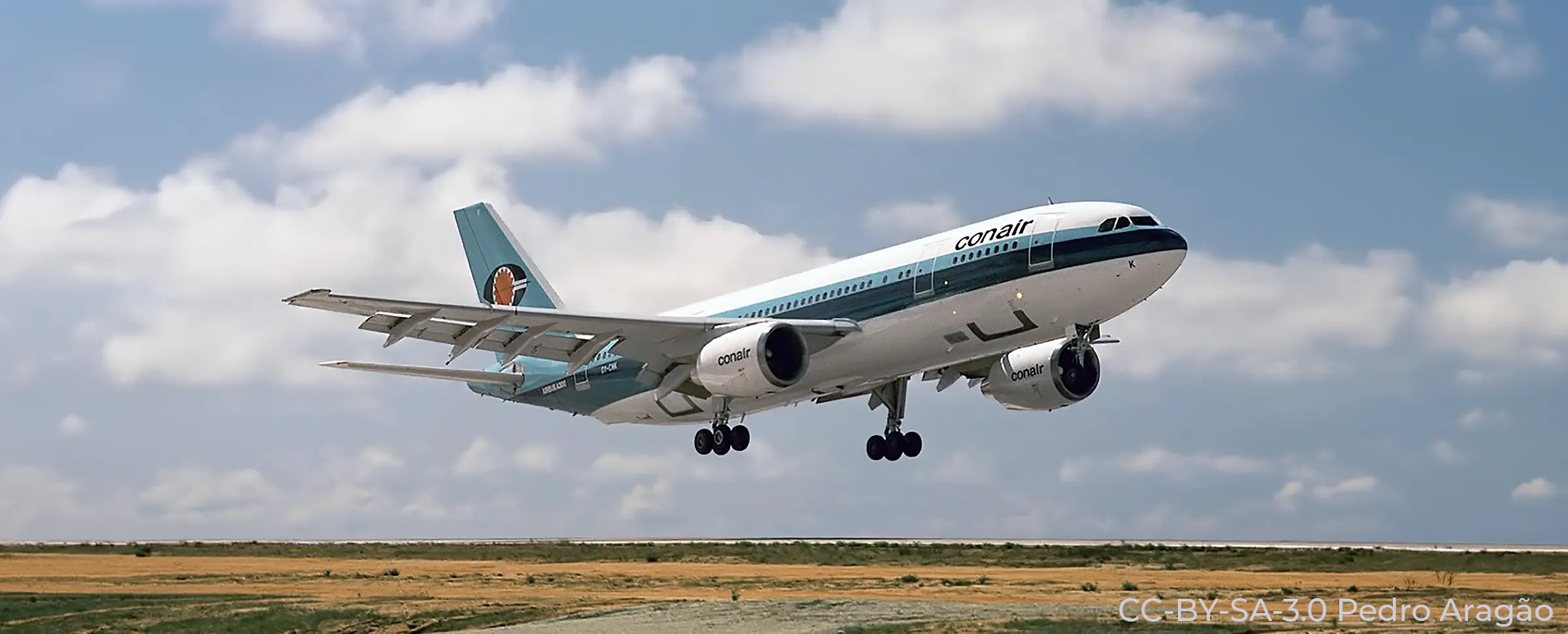
As an example of this trend, we have the large-size aircraft that are concerned with efficiency and the environment. This is the case of Airbus A380 model, that uses less than 3 liters of fuel per passenger per 100 kilometers (with full occupancy), the lowest consumption achieved to date. Other models such as the Airbus A350 or the Boeing 787 Dreamliner demonstrate extensive use of the composite materials, This results in a lower weight for the aircraft and, consequently, lower fuel consumption.
We also live under a constant obsession to make aircraft increasingly electric, applying the already long-standing concept to current models. “fly-by-wire” until unexpected limits just a few years ago.
In short, thinking about the environment is becoming an increasingly important priority For designers, engineers, manufacturers, operators, and managers in the aeronautical sector. We are all aware that this is a sure bet and that every step we take, no matter how small, adds up in the same direction. Returning to Albert Einstein’s thinking, we can be assured that this sector, the aeronautical one, works to make our world increasingly developed, but also more habitable for future generations.