Technology and procedures are essential, but airport safety also depends on the decisions people make. Training in Safety (AVSAF) and Security (AVSEC) strengthens the safety culture and reduces the impact of human error.
Airport security is an essential pillar of air transportation: it protects passengers, crews, staff, aircraft, and infrastructure in a demanding and ever-growing environment. This dynamic environment requires the continuous adaptation of services, facilities, and procedures.
However, beyond technology, there is one decisive factor: the human factor. Security does not lie solely in systems, but in how they are interpreted, applied, and acted upon in real time. Procedures, resources, and human talent together form the true backbone of airport security.
Therefore, it is essential to ensure that the professionals responsible for airport security have the necessary skills to do so effectively. Ongoing training not only reinforces technical knowledge but also fosters a culture of accountability in daily operations.
In this context, airport security is organized into two main areas, both of which are strongly influenced by the human factor:
Safety and AVSAF
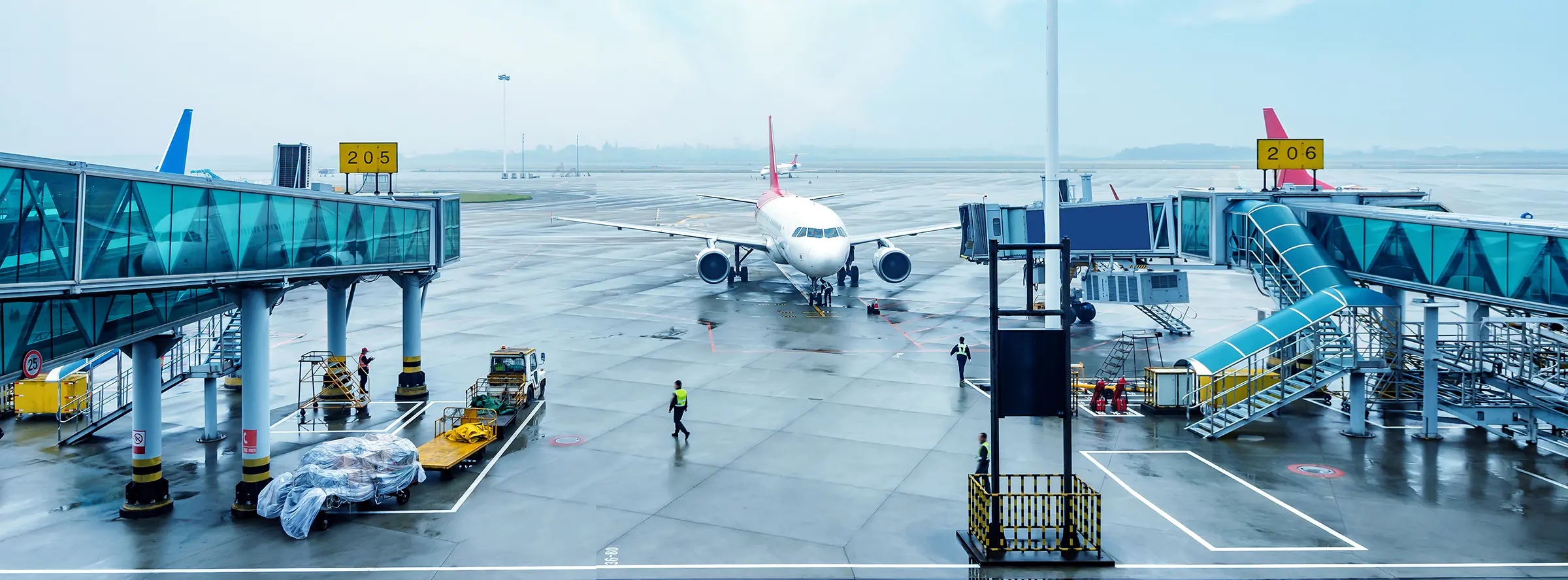
Known as operational safety, this aspect is focused on ensuring that airport operations proceed without risk. It is an environment where human error is not an exception, but rather a constant risk.
In everyday life, this translates to situations such as:
- Decision-making under pressure.
- Coordination among ground crews.
- Communication with the crews.
- Correct interpretation of signals and procedures.
All of this takes place in a dynamic environment, with simultaneous operations, tight deadlines, and tasks that, although repetitive, require constant attention.
In this context, situational awareness and the ability to anticipate risks are critical skills. And they do not develop spontaneously: they require ongoing training, practical experience, and tools that help improve self-awareness and decision-making under pressure.
Security and AVSEC
This area aims to protect civil aviation against acts of unlawful interference, and its impact is particularly evident in:
- Coordination among the agencies involved.
- Access control to restricted areas.
- Monitoring of critical infrastructure.
Here, the key lies in detecting suspicious behavior and maintaining a sustained level of vigilance in particularly sensitive environments.
The effectiveness of these measures depends, to a large extent, on a true understanding of the threats and the ability to identify risks in everyday situations. Understanding what is happening, why it is happening, and how to respond makes the difference between a secure operation and a vulnerability.
Training, Human Error, and Safety Culture
Continuing education in safety and security not only ensures the acquisition of technical knowledge but also enables individuals to adapt their performance to new threats, technologies, and procedures.
Furthermore, it is key to addressing one of the sector’s greatest challenges: human error. Factors such as fatigue, overconfidence, routine, lack of communication, or misinterpretation of procedures are behind a large proportion of incidents and accidents.
This is where an interesting concept comes into play—one that is increasingly prevalent in the modern management of ICAO, EASA, and AESA safety regulations: just culture or Just Culture. This approach promotes the reporting of incidents and vulnerabilities as a basis for organizational learning, without neglecting individual accountability for unacceptable behavior. Only in this way is it possible to identify latent flaws and address the true root cause of the error.
In an environment where everything seems to be under control, it is precisely the human factor that serves as the key link capable of ensuring—or compromising—the system’s overall security. Investing in raising awareness and developing people is essential to ensuring the highest levels of airport security.
Where Training Makes the Difference
Ultimately, procedures and systems establish the framework for action, but we must remember that we are the ones who determine their actual effectiveness , and this is where training ceases to be a requirement and becomes a strategic tool.
At AERTEC, we develop programs tailored to real-world operational scenarios, focusing on:
- Decision-making under pressure in real-world operational settings.
- The development of situational awareness as applied to Safety (AVSAF) and Security (AVSEC).
- Strengthening the safety culture through formal training and awareness-raising.
Our new training platform has been relaunched with precisely that goal in mind: to translate technical knowledge into real-world operational behavior.
Because in aviation, safety isn't compromised when a system fails, but when a decision fails. And that, whether we like it or not, is always a human factor.
Key related topics: AVSAF and AVSEC Training, Airport operations