In the face of the continuous reinvention of technologies, fashions and the growing motivation of designers to create something new and unique, the aeronautics emerges as a source of creation that goes far beyond the original industrial sense of the term. In fact, it is striking that a new design sector is thriving in which the following are being harnessed aircraft parts to create unique furniture pieces.
This new design concept is appreciated by aviation enthusiasts as well as by people who like to enjoy aviation as a way of life. creative alternatives for your daily life, both personal and professional.
Some aircraft parts can enjoy a second life as unique decorative elements. Are you joining this trend?
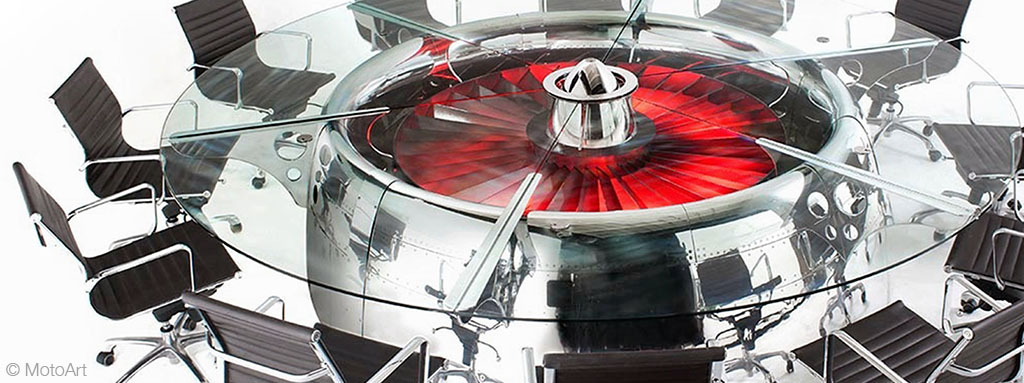
There are few chairs, desks or executive tables that can beat the uniqueness of a meeting table built from a discarded General Electric turbine from a Boeing 747. Such a table, with several artistic accolades to its credit, has been created by Moto Art, a design studio dedicated to restoring aircraft parts and turning them into unique, high-end furniture. Or a ceiling fan made from the propeller of a Corsair F4U. Not to mention a desk made from the propeller of a sharklet discarded from an Airbus A320 due to a small imperfection, which is turned into a unique piece and can be found on the Portobello Street platform.
Many of the pieces used for this new interior design trend come from the obligatory renewal of aircraft components, The main reasons for this are their obsolescence and compliance with safety standards. Another part has its origin in parts containing small imperfections which do not allow them to pass the Standard. Finally, there are the pieces obtained from end-of-life aircraft and that go to the scrapyard. Possibly the latter are the ones that allow aviation romantics to obtain the most valuable parts. vintage and curious.
Finally, another added value that is brought to this exclusive furniture is that some designers allow the customer to customise the element to their liking. They can opt for elements such as LED lighting in the preferred shade, adding corporate colours and elements, or adding power sockets, sound or multimedia devices. The limit is as far as the designers' imagination can take them.
Many aeronautical parts have the opportunity to be designed twice. The first was to fly as part of an aircraft, while the second, once it had fulfilled its original mission, was to personalise it and become part of the life of a passionate aircraft enthusiast.
Would you like to own a piece of aviation history?