Many of us have the nostalgic image in our memories of a small plane soaring through the sky above the sea, pulling a advertising banner, a sign perhaps that summer is coming to an end. Aerial advertising is just one among the wide variety of aerial jobs that can be carried out.
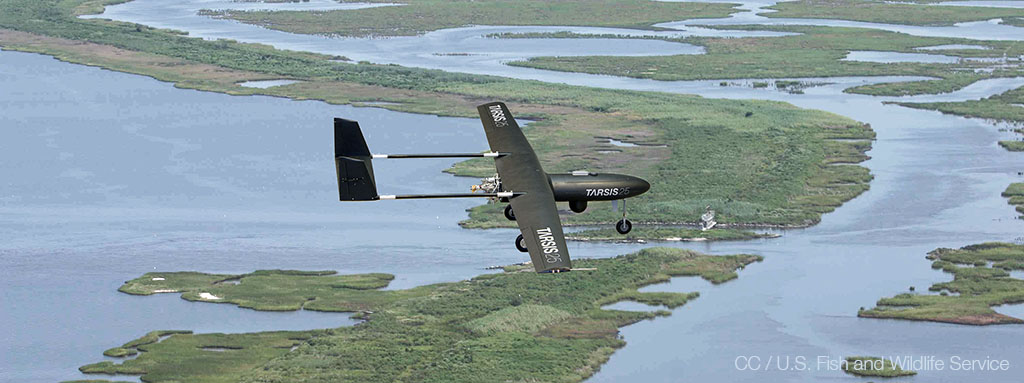
RPAs offer greater versatility than crewed aircraft, specifically the variety of configurations.
In mid-2014, the Royal Decree-Law that established the was published in the Official State Gazette. operating conditions for remotely piloted aircraft (RPAs)This could have represented an opportunity to complement the traditional business of aerial work companies, with associated advantages such as increased operational safety and reduced operating costs. However, today most continue to maintain their traditional business, and companies There are over 2,400 RPA aerial work operators registered with AESA, including both companies and individuals..
With the perspective that time past provides, and with the new regulation on RPAs about to be published, The market for air services with RPAs doesn't seem to have fully taken off yet. Some attribute this to the limitations introduced by regulation, although it is true that, despite the existence of small companies highly specialised in the provision of these types of services, It appears that the market volume that most studies were aiming for is not materialising, at least not in the private sector. On the other hand, the public sector in the civil domain is not accessible to micro and small enterprises, due to financial solvency issues among others, therefore, For the moment, public investment is focused on the implementation of pilot projects to validate the suitability of these types of aircraft and technology in the provision of services traditionally supplied by manned aircraft.
But what type of aerial work is provided and with which aircraft? Which would be susceptible of being carried out by RPAs and which, a priori, seem difficult to carry out by RPAs in the short or medium term?
The aerial work traditionally carried out by piloted aircraft, whether fixed-wing or rotary-wing aircraft, is as follows:
- Aerial photography.
- Press, television or film flights.
- Aerial advertising.
- Flights for special events, including airshows and competition flights.
- Glider towing.
- Skydiving and freefall operations.
- Aerial cartography.
Light aircraft such as Cessnas or Pipers are typically used for this type of work.
- Agricultural flights.
On crop-dusting flights, the best-known aircraft is the Air Tractor, with its characteristic yellow colour.
- Observation and patrolling.
- I work in oil spills.
- Maritime rescue.
These roles employ the CN235 aircraft, designed by the former Construcciones Aeronáuticas (now part of Airbus Defence and Space) in its maritime patrol version, as well as helicopters from the companies AgustaWestland, Eurocopter (Airbus Helicopters), and Sikorsky, primarily.
- External load operations by helicopter.
- Fire Extinguishing.
Both aeroplanes and helicopters are used in firefighting flights. In Spain, Air Tractors are used in both their land-based and seaplane versions, and the well-known Canadair and Bombardier aircraft, with their red and yellow stripes, are used for firefighting. For the coordination of firefighting units, Vulcanair and Cessna aircraft are employed. The most commonly used firefighting helicopters are Bell helicopters for transporting brigades and supporting water drops, and Kamov bomber helicopters.
More curious jobs, carried out mainly by helicopters due to their ability to fly and maintain position, are the following:
- Flights for construction, including overhead power line laying operations and tree pruning.
- Avalanche triggering operations.
- Sterile insect release for pest control.
- Herding, animal rescue flights and vet shuttle flights.
The variety of aerial jobs is greater than one might initially think, and undoubtedly, the vast majority, if not all, or even new aerial jobs could be carried out with RPAs.. The main limitation today, more than the technological one, has been the regulatory one. As the main novelty The new Spanish regulation will allow services to be provided in urban areas, but it seems that the main barrier will continue to be the limitation on the distance between the aircraft and the remote pilot., which limits the range of operation (in practice, it's five hundred metres around the location of the remote command and control station).
RPAS offer greater versatility than crewed aircraft, specifically, the variety of configurations: fixed-wing, rotary-wing, and multi-rotor, and even hybrid systems, allow for the development of all types of applications. While it is foreseeable that those involving the lifting of loads, for example, for firefighting, will take decades to become affordable due to safety concerns… In aeronautics, safety goes hand in hand with the airworthiness certification of aircraft. And the certification process entails serious investment. Therefore, it appears that RPA technology will have to wait for things to gradually loosen up, and for companies, through effort and pilot tests, to demonstrate the safety of flight operations. In the short to medium term, we will continue to see only small RPAs performing filming tasks and cartography work, as well as small-scale agricultural applications. Support for firefighting is another service where these aircraft have a lot to offer. Let's hope the situation changes for the good of technology and in favour of the aeronautical sector, allowing the creation of new and interesting business lines for the industry.