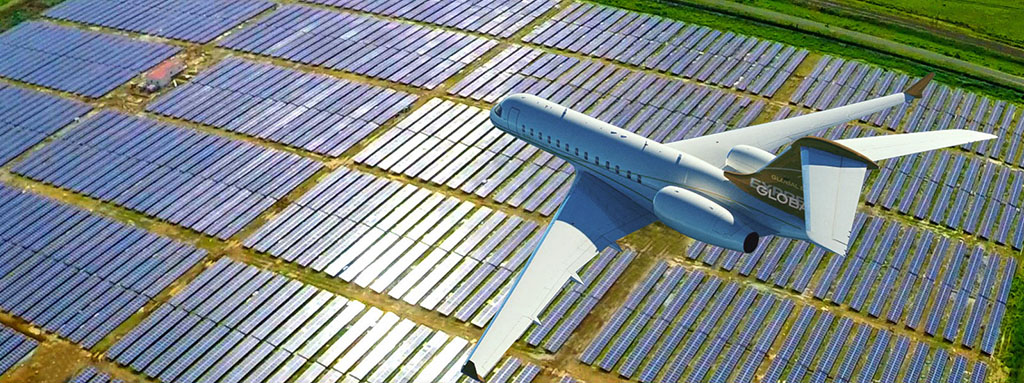
Cochin International Airport (COK), in Kerala, is India's fourth busiest with an annual passenger traffic of around 7.5 million. It was the first of his country's major aerodromes to be privatised. However, its great international prominence has come about because it is the first airport in the world to be entirely energy self-sufficient thanks to an extensive installation of photovoltaic solar panels and a general policy of resource optimisation.
Cochin Airport (India) has proven that it can generate more energy than it consumes, thanks to the sun.
This is especially significant when you also consider that airports are major energy consumers, and we're talking about a country that covers more than 90% of its energy needs with fossil fuels.
 The idea began to take shape in 2013 at a time when the positive evolution of passenger traffic necessitated addressing a series of improvements to airport facilities. A suitable opportunity was perceived to develop several projects aimed at improve the airport ecologically. In fact, the photovoltaic solar installation is not an isolated milestone, but will be followed by important projects for water recycling and waste treatment.
Two years after its conception, the project was finalised at an approximate cost of $10 million.
At one end of the airport, next to the head of its 3,400-metre-long main runway, is an 18-hectare facility that houses 48,150 solar panels. To these must be added those that were initially installed on the roofs of terminals and hangars. As a result, the installation generates a total of 12 megawatts of energy daily.
 The airport's needs are around 48,000 units of electricity per day, while the current facilities produce between 50,000 and 60,000 units daily. More than enough.
This is a project that not only saves the airport money but also contributes very positively to the reduction of greenhouse gas emissions. To give you an idea of what this initiative means, it is estimated that in the first 25 years of operation of the solar power plant, 300,000 tonnes of CO2 will be avoided, or the equivalent of planting 3 million trees.
From the economic point of view, has also proven to be a satisfying project as, according to initial estimates, in just five years it will have been amortised The construction of solar facilities. From then on, it will all be savings.
The idea has spread to other airports such as George (GRJ) in South Africa and Denver (DEN) in the United States, among others. This is undoubtedly an initiative that will continue to spread to many other airport facilities.