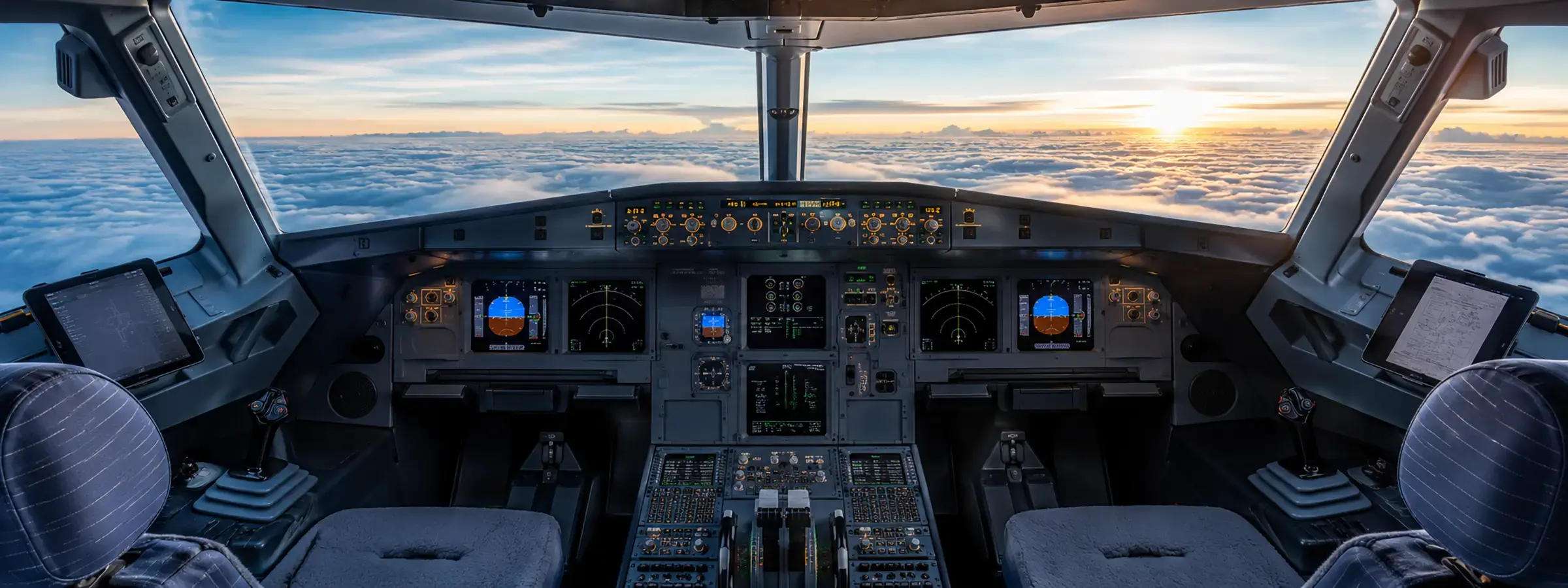
It is a good idea to promote the visibility of women in science and encourage young women to pursue technology careers.
On 20 July 1969, a human being set foot on the Moon for the first time. The Soviet Union had achieved its objective, beating the USA by weeks. This is how the alternative history, posed in the series “For All Mankind”, begins its development. Following the same fictional plot, this Soviet triumph led NASA to intensify its efforts, to develop its space programme beyond its original plans, and to accelerate the inclusion of women in space missions.
Although in our reality, the one we live every day, the integration of women has been slower, we want to highlight in this article the female contribution made in the aerospace field.
We start the journey with Nancy Roman (1925-2018), an American astronomer and a great champion of the Hubble Space Telescope. From a young age, she showed a fascination with the stars, and even when she was at secondary school, it was clear she wanted to be an astronomer. Despite discouragement from some teachers regarding her preference for scientific studies, she managed to graduate in Astronomy in 1946. She was the first woman to hold an executive position at NASA. She dedicated her later years to encouraging teenage girls to discover and enjoy science. In 2027, NASA plans to launch a telescope that will bear her name. According to Roman herself, «I didn't let the fact that I was a woman hold me back.»
We move on to Valentina Tereshkova (1937). This Russian woman's passion for flying led her to join a parachuting aeroclub at the age of 22, something her mother didn't approve of, considering it a men's activity. In the space race with the USA, the Soviet Union heard rumours that the latter was training female astronauts, and this sparked the USSR's interest in training women and launching a space mission by a cosmonaut. Valentina became the first female astronaut. In 1963, she orbited the Earth for 3 days aboard the Vostok 6.
Jacqueline Cochran (1906-1980), she was not only the first woman to break the sound barrier as a pilot, but she also set numerous speed, altitude, and distance records. Starting out as a beautician and later a cosmetics entrepreneur, she discovered her true calling when her partner proposed she advertise her own cosmetics line on board a plane piloted by herself. She never stopped flying after that: she participated in competitions, served as a pilot in the Second World War, and led the Women’s Air Force Service Pilots, an organisation whose aim was to train and instruct women pilots. Her work for the equality of women and men in the aviation sector is noteworthy.
In the 1960s, three African-American women stood out: Katherine Johnson, Dorothy Vaughan and Mary Jackson, who were part of the group of “human computers” and about whom the film “Hidden Figures” was made in 2016. They performed calculations by hand before electronic computers were introduced. Katherine Johnson was a mathematician who helped calculate the trajectories for the Apollo 11 mission (the first mission to reach the Moon). Dorothy Vaughan was a pioneer in computer programming and a leader at NASA, and Mary Jackson broke barriers as the agency's first African-American aerospace engineer.
Mae Jemison (1956), a chemical engineer, physician and NASA astronaut. She was the first African-American woman to travel into space. She admits to being inspired by Nichelle Nichols (Lieutenant Uhura in the series Star Trek). From a young age, she had a clear scientific calling, which was supported by her family, though not in the same way by the professors she encountered during her university studies. Nevertheless, her arrogance and persistence kept her moving forward. In 1992, her only space mission took place.
We don't want to forget the many other women who have made significant contributions to aeronautics from the shadows. For example, wives like Janet Shearon Armstrong, Susan Borman, and Pat Collins kept house and looked after their children, allowing their husbands, Neil Armstrong, Frank Borman, and Michael Collins respectively, to concentrate on their space missions.
The enormous work of these pioneers has brought about a cultural change, overcoming gender and racial barriers and serving as an inspiration. Although nowadays the female presence in the aeronautical industry has increased, inequalities still persist that limit inclusion, innovation and diversity of thought in this field. Fortunately, recognition for women's contributions to aeronautics has gained greater relevance in recent years thanks to various initiatives and efforts that seek to highlight their achievements and promote inclusion.
Every year, the organisation Women in Aerospace (WIA) It recognises outstanding women in the aerospace industry through its annual awards. These awards honour women for their professional excellence, leadership, and contributions to the sector. For example, at the 2021 ceremony, Dr Amy McAdam was honoured for her contributions to the Mars Science Laboratory and her advocacy for young women in science.
Nowadays, and thanks to technological advancements, organisations such as Women in Aerospace (WIA), Girls in Quantum, or even the social network “X” itself, provide spaces where women in the industry connect, share experiences, and support each other.
It is a good idea to invite readers to promote the visibility of women scientists and to encourage young girls towards technology careers, so that we can move towards greater equality in the coming generations. Women represent half of the world's population, why waste this potential?