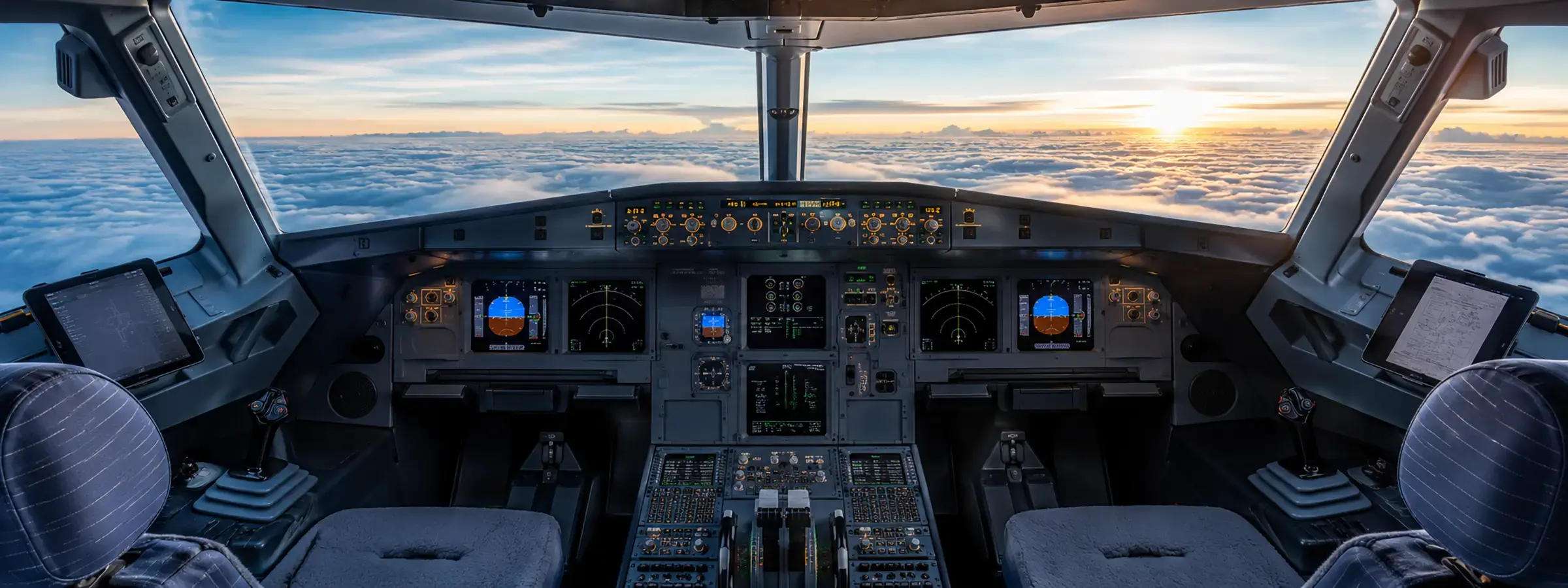
In general, employment in the aerospace sector in Europe is characterised by the following elements:
- Positive and sustained employment growth during recent years, with above-average performance from European industrial sectors.
- High concentration of aeronautical activity and employment in five countries: France, the United Kingdom, Germany, Italy and Spain.
In France, the aerospace sector is a major economic driver for the two regions of Nouvelle-Aquitaine and Occitanie. It brings together 1,900 companies that employed 146,000 people at the end of 2016. They represent 6% of non-agricultural waged employment and up to 20% of industrial employment in both regions. According to the website www.estaca.fr, el 37% de los recién titulados se enfocan hacia el sector aeronáutico y el 98% de ellos encuentran su primer empleo en un plazo de 2 meses.
The role of women in the aeronautical sector has grown in recent years, although we are still far from what might be considered desirable.
In the United Kingdom, according to Philip Brien and Chris Rhodes in the “House of Commons Library”On 8th November 2017, the aerospace sector had a turnover of £31 billion (approximately €35,000) in 2016, employing 95,000 people, with the largest number of jobs located in the South West and East of England. Midlands. In this same document, Katherine Bennett, the head of Airbus UK, gave her opinion on Brexit, stating that «the future investments made by Airbus inevitably depend on the economic environment in which we operate. The company's business model is based on our ability to move products, people and ideas in Europe free of constraints.«This position was reaffirmed by Fabrice Bregier, the CEO of Airbus, who mentioned in June 2017 that for Airbus it would be «very easy to have a new plant somewhere in the world for new projects."
- Highly skilled employment, _PH0__ with a high percentage of university graduates and the need for specific systems integration technicians (systems engineering). It is estimated that 38% of employees in the sector have university training, which contrasts with the 18% represented by the same group across all sectors, in the case of Spain.
- Sustained increase in turnover The trend is expected to continue over the last few years and future forecasts point to a continuation of the same trend.
- The European aerospace industry is predominantly by the aircraft manufacturing segment, especially large commercial aircraft.
- There has been a Negative productivity trend as a consequence, among other things, of the sustained increase in production costs.
One of the unique aspects of employment in the aeronautical sector is the the evolution of women's roles in a workplace that was almost exclusively male.
Let's start by considering the percentage of women enrolled in technical courses in the 1975-76 academic year. They only accounted for 2% of the total. Likewise, they made up 5% of those studying engineering, compared to 95% men.
Moving forward to the 1998-1999 academic year, we find a proper integration of women into the university system, making up 54% of new entrants. Furthermore, women surpassed men in all degree courses, except for technical subjects. It is precisely in these qualifications that in recent years there has been a Female stagnationwhich it does not suggest that 25% will be exceeded in the coming years.
One of the most representative benchmarks that can be used to analyse the integration of women into engineering and their incorporation into the labour market is the figure of professional registration.
Let's take the data on the number of registered members of the Official College of Industrial Engineers of Western Andalusia, in Spain, as an example. Until 1992, registered women did not even represent 1%. In 2002, that percentage rose to 5.5%, and in 2008 to 10%. However, in the following six years, the increase was only a few tenths of a percentage point.
Let's now take the example of pilots. Continuing with the example of Spain, there are currently 6,000 pilots according to data from the Spanish Airline Pilots Union, of whom only 198 are women. Nor are the figures any better in the global context, with women pilots making up only 3% of their professional group. Why this imbalance? Almost instinctively, the first thing that comes to mind is the difficulty of reconciling this profession with one's personal life, but then one thinks of the large number of female flight attendants and cabin crew in airlines.
Due to the incipient growth in passenger numbers, it is predicted that, In the next 20 years, over 104,000 pilots will be needed in Europe. and some 610,000 worldwide, according to the study. Pilot and Technician Outlook (2016). And the role of women will be key.
According to some experts, the cause may lie in the pressures that women endure, which lead them to higher rates of self-criticism and demandingness, greater insecurity in themselves, and high levels of stress, when their gender role identity is in conflict. The possibility of being a mother plays an important role here, as motherhood is seen as a conflict with the working world.
According to Susan Chodakewitz, President of Tetratech, when we focus on technical and executive positions in the sector, the percentage of women drops from 25 to 10%. The rest of the positions occupied by women are administrative.
According to Thierry Baril, Chief Human Resources Officer at Airbus, speaking in the newspaper Le Monde, companies want to recruit more women: «The company must be a reflection of society. Mixed teams are synonymous with greater efficiency and cohesion, key ingredients for better performance.».
This French media outlet states that some companies have set targets for hiring women. Airbus wants to reach one-third of them in its workforce. Safran desires a minimum of 25% for engineers and executives. By 2023, Thales is aiming for 40% for the workforce overall and 30% in middle management.
The questions to be posed are simple: why aren't women attracted to the aeronautical sector? or why do they leave this sector? It's complicated to give a concrete answer. Perhaps it's a combination of several factors: stereotypes, being pigeonholed technically, or because there aren't any role models…
What is clear is there is a clear ambition and need at the global level to work on development policies and to enhance the role of women in the aeronautical sector.