The F-117 Nighthawk was a one-of-a-kind aircraft, as its only defence was to remain invisible to radars, flying solo and stealthily over hostile territory.
Throughout aeronautical history, the achievement of each milestone marked the course of its evolution. However, how would one classify the success of an aircraft that fulfilled every mission without actually existing? Even in cases where someone might happen to see it, the almost obsolete term UFO (unidentified flying object) could be used.
To be a ghost with the ability to change the course of a military conflict was the ambition of any army from the late 20th century onwards. As we all know, the development of much of the aerospace engineering has traditionally been linked to armed conflicts, and this occasion was no different.
But before we lift the sheet on this ghost, we need to understand the necessary condition for an aeroplane to meet this requirement. To get into the subject, in the aeronautical world, this technology is known as “stealth”. Or as its Spanish equivalent, “sigiloso” or 'invisible', with the word 'furtivo' being the most used. But on a practical level, what would it mean? In essence, It is undetectable by radar. In other words, radar waves would not detect the object, the basis for which is that the surface must be faceted to deflect or absorb the wave., remove parts of the polygon without adding any new vertices.
Interestingly, the theory for the development of this aircraft concept was originally put forward by a Soviet researcher. It was known that The radars had trouble locating objects with faceted surfaces. The problem arose from applying this concept to an aircraft, where aerodynamics are fundamental for stable flight. Furthermore, Not only did the plane need to be undetectable, but so did all of its cargo., Therefore, an internal weapons bay was designed for bombs and missiles. The engine air intakes also had to be covered with a special mesh to reflect waves and reduce infrared detection. At the same time, the various bay doors (cockpit, landing gear, and weapons bay) had to be made with a serrated shape to maintain the pattern. All of this was supplemented by the use of paint that absorbs radar waves. Finally, the aircraft did not carry radar in order to enhance stealth by avoiding electromagnetic emissions.
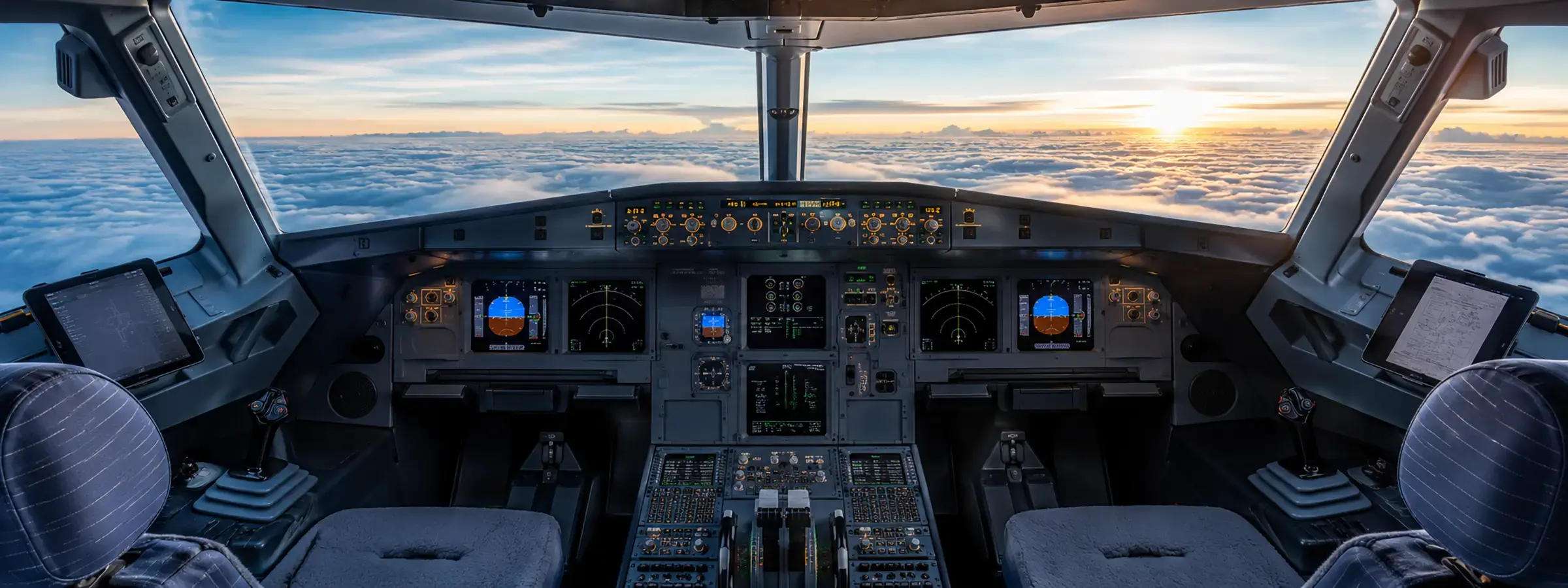
Precisely one of the initial problems was the conception of a faceted design. Science unveiled what could be a real problem regarding the project because the flight of an aircraft with this geometry would be unstablee. To counter this, one of the measures that was put in place was replace the manual flight control system with an electronic interface, known as Fly-by-wire. This contribution provided better control, increasing manoeuvrability, and consequently reduced instability by automatically correcting certain flight parameters. All of this translated into a considerable increase in the aircraft's safety.
The Lockheed F-117 Nighthawk From its inception, it was a complete unknown, even to the country that produced it. Very few within the USAF (United States Air Force) were aware of the existence of this aircraft. In fact, the pilots chosen to operate this plane were few, as in addition to other requirements and skills, they had to have a considerably high number of flight hours. This aircraft took to the skies from the early 80s, although it remained a complete unknown until the late 90s. Its most obvious characteristics were stealth flight and its distinctive black colour. Due to the drive to keep its technology a secret, the missions in which this aircraft participated were almost always nocturnal. It became an invisible object not just for radar, but also for the human eye. A true flying phantom.
Its main function was to infiltrate enemy lines undetected, with the aim of undermining the adversary's strategic defensive systems. It was primarily used to attack ground positions. It did not participate in aerial combat, as its invisible flight allowed it to avoid any altercations. In fact, only one of these aircraft was lost in conflict, during the Kosovo War. Despite this, its effectiveness was never doubted. It earned and grew the trust in its capabilities over time by emerging unscathed from the countless missions it participated in across different conflicts and punctually fulfilling the objectives set.
Although the project's success was undeniable, the USAF was forced to officially close it in 2008, citing its high maintenance costs and the need to update the fleet with new models, such as the F-22 or F-35. However, as happened in its early days, it is believed that they continue to operate in secret, as there are active units for test operations. Despite being a first-generation fighter, and being replaced by much more capable fifth and sixth-generation ones, its retirement from the American military has diminished the strategic air strike. And it is important to emphasise that last word, strategy. Since all of its missions had the goal of opening a path into enemy territory to safeguard the incursions of other army units.
However, to talk specifically about stealth aeronautical technology in the 21st century would be to talk about the past, since The vast majority of modern aircraft include tools to evade detection. However, becoming literally undetectable, as happened with the F-117 during the last decade of the 20th century, is believed not to be possible, due to the advancement of technology.
However, The concept of a stealth aircraft encompasses more concepts, new technologies, and greater overall anti-detection efficiency.. Indeed, work has continued on developing more stealthy aircraft, with the aim of increasing their strategic operability. This is the case with the new B-21 Raider, the USAF's latest crown jewel. Now, greater sophistication in aircraft detection must be taken into account, where not only radar waves would be important, but also other key aspects such as the heat and noise emitted by the engines, an area in which significant advances have been made.
As is customary, we must expect all of this to have a notable influence on the development of civil aeronautics. Much of the technology used in commercial aeroplanes originated in the military industry. In fact, one of the main pillars for the aeronautical industry for the next decade is the reduction of pollution, with noise also being a form of pollution and influencing our surroundings, in addition to the repeated reduction of the carbon footprint.
Like it or not, the development of military technology has so far led to advances in almost every type of industry, including aeronautics. More efficient and stealthy engines, stronger and lighter structures, more effective maintenance methods, and better-organised supply chains have been developed, among other improvements. A large part of the industry argues that this form of development is a faster route than the traditional one, especially given the budget allocated and the timescales involved to the need to obtain a response to a technological problem.