Our generation never thought it would face a crisis such as the one caused by the COVID-19. Not since the Second World War has the world experienced such a serious crisis, with the same origins and an impact from which barely a dozen countries around the world have been spared.
On the one hand, it is about a health crisis which, according to international experts, will last a minimum of two years (with periods of peak, latency and relapse) and, on the other hand, it is an economic crisis that will last longer or shorter depending on how we are able to prepare ourselves from today onwards. In reality, we are all aware that, in one way or another, the world will no longer be as it was before.
The scenario after the COVID-19 crisis is not encouraging, but we have the knowledge and experience to minimise the consequences.
The aviation sector has not been spared this coronavirus crisis and will not be spared its consequences. It is in our hands, however, to contain the damage and the ability to be prepared for the quickest and most effective recovery possible.
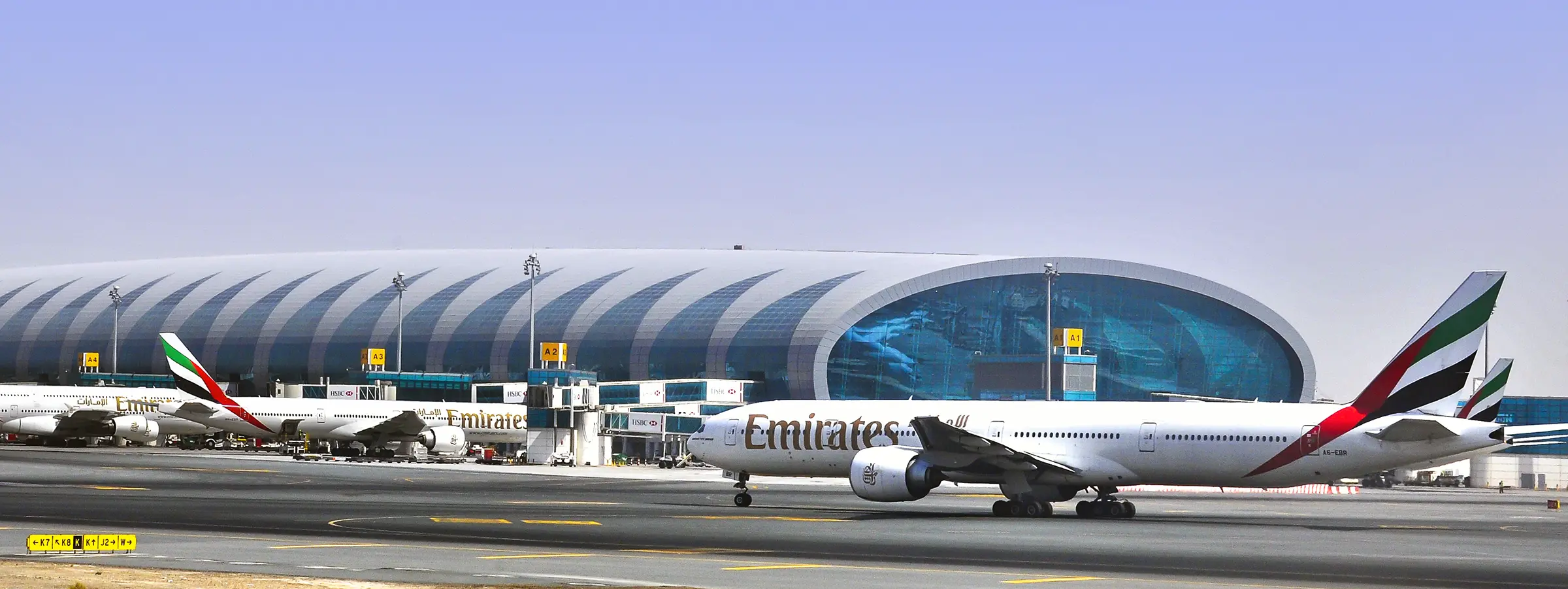
It all went in a chain. With evidence of the danger of a pandemic in the making, countries began to restrict the movement of people. Next, some borders were closed. The next step was the confinement of populations in several dozen countries and the closure of airports. Their activity was halted except for emergency flights, the transport of supplies or the occasional repatriation of citizens. The entire ancillary service sector linked to airports followed the same pattern. Airlines parked their fleets. The strategic renovation or expansion plans of airlines, operators and airport managers were put on hold.
At the same time, industries were forced to shut down by legal requirements in some countries where there was a generalised policy of combating contagion. It was also necessary to put in place the necessary measures to allow operators to work safely under completely new circumstances. The supply chain, for its part, simply followed in the footsteps of the original equipment manufacturers (OEMs), Original Equipment Manufacturer).
This escalation of events alone has meant that an impact of tens of billions of euros for the aeronautics sector.
None of the budgets or forecasts made by companies for the 2020 financial year could have imagined this scenario. A rethink is needed. And where exactly are we? What is ahead of us?
Let us start with air transport. The big difficulty for the day after COVID-19 is that the pace of recovery of this sector will not be self-dependent.. The pace of improvement will be determined by developments in the different regions of the world that induce people to move around. In the field of tourism, for example, it is not clear which destinations around the world will in the short term allow leisure activity as before the crisis, without restrictions or limitations that could condition the volume of travellers. No doubt about it, many regions will have as a priority the protection of their own population. and this will affect the type of activities, concentrations of people and many other aspects of tourist enjoyment. What most experts do agree on is that domestic tourism will start first and that it will be months before international destinations start to recover.
For its part, business travel will be reduced in the future and will not return to past figures. The world has changed. The health insecurity that will result from the movement of people in closed spaces and the restrictions that will be put in place in many destination countries will be constraints that will have to be taken into account. In addition, the experience gained from the forced introduction into companies of the teleworkwhich most of them have passed with flying colours and with distinction. Few expected that the productivity of their companies would not only not decrease, but sometimes even increase. The possibility of conducting meetings of all kinds remotely will now always be the first option to be considered. Even seminars, congresses or presentations have in this period revealed new possibilities for remote meetings. Consequently, business passengers will decrease compared to before COVID-19.
The return to normality will be slow. Airlines overcoming the crisis they will not initially schedule the same capacities and frequencies of flights than before the crisis because there will be no demand to justify them, especially on international flights.
As a consequence of the above, it is predictable that there will be an oversupply of aircraft on the market, As a result, airline demand for the lease, rental or purchase of new aircraft will be reduced.
In relation to the aeronautical manufacturing industry, The forecasts presented in 2014 by the two major manufacturers in the sector, Airbus and Boeing, which covered a period of 25 years and which, until February of this year, were being scrupulously fulfilled, have remained a dead letter.
Aircraft manufacturers have already announced a reduction in the production rate of some of their models to accommodate the adjustment in demand.
Airbus used the announcement of its sales and delivery figures for the first quarter of 2020 to announce its decision to reduce the production rate by about 30 % of some of its aircraft in view of the new forecasts due to the COVID-19 pandemic crisis. Some strategic decisions, such as the conversion of the A380 assembly line to the A321neo in Toulouse, have also been put on hold for the time being.
The case of Boeing is similar. It has already announced a reduction in its production and several lines of work to address the future of the company in the new scenario. Among the measures implemented is the incentivisation of voluntary redundancies. In its case, the beginning of 2020 has been weighed down by the events surrounding the 737MAX model, which, to make matters worse, looked set to recover from May onwards.
Many motivational talks refer to a speech given by John F. Kennedy in Indianapolis in 1959, in which he literally said: «.....«In the Chinese language, the word «crisis» is composed of two characters, one representing danger and the other, opportunity».» (In Chinese, the word «crisis» is composed of two characters: one means danger and the other means opportunity). Although some Chinese philologists dismiss this literal translation, it is a good starting point for those who want to convey that hard times are a good starting point for preparation and improvement.
In the aeronautical context, could we talk about something like this after the extraordinary crisis we are experiencing due to COVID-19? Possibly it would be more accurate to see it from another point of view, as is the necessary adaptation of the sector to an unprecedented scenario.
The health security will be the primary element in the new passenger experience.. This will affect the entire chain, from aircraft design to the configuration of the offer at the destination. The work of adapting to this new situation will affect infrastructures, space design, mobility, services, processes, procedures, training, management... There is a lot of work ahead.
However, we can do this purely out of a subsistence need for the sector or, ideally, with a view to the opportunity We have at our disposal to fully renew what we already have, which is no mean feat.