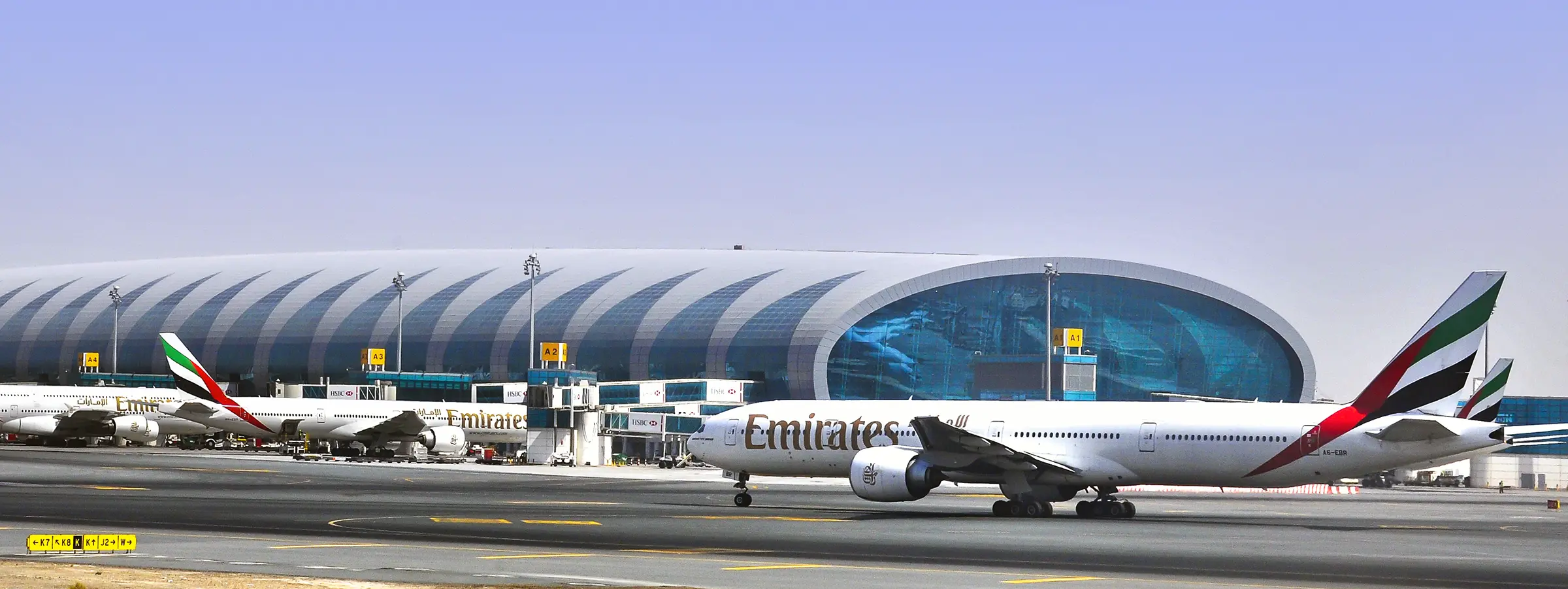
Dozens of kilometres separated the traveller from his final destination in the distant Middle Ages and he could already glimpse on the horizon the imposing cathedral mass with its high towers and sharp spires silhouetted against the sky. Those medieval buildings did not owe their existence solely and exclusively to religious worship. Beyond that first function, they were promoted as landmarks of contemporary modernity, symbols of institutional and territorial power and a letter of introduction and farewell to the outsider. All this in a continuous and fierce competition that in turn favoured creativity and technique in buildings throughout Europe.
Apart from their usual functions, cathedrals and airports share the mission of having an impact on those who visit them.
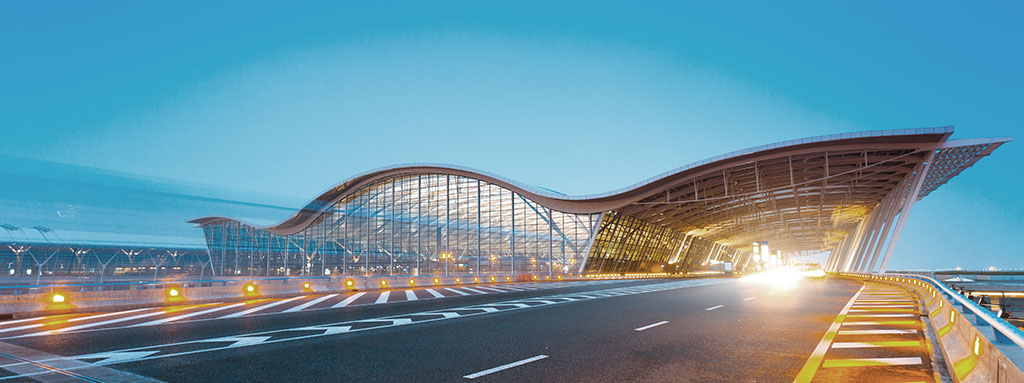
The era of cathedrals is over and in the 21st century, new airport terminals seem to have taken the baton as promotional, iconic and representative elements of the place that houses it.
Gone are the days of the first airports where a small passenger building was supposed to be sufficient for customer service, baggage check-in or flight information.
The huge complexity that airport infrastructures have achieved and their strong presence in the territory have placed airports as the most important one of the main instruments for image and promotion of the city, country or even the political regime that protects them. Not surprisingly, it is the first and last thing anyone visiting the area will see and can be a key element in the traveller's impression of the place.
Aware of all this, and now immersed in a planetary scale of competition, the major international airports seem to have revived the old competition between cathedrals in order to gain a place in this globalised world.
Of course, in the design of new airports, it is necessary to start from a functional resolution, with the clear idea of providing and to cover all needs that the sector and air traffic require. This is becoming increasingly complex and demanding. However, in addition to this aspect, we have to add the condition of powerful iconic element which is already inherent to this type of infrastructure.
Governments around the world are encouraging major architectural firms to participate in the planning and design of new facilities capable of making a strong impact on the traveller and achieving international repercussions. One only has to look at the latest news to see that the international airport construction and design scene is booming and developing.
The prestigious architect Sir Norman Foster, who has established himself as an expert in airport design, is currently the architect of two of the largest airports under construction in the world: Beijing and the new CDMX international airport in Mexico City. The latter is the largest infrastructure project under construction in Latin America.
In both cases to the characteristic and spectacular design High Tech The architect's distinguishing feature is the allusions in his design to national symbols such as the Chinese dragon and the eagle and snake respectively.
Istanbul boasts what will be the world's largest airport under one roof: it covers almost one million square metres and has been conceived as the great gateway to modern Turkey. Quite a statement of intent.
Notable examples are size and international projection, but obviously there are many airport projects in international destinations where architecture is fully involved in the configuration of these large containers, experimenting and implementing new designs, structural typologies, envelopes, control of natural light, sustainability, mobility, interiors...
Terminals for generate in users and visitors a quasi-mystical impact and similar to what those who entered the impressive cathedral vaults under the light sifted by stained glass windows could experience in the past. In both cases, cathedrals and airports, their mission was and is to raise us to the heavens.