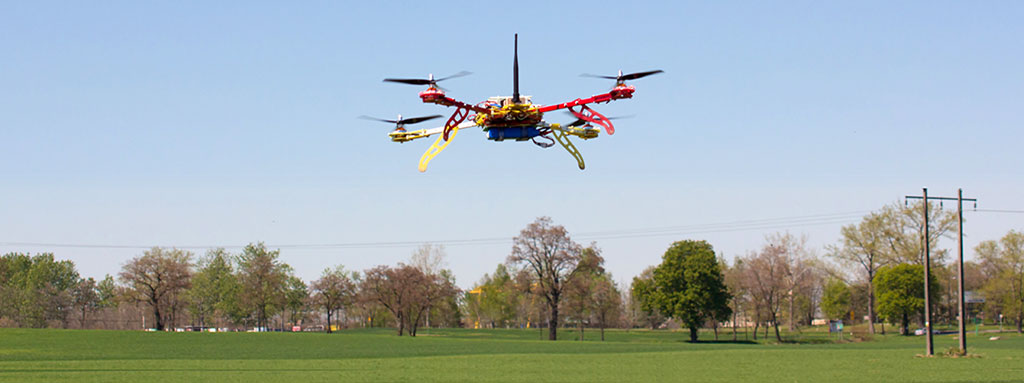
In a previous post on this same blog (“Everyday applications of UAS”), the urgent need to establish specific regulations applicable to unmanned aerial systems «drones» (as the press insists on calling them) and the aerial activities carried out by them. The situation of legal loophole which surrounds this technologically advanced sector in many countries, curtail its development in the civil sphere, preventing them from exploiting their large economic potential and reducing these states' competitiveness against those that have already addressed their regulation.
On 4 July, the Spanish government approved a procedure for authorising operations carried out by RPAS (the English acronym for «Remotely Piloted Aircraft System»), which is included in Royal Decree-Law 8/2014. This procedure forms part of what is known as Urgent Measures Plan for Growth, Competitiveness and Efficiency, a package of urgent legislative measures aimed at fostering competitiveness, improving access to finance and promoting employment in the country. Spain thus joins a select group of countries (no more than 15 and mostly European) which have specific laws For the regulation of this activity.
In France, two years after the regulation of UAS activity, there are over 600 companies operating.
This is by no means a definitive regulation. The European Union has been working on a common regulatory framework for several years. which is expected to see the light in 2016, and which will integrate these aircraft into European airspace. However, to ensure a progressive transition and pending the development of regulatory provisions, operations of remotely piloted civil aircraft in Spain are hereby authorised, with the necessary levels of safety, under the provisions set out herein.
This temporary measure, which applies with immediate effect, establishes the conditions in which the activity can be developed, the Mandatory technical specifications for aircraft and other aspects such as Pilot training and licence validity. It exclusively addresses the operation of remotely piloted civilian aircraft. Under 150 kg of maximum take-off mass (or over 150 Kg and intended for firefighting and search and rescue activities).
According to the text, aerial activities with RPAS will be permitted, under certain restrictions, for the carrying out of Technical or scientific work and specialized operations, during the day and in conditions of visibility., always operating outside urban centres or population groups, in uncontrolled airspace. In any case, The person responsible for the aircraft and its operation shall be the operator. which, in addition to complying with this provision, shall comply with the rest of the applicable regulations relating to the use of the radio spectrum, data protection or the taking of aerial images.
Operating restrictions are established based on the maximum take-off mass (MTOW) of the aircraft. A distinction is made between aircraft weighing more than 25 kg, between 2 kg and 25 kg, and less than 2 kg. Aircraft weighing more than 25 kg must be registered in the Aircraft Registration Register and have Certificate of Airworthiness, which will establish the conditions and limitations for its operation. Only aircraft weighing less than 2 kg will be permitted to fly beyond the pilot's line of sight, provided they remain within the range of the radio control station. In either of these cases, Aircraft identification will be mandatory during the development of operations, by means of a plate fixed to its structure with the operator company's details.
Regarding pilots, according to the Royal Decree, for operations with aircraft weighing less than 25 kg MTOW, it will be sufficient to have a Certificate for RPAS piloting issued by an approved training organisation. For aircraft with a higher MTOW, at least the theoretical part of any pilot licence, including ultralight ones, will be required. Likewise, knowledge of the aircraft, its systems and piloting must be demonstrated through a certificate issued by the operator or manufacturer.
All RPAS activities must be reported to the AESA, which in the case of aircraft with MTOW above 25 kg must issue express authorisation for the operation. Information must be provided on the operator, aircraft, pilots, and operation, along with supporting documentation proving that the established requirements are met. Among these requirements are, for example, having an insurance policy (or other financial guarantee covering civil liability), documentation relating to the aircraft's characterisation and the operations manual, as well as having established a flight testing and aircraft maintenance programme. Only in situations of serious risk or catastrophe, for the protection and rescue of people and property, may authorised operators, at the request of the responsible authorities, carry out flights that do not comply with these conditions and limitations.
There is still a way to go. The operations permitted by the new law are still limited and there is some uncertainty regarding their application. What is beyond doubt is that this provision removes the regulatory barriers that were hindering the development of the sector in Spain. From AERPAS itself (Spanish Association of Remotely Piloted Aircraft Systems) they are optimistic, hoping that this first step will lead to Climate of stability and confidence, in which can be specified Investment opportunities immediately. With precedents such as France, where two years after the regulation of the activity there are more than 600 companies operating, we can at least expect that the regulatory process that has just begun will bring about the definitive take-off of this sector and the beginning of a significant transformation in the Spanish aeronautical industry.