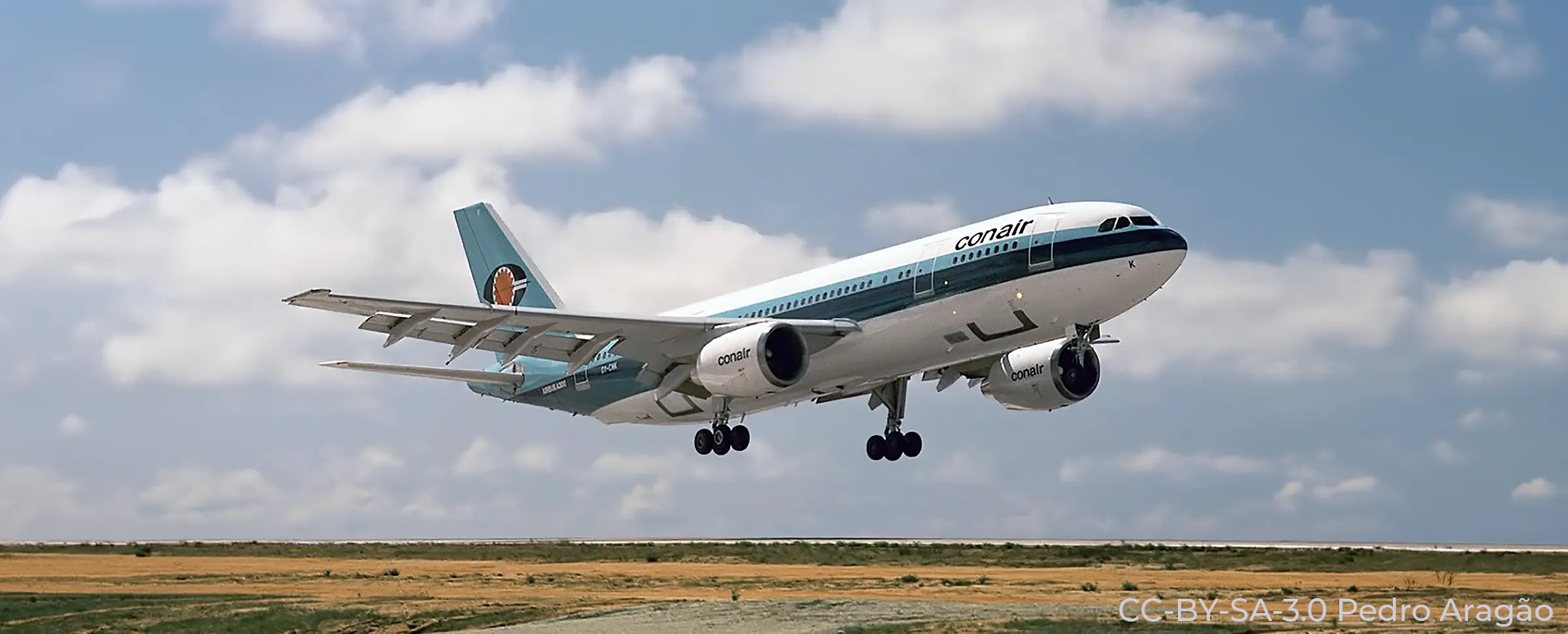
The aviation It is, without a doubt, the most decisive technological advance of the 20th century. It not only completely changed air transport, but also It changed our habits and our way of perceiving the world.
In the early part of that century, and despite the fact that aviation experienced exponential growth during those early years, an airport was nothing more than a small runway next to which was a hangar where crew members, operators and the passenger himself lived together. Over the years, the development of more established commercial aviation brought with it a More complicated infrastructure And the emergence of the first passenger stations, which were located alongside increasingly larger and more complete airfields. These early passenger stations, designed and built by architects, responded exclusively to traditional criteria of conception, execution, and maintenance. The entire burden of experience and tradition was put at the service of this exciting and emerging world.
Engineering and architecture, an absolutely indispensable symbiosis for conceiving what today constitutes a terminal building.
However, as is the case in all areas of human development, Progress is not exempt from certain complexity.. Complexity at the technical, normative, sociological, etc… level… Commercial aviation began to become sufficiently massive that its regulation became essential. This is how aeronautical engineering leaps from the factories to the airports, designing, calculating, and ultimately controlling every single element and process that took place there. And the passenger stations, terminals already, were not going to be an exception.
Thus, during the 1960s and 1970s, passenger terminals were designed with strictly engineering criteria. So many embarking doors providing service to so many parking spaces that housed aircraft that would transport thousands of passengers. That’s all. Done once, done all. The terminal in Málaga, for example, was identical to those in Gerona, Alicante, or Palma. And what about the auxiliary buildings such as control towers, hangars, and facilities buildings, etc., whose design criteria followed exactly the same pattern. In many cases, as incredible as it may seem, this still remains the case today.
With the exception of a few examples like those of Eero Saarinen In New York JFK (1962) or Washington Dulles (1966), airport architecture did not exist as such.
The convergence of both disciplines In this environment, it wouldn't happen on a widespread basis until well into the 80s. As a matter of fact, Sir Norman Foster, a master of industrial architecture and high-tech, He landed in the world of airports with the revolutionary Stansted terminal. It is there where, hand in hand with the aeronautical engineers, who provided all the necessary data for the proper sizing of the building, and through the technique of leitmotiv From his architecture, Foster recovered the elements of the more traditional mode of architectural practice, By placing them at the service of this type of buildings and showing us the path that has reached us to this day: an absolutely indispensable symbiosis to conceive what today constitutes a terminal building. Sometimes with glorious results and other times not so fortunate.