Some countries are starting to resume operating regular flights Within the so-called “new normal”. One of these countries is India. This case has a series of peculiarities that lead to the need to open it earlier than in other places.
Large territories, such as India, need air traffic to keep their society developing. Their experience will be the starting point for many other countries.
It is a huge country. India has an area of about 3.28 million square kilometers, while the entire European Union reaches almost 4.5 million, although it should be remembered that in this case it is a group of 27 countries. These enormous areas They need air traffic to be connected. India is also a country with a huge population, with about 1.2 billion inhabitants, while the European Union does not reach 450 million. Moreover, the official impact of COVID-19 in this Asian country is relatively low compared to other places. These circumstances have led to the decision to open its airports to domestic flights, for which the Airports Authority of India (AAI) has published the new SOP (Standard Operating Procedure). Among all the measures adopted, we highlight the following:
- Passengers must be subjected to a thermal examination and they must have the Official tracking application from the government on their mobile devices (the app is called Aarogya Setu (see), except for children under 14 years of age. If they do not show the «green» color or do not have the government contact tracing app, they will not be allowed to board the plane.
- Passengers must arrive at the airport two hours before departure.
- Passengers will be able to enter the terminal building if their flights depart within the next four hours.
- All passengers must carry masks and gloves.
- For physical distancing in waiting areas with seats, Some of the chairs will be locked up. with tapes or marks.
- All staff must have hand sanitizers and personal protective equipment as indicated by the Ministry of the Interior.
- Carry-on luggage carts will not be allowed., Trolleys, except in special cases, must be disinfected.
- Airport operators must provide a service for disinfecting all luggage before entering the terminal.
- All the terminal's entrance doors will be opened to avoid crowds at specific points.
- They will be placed Signs of social distancing or stickers on the entrance doors and check-in queues, security or boarding areas.
- They will be placed at the entrances felpudos with clay to disinfect the shoes.
- The counters will carry curtains of methacrylate or face screens for personnel who have interaction with passengers.
- Newspapers or magazines will not be provided throughout the terminal.
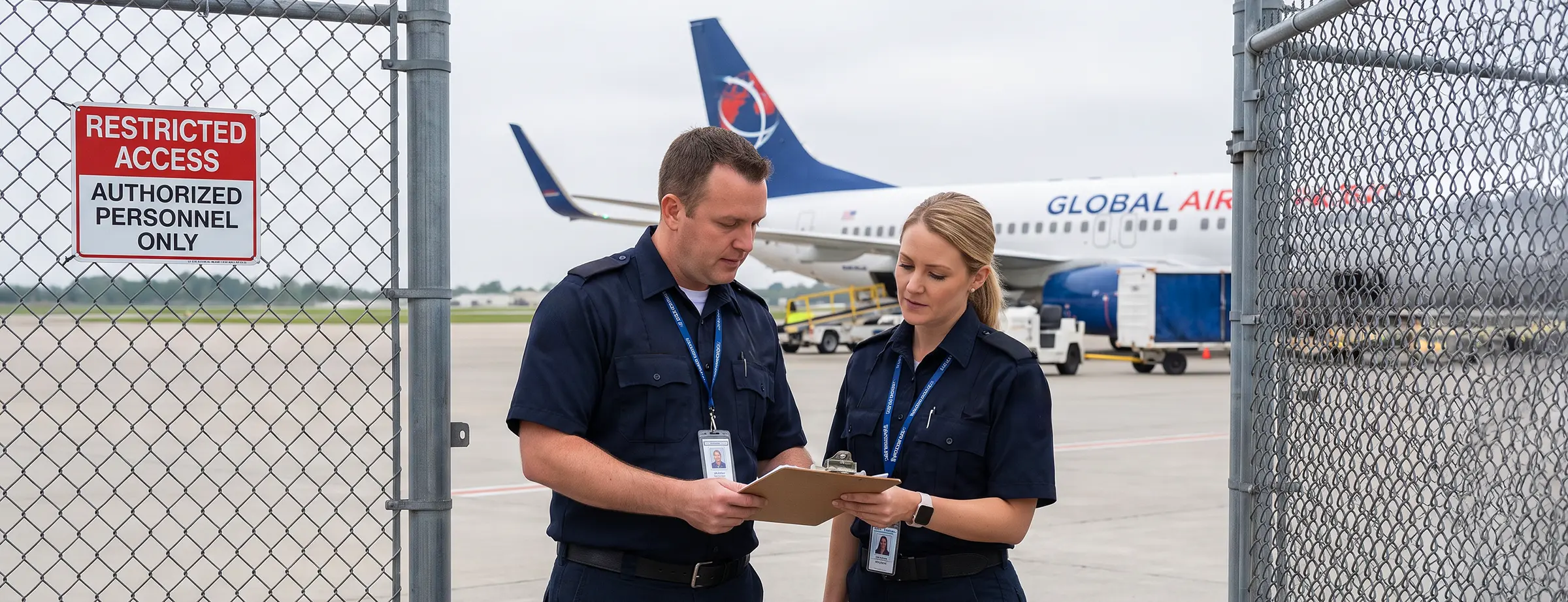
- Employees with a high fever, difficulty breathing, or a cough will not be allowed to enter the airport.
- When the flights land, passengers must exit sequentially by flight segments.
These measures are sensible and generally correct, as well Extrapolable to other airports and countries. The temperature control procedure, although proven to be of low utility, will always be able to allow the detection of some obvious cases of sick people. This procedure, combined with marking the distances in all the queues, will probably be one of the most widely applied, just as it will be the case with the blocking and separation of seats in the waiting areas. Protective screens and disinfectant mats will also be common.
The following set of measures may be more complex and are related to: baggage management. On the one hand, the ban on carrying carry-on luggage of the trolley type and on the other hand the ban on disinfecting all luggage stored in the hold. This disinfection will most likely be carried out manually by handling staff. In India, a country with a large pool of available labor, this is not a problem, but in other areas it may be more complex or infeasible, so solutions must be found to automate it. Otherwise, this will result in an increase in the price of fees or tickets, which will further complicate the operation.
Finally, let's talk about the first point on the previous list. obligation to carry a mobile phone to everyone who wants to fly and, besides, require the installation of a tracking and monitoring application It clashes with the culture of freedoms of the vast majority of countries in the world. This is an application that can additionally detect if we have been near people confirmed as infected and will give an alarm when consulted by the authorities, preventing us from flying. This alleged interference in people’s freedom combined with the fact that many countries do not have either that technology or the ability to analyze the data and generate the appropriate alarms, make its implementation very difficult. However, if the experience in India proves that this type of applications are an effective solution for controlling infections, we would have to start thinking about more countries developing them and forcing them to use them.
In conclusion, the example of India in adopting these measures allows us to think that in the European Union and in comparable countries or regions in size and population, They could take the same path soon. To do this, they must look in the mirror of those who are returning to normalcy, the new normal, to follow in their footsteps (or not) and learn from their successes and mistakes.