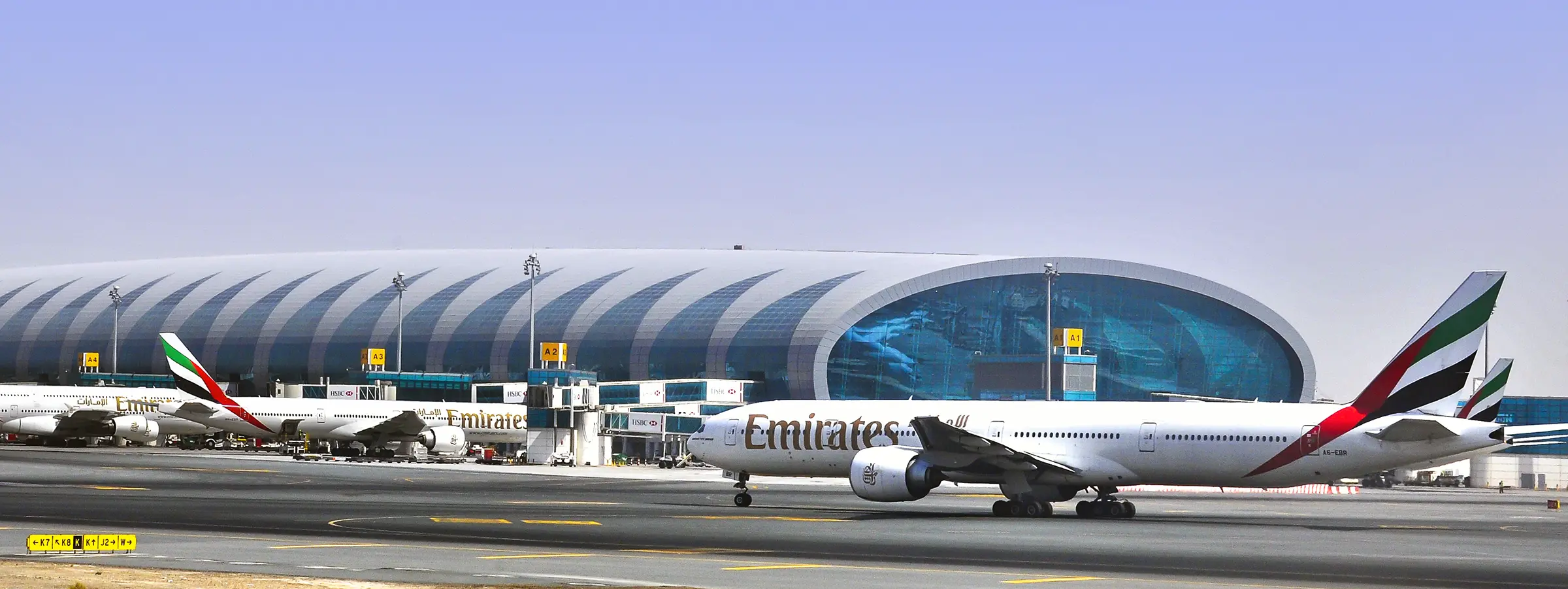
One of the most interesting things to write about on a blog is statistics. Statistics clearly show that people don't read what they don't like. Taking responsibility for a problem is unpleasant, and as a consequence, I imagine this article won't be too popular with the airline industry audience.
The issue of the environmental impact of air transport is a complex one. Air transport brings substantial socio-economic benefits, and therefore, causes politicians, industry, and civil society to look the other way when faced with an uncomfortable truth.
Air pollution from aviation activity is on the rise.
In economics, externalities are costs or benefits that affect a third party not involved in the economic transaction. Air pollution is one such example. Unlike noise pollution, which is managed more or less at a local level, the geographical scale of air pollution extends beyond any jurisdiction. There is no national, regional, or local legislation that prevents air pollutants generated on the other side of the world from arriving.
Air transport releases millions of tonnes of all kinds of gases into the atmosphere annually. Carbon dioxide, nitrogen oxides, sulphur dioxide, methane, heavy metals, particulate matter and other cloudy chemical components cross any international border uncontrollably. Since the atmosphere allows for rapid and widespread diffusion of pollutants, the effect on the environment is not rapid and direct. It is rather long-term and cumulative. In other words, its effects go unnoticed for years until it is too late.
It would be unfair to accuse the Airline Industry of not studying this issue. New technologies are designed every year. The problem of reducing emissions at source is being addressed. Air pollutant emissions, per passenger-kilometre, have been considerably reduced thanks to more efficient and cleaner engines. On the positive side, emissions of the most harmful pollutants, despite an increase in the number of aircraft, have decreased. But the fact is that carbon dioxide emissions have increased. Demand for air transport is growing, driven – as might be expected – by fuel efficiency itself. Flying is cheaper than ever. As a consequence, net emissions generated by the aviation industry are still on the rise.
Airlines, the main source of emissions, reap the benefits of the business but rarely bear the environmental costs. The costs of cleaning up the environment are not included in the ticket price. I must admit that quantifying these costs is almost impossible. Even if it were possible, reaching a global agreement would be the stuff of science fiction. As a consequence of all this, the environmental mess generated by passengers flies free.
Those who think a preventative charge against environmental impact would strangle air transport are mistaken. The inhabitants of medieval London would throw all sorts of rubbish and the contents of their chamber pots into the street daily. Today, regulations are very strict, and yet London's economy is more prosperous than ever.