The pandemic caused by COVID-19 has led to a drastic decline in the number of passengers on airplanes. Although flying is safe, people's mobility has been affected since the beginning of this health crisis.
While in 2019 more than 4.5 billion passengers flew and it was expected to exceed 4.7 billion in 2020, the reality is that the closure of borders in the first weeks of the pandemic caused planes to stay grounded and passengers to be confined to their homes.
International travel has decreased by 92% compared to 2019.
The aviation sector is one of the most affected by the pandemic. Passenger confidence is key to recovering a sector that depends on a good part of the global economy.
Just over a year after the global downturn due to the closure of borders connectivity is starting to recover. However, this recovery is being very slow, mainly due to the quarantine measures that still exist in many countries and the impossibility of planning a trip due to the constant changes in the measures against COVID-19.
The importance of the aviation sector for recovering the global economy is crucial. 65.5 million jobs depend on the aviation industry In addition to being crucial for tourism, a sector that accounts for 10.4% of all global economic activity.
To achieve economic recovery it is essential that Let's fly again And to do this, we must work in two directions:
In the short term, Unify measures in all countries to restore cross-border freedom. Considering this objective, international organizations, IATA, ICAO or Eurocontrol, They propose the implementation of test all passengers before flying. This measure will allow governments to open their borders without resorting to restrictions and quarantines while restoring the confidence that passengers need to travel again.
However, vaccination is presented as the solution to the pandemic, provided that the number of people vaccinated is sufficient to create herd immunity.
In the more specific context of air transport, in order to regain passenger confidence, work is being carried out both at the airports and on the aircraft.
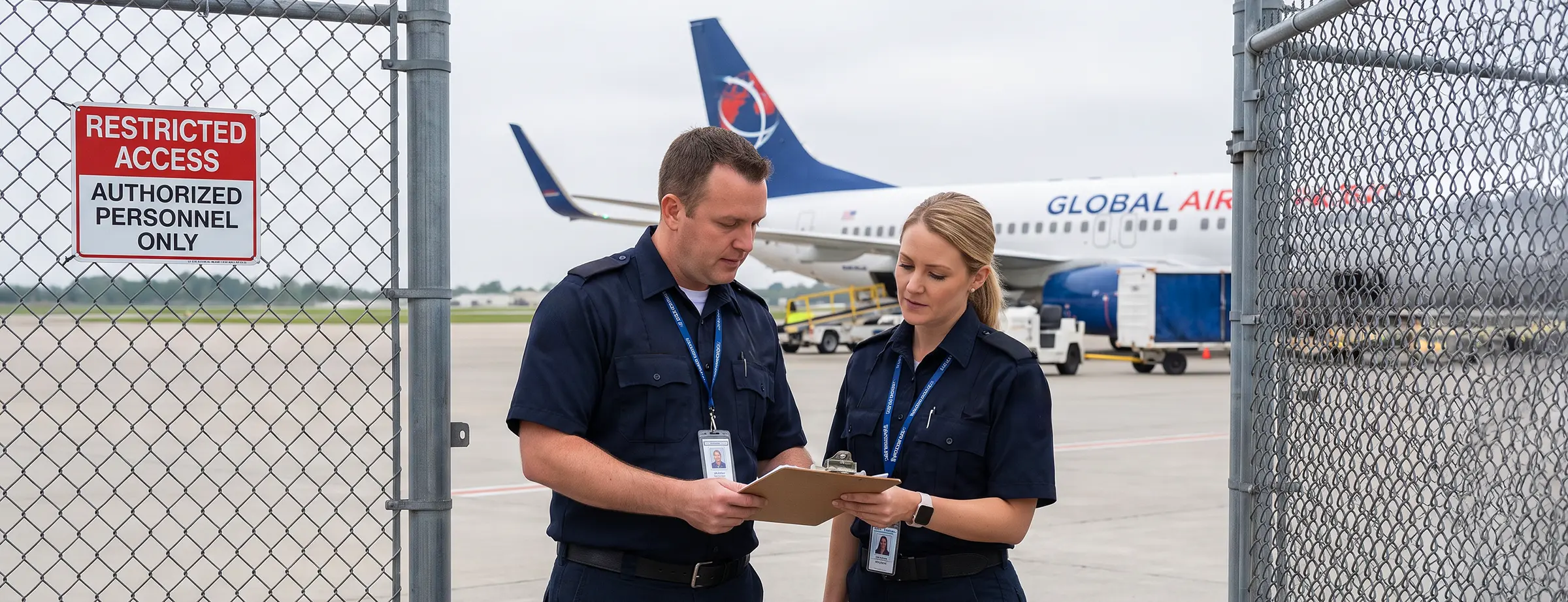
To this end, special procedures are being implemented at the airports., by increasing the distances between passengers and by increasing self-service processes and systems touchless, solutions aimed at minimizing the possibility of contagion among passengers.
In addition, among the new procedures is the possibility of establishing the control of health passports. Although its format is still subject to debate, health passports will represent an improvement for passengers, airports, and airlines. On the one hand, passengers will be informed of the tests, vaccines, or measures they need before traveling. Additionally, they will be able to share the results of their tests and vaccinations in a secure manner, protecting their privacy.
For airports, it will simplify the process by receiving test results and vaccines in a single format, streamlining their control and reducing potential for falsification.
For airlines, by simplifying the process of providing information to passengers and verifying that they comply with the requirements.
In the aircraft, the simulations carried out by the manufacturers Airbus, Boeing and Embraer add empirical evidence to what we already imagined from the statistics, and it is the low probability of contagion when traveling by plane.
This is confirmed by the figures published by the International Air Transport Association (IATA), which show the low incidence of COVID transmission on board aircraft. Since the beginning of 2020, one case is associated with every 27 million passengers. Even considering that 90% of cases are not reported in the tracking systems, there will still be one case for every 2.7 million passengers. In both cases, the figures are extremely reassuring. Moreover, most of the reported cases occurred before the use of masks on board was imposed.
The reason for this low probability of infection is based on a “layered” protection system in which each measure builds on the previous one to achieve total protection.
To do this, the following is considered on aircraft:
- The use of High-efficiency filters (HEPA, High-Efficiency Particulate Air), which traps bacteria and viruses with an efficiency of 99.9%, and prevents the cabin ventilation system from allowing the circulation of microbes.
- The limitation of movement of passengers in the cabin seeking to reduce interaction between passengers.
- The seat configuration, This creates a natural barrier that prevents air from circulating between the rows of seats.
- The air distribution It is usually performed from the ceiling to the floor, reducing the airflow to the front and back to a minimum.
- The air in an aircraft It is recycled between 20 and 30 times per hour, This is a number even higher than the air recycling that occurs in operating rooms.
- In addition, following the philosophy of “layers of protection”, the Mandatory use of the mask It adds an additional and significant level of protection, so that, despite the proximity factor in the cabin, the risk of contagion is lower compared to other interior spaces.
Given all this, adding special procedures at airports, sanitary passports, tests at origin, and security conditions inside the aircraft, we can only think of to fly again maintaining the highest priority that exists in the aviation world, which is safety.
Related posts: «COVID19 and the aviation sector» (March/2020), «The aviation sector in the wake of the coronavirus» (April/2020).