When we look back, we are surprised by many of the changes we have experienced in airports over the slightly more than a century of commercial aviation. It is no longer just about aircraft models, or the design and size of terminals, but about other aspects directly related to passengers.
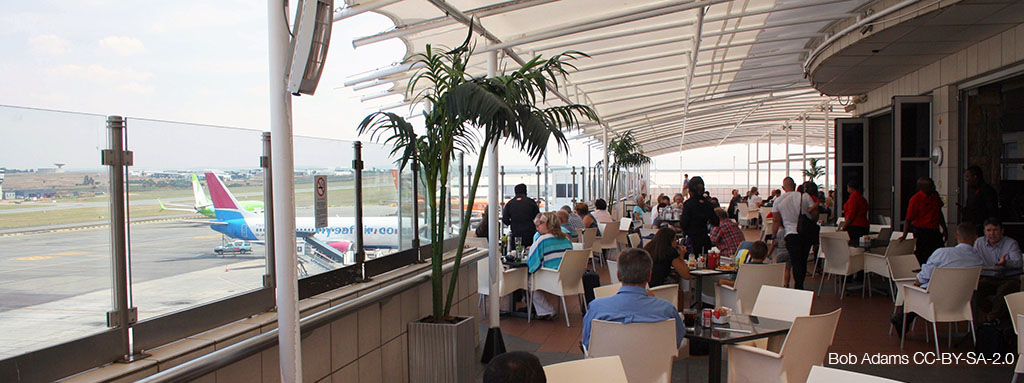
A gourmet dining experience is taking on an increasingly prominent role in the passenger experience.
Until almost the end of the 20th century, aviation could be considered elitist as it was an expensive and exclusive means of transport. Currently, it remains exclusive for those who wish to pay for a first-class ticket, but already everyone has access to the plane for very affordable prices. This has translated, particularly in the last twenty years, into a sustained increase of the number of passengers using airports. It doesn't look like it's going to change, but rather the opposite.
Passengers also spend more time there. The security measures introduced in recent years have necessitated earlier boarding times and, consequently, a longer stay at the terminal. And what has been the most direct consequence? Undoubtedly, the increase in leisure, shopping, and catering services offered at airports in order to improve the passenger experience.
It looks like a logical equation from a commercial point of view: more passengers, for longer, and in a limited space.
Restoration has always been a constant in terminals, but for the reasons outlined, airport managers have seen a opportunity to capture not only the traveller who is content with a burger and a soft drink, but also the one who seeks a more glamorous gastronomic experience. They have realised that a good number of passengers want good food and are willing to pay for it. Let's look at some examples of what we already have at airports:
In the Orlando Airport (MCO), in Florida, we can find the Cask&Larder restaurant, which represented a real revolution by joining the “farm-to-terminal” concept. Following its opening, the airport showed an increase of 24% in catering services, which far exceeded the 7% increase in passenger traffic. Its secret is to offer fresh, quality products, as well as the best dishes from regional cuisine.
In the same airport, you'll be able to find other “out-of-the-ordinary” restaurants, like Bahama Breeze, MCO Market or Taco Loco. This is precisely what passengers are looking for these days.
In the case of Hartsfield-Jackson Airport In Atlanta, there's the curious case of “One Flew South,” a luxurious dining experience that champions collaboration with local farmers and producers. It also offers great takeaway dishes.
In the El Prat-Barcelona Airport At Barcelona–El Prat Airport (BCN) is the restaurant “Porta Caig”, which was chosen by the Daily Mail as the best airport restaurant in the world thanks to an extraordinary selection of updated and reinvented dishes of contemporary Catalan regional cuisine by the prestigious chef Carles Caig.
Without a doubt, one of the attractions that Terminal 5 has is Heathrow Airport (LHR), in London, is the restaurant “Plane Food”, run by the famous international chef Gordon Ramsay. As this is one of the airports in the world with the highest international traffic, the restaurant opted for a selection of quality European cuisine in a modernist design setting.
Chef Dani García has the restaurant “DeliBar” in the Málaga-Costa del Sol Airport (AGP), where it stands out for something as typical and in demand as Andalusian tapas, to which it gives a touch of modern cuisine.
In the aToronto Pearson Airport (YYZ), in Canada, stands out with “Twist,” by Canadian chef Roger Mooking, which offers quality North American comfort food. There are other restaurants at this very airport where regional cuisine may not be their strong suit, but they are among the most prestigious in the world. These are Susur Lee's Asian Kitchen and Trattoria Boccone, by the renowned chef Massimo Capra.
The Munich Airport (MUC) has recently been awarded for having the best restaurants, but if it stands out for something special, it is for being the only one with a brewery, called “Airbräu”, with its corresponding restaurant, where regional dishes can be enjoyed. There is no doubt that Bavarian beer is a regional product of fame and prestige.
In the Hong Kong International Airport (HKG), highlights “Hung's Delicacies”, a high-quality establishment where regional cuisine takes centre stage and where marinated meats are a benchmark.
In this selection, we cannot forget the restaurant “Top Air”, in the Stuttgart Airport (STU), one of the first to launch this trend, where chef Marco Akuzun offers a selection of European gourmet dishes predominantly featuring fine meats.
The list is much longer and more airports are joining the trend of having reference gastronomic spaces in their facilities every day.
Fast food, meanwhile, has continued to attract followers, and as a result, chains continue to operate these types of businesses in airports. However, a high percentage of passengers specifically seek a gourmet experience with typical and authentic local foods from the places they are travelling to. And airport managers are aware of this.
Enjoy your meal!