Diseño de infraestructuras eficientes, seguras y orientadas a la operación del aeropuerto.
En AERTEC desarrollamos diseños de anteproyectos, proyectos básicos y proyectos constructivos de infraestructuras lado aire y lado tierra a partir de una visión integrada que incorpora criterios aeronáuticos, operativos y de sostenibilidad. Este enfoque nos permite definir soluciones alineadas con los estándares internacionales y adaptadas a la realidad operativa del aeropuerto, garantizando eficiencia, seguridad y un desempeño óptimo a lo largo de todo su ciclo de vida.
Nuestro trabajo parte siempre de la operación aeroportuaria, asegurando que cada solución responda a las necesidades reales de explotación, facilite la integración de sistemas y reduzca riesgos en las fases posteriores de construcción y puesta en servicio.
Nuestros servicios de planificación
Infraestructuras lado aire
Especialización en el diseño y optimización del campo de vuelo, garantizando seguridad operacional y eficiencia en los movimientos de aeronaves.
Diseño de pistas
Diseño de calles de rodaje
Diseño de plataformas de estacionamiento y sistemas asociados
Visual aid design: ground lighting and signalling
Design of instrumental aids: radio equipment
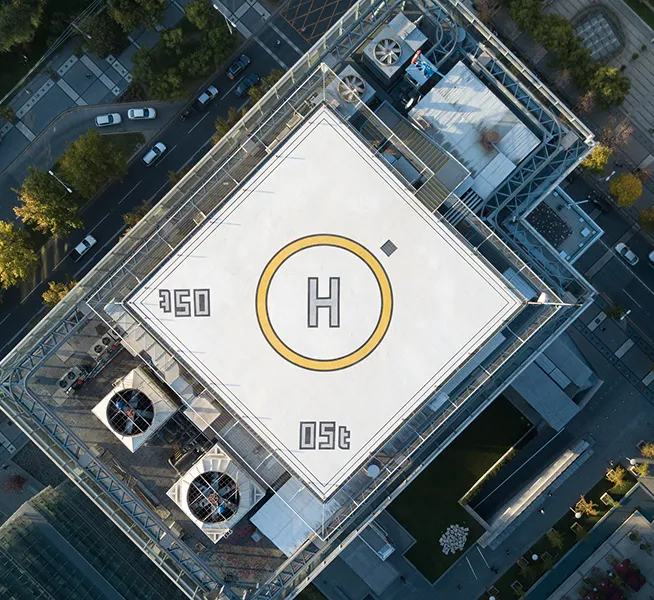
Diseño y tramitación de helipuertos y helisuperficies
Diseño de vertipuertos (link con la sección de AAM)
Área terminal
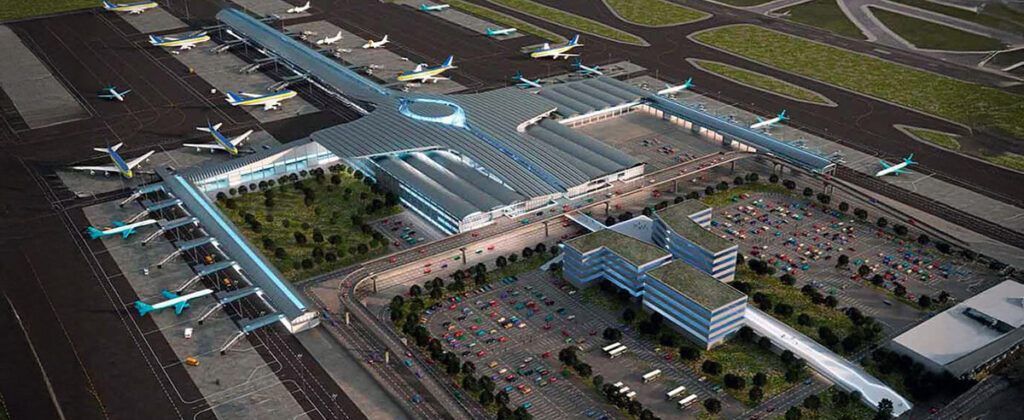
Diseñamos terminales orientadas a la eficiencia operativa y a la mejora de la experiencia del pasajero.
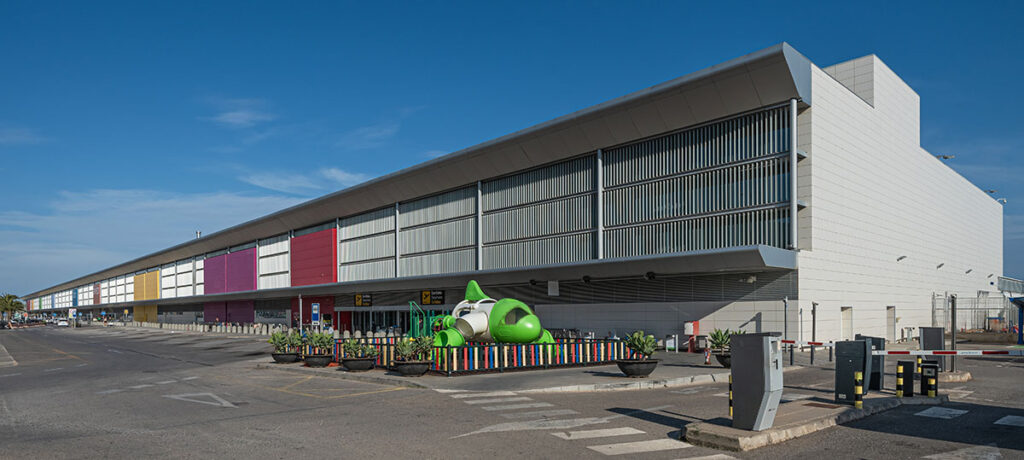
Diseño de terminales de pasajeros
Diseño de terminales VIP
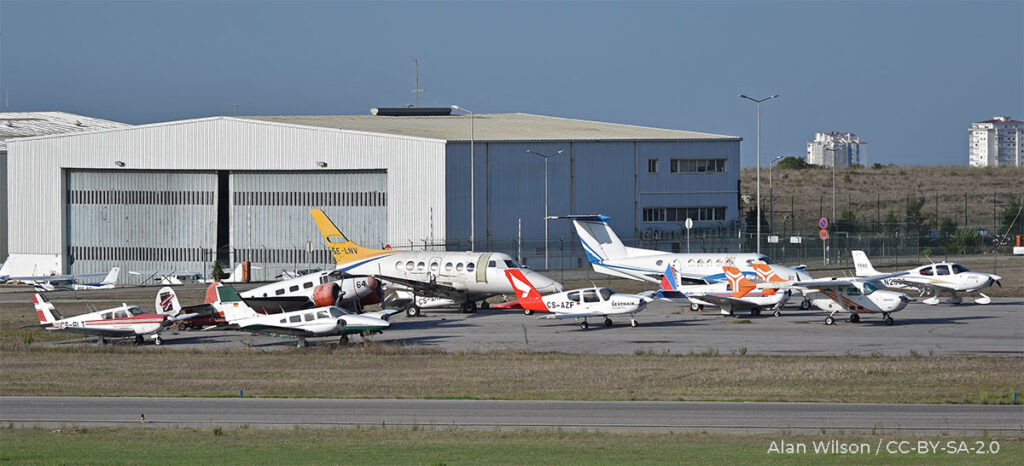
Diseño de terminales de aviación general (FBO)
Diseño de accesos, urbanización y aparcamientos
Diseño de sistemas automatizados de tratamiento de equipajes (BHS)
Integración de infraestructura y sistemas para garantizar la gestión segura y eficiente del tráfico aéreo.
Diseño de torres de control
Diseño de salas técnicas y espacios operativos
Diseño de equipos e integración de sistemas
Infraestructuras industriales aeronáuticas
Desarrollo de infraestructuras de soporte esenciales para la operación aeroportuaria.
Hangar and MRO design
Cargo terminal design
Diseño de edificios operativos y naves multiservicio
Diseño de talleres y almacenes
Infraestructuras auxiliares
Diseño de sistemas e infraestructuras energéticas y de soporte.
Diseño de redes eléctricas y subestaciones energéticas
Diseño de instalaciones fotovoltaicas
Diseño de centros de emisores
Diseño de edificios de salvamento y extinción de Incendios
Fuel plant and distribution system design
Enfoque integrado
Desde la planificación estratégica hasta el diseño detallado, AERTEC cubre de forma integral todo el ciclo de vida del aeropuerto, asegurando la coherencia entre la estrategia y su materialización en infraestructuras operativas. Nuestro enfoque se basa en una integración multidisciplinar que conecta lado aire, lado tierra y sistemas, con un diseño orientado a la operación real del aeropuerto. Esto nos permite garantizar el cumplimiento de los estándares internacionales y, al mismo tiempo, optimizar costes, plazos y riesgos constructivos, aportando soluciones sólidas, eficientes y preparadas para su explotación.
Airfields
Airside expertise
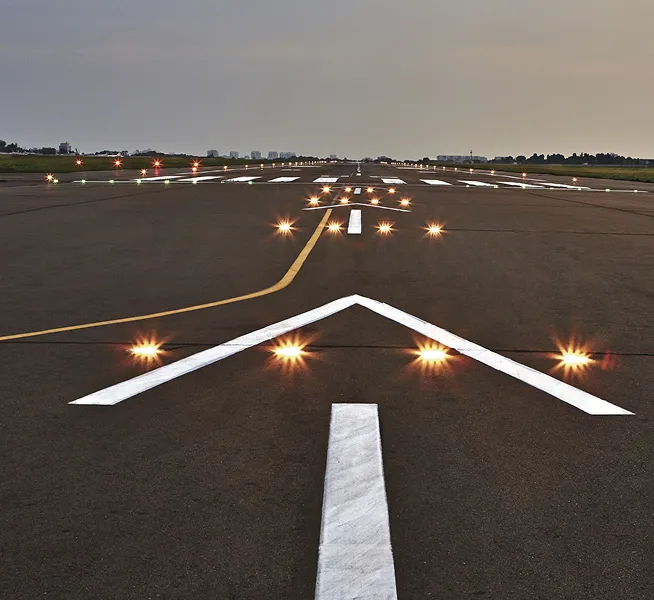
Visual aid design: ground lighting and signalling
Airfield ground lighting (AGL) is essential to ensure the safety of airport operations. AERTEC’s aeronautical and electrical engineers who specialise in AGL are familiar with the applicable international standards and offer advice and engineering services for all kinds of lighting (non-precision approach runways and CAT I, II or III precision approach runways).
Their experience not only covers traditional systems like standard tungsten lamps, but also advanced systems using LED and solar-powered solutions, and even state-of-the-art systems in this area like A-SMGCS or alternative AGL power supply solutions.
Preliminary, basic and construction project designs for airfields
AERTEC has well-trained human capital comprised of aeronautical, civil, electrical and telecommunications engineers with the technical know-how and experience needed to design airfields.
Project planning
System specification (attributes, operation and performance)
Procurement package (documents)
Procurement process (valuation, contracts, etc.)
Deployment (insurance system)
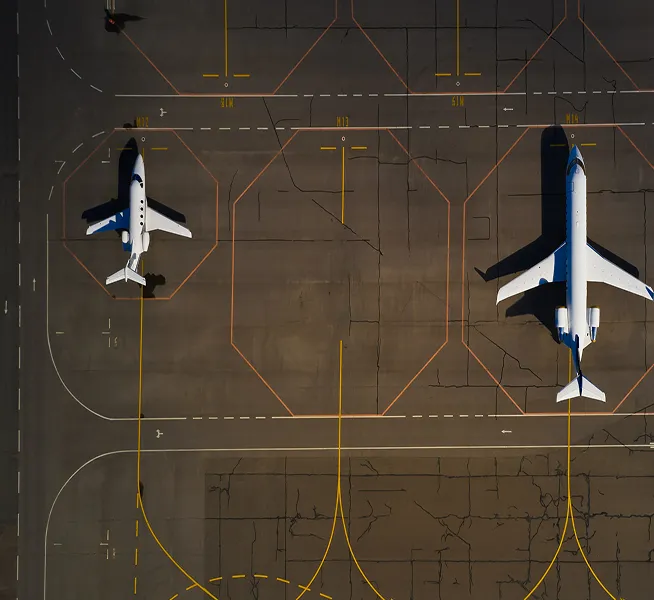
Design of aircraft parking aprons and their associated systems
Specialists in designing aircraft parking aprons and their associated systems. The design of the following elements is linked to these infrastructures: paving, horizontal signage, ground lighting and special systems, such as visual docking guidance systems (VDGS), pre-conditioned air (PCA) units and ground power units (GPU), and the design of apron lighting design and service areas, roadways, etc.
Design of instrumental aids: radio equipment
We study the effect on navigation of obstacles to radio aids, their ideal location, and assess the operational constraints resulting from the critical and sensitive areas defined. We conduct new equipment supply studies and draw up strategies: type of equipment, location and installation.
Heliport and helipad design and paperwork
We are experts in designing and planning heliports and helipads. AERTEC designs integrated solutions for private and public clients and related activities, such as: medical emergencies, firefighting, maintenance, passenger transport, etc.
Airport infrastructures
We design airport infrastructures and facilities that, although located outside the airport grounds, are closely linked to it. AERTEC's services cover both internal and external infrastructures linked to the airport sector.
Control towers
As an aeronautical engineering firm specialised in airport infrastructures, AERTEC has expertise in designing key airport buildings, including control towers.
Our capabilities and experience allow us to provide consultancy and lead engineering services for the overall design of control towers. We cover everything from initial planning, identifying the optimal location, determining its height and equipment needs and adapting it to international standards, as well as its detailed design, which includes the architectural concept and basic design.
Terminal areas
Preliminary, basic and construction project design
Passenger terminal design, including shopping areas and spaces
Cargo terminal design
VIP terminal design: general and corporate aviation
Design of access routes, urban infrastructure and car parks (intermodality)
Ancillary buildings
Preliminary, basic and construction project design
Electricity grid and substation design
Emission centre design
Design of rescue and firefighting service buildings
Hangar and MRO design
Fuel plant and distribution system design
Diseño de naves multiservicio: seguridad, aerolíneas, catering, etc…
Airport architecture
Spaces designed to enhance the passenger experience. Flows should be intuitive, well-sized and link together seamlessly.
In an airport, everything is designed according to aeronautical criteria, from the feasibility of the overall system to its design and implementation. This requires engineers and architects to integrate processes, flows and volumes, creating efficient and functional spaces.
Architecture and engineering merge together to strike an essential balance. For instance, a terminal building should provide an intuitive and optimised process flow, with spaces that clearly separate functional areas. At an airport, the layout of the entire structure is designed around its cross-section, where human and aeronautical scales converge.
Designing airports poses challenges such as handling large scales, designing adaptable terminals, complying with standards and ensuring efficient maintenance.
With a professional design, passengers feel at ease and find all of the airport processes easy, with architecture playing a key role in enhancing the travel experience.
Designing airport buildings also presents major challenges:
Dealing with large scales, which are always difficult to resolve from a compositional standpoint
Designing buildings that can be easily extended, because the number of passengers who pass through the terminals will increase in the future
Complying with current regulations
Efficiency and ease of maintenance, since, due to their size, consumption and costs are greatly increased
As we often see, travelling causes tension and anxiety in some passengers. These feelings are caused by not knowing where to go or what processes have to be followed. But what happens when passengers feel exactly the opposite? Why do passengers feel calm and in control in identical situations at different airports?
This is most likely due to the architecture and the fact that a professional is behind the design.
Simulation for airport planning
Secure operations to enhance the passenger experience
When a system reaches a certain level of complexity (as is the case for airports), analytical calculations may not be effective, sufficient or even possible. Simulations enable a detailed analysis, with numerous interdependencies, processes and input parameters.
Simulations allow us to create models that factor in the dynamic effects of information and interrelationships between all airport operations. Realistic and detailed models of airport ground distribution can be created to support airport design or air traffic simulations. It is possible to recreate any past, present or future situation, where the result of any interaction can be accurately analysed.
Definition of the objective Entering the collected data
Flight schedules.
Distribution of infrastructure.
Dependence on runway operations.
Airspace rules.
Track crossings.
Routes of the taxiways.
Push-pull procedures.
Gate/parking allocation rules.
Thawing procedures.
Traffic rates and processing hours.
Operational configuration.
Aircraft characteristics.
Stakeholder interviews.
Configuration of the layout of the airport facilities.
Implementation of operational rules.
Specification of flow object characteristics.
Generation of flow objects from the flight schedule.
Modelling the logic of processes and flows and their interdependencies.
Verification of the correct implementation of the logic of the model.
Comparison of the key results of the simulation model with data from actual operations.
Simulation of the different scenarios, according to the design requirements, can begin. It includes the following:
Distribution changes.
Changes in traffic demand (through scheduling of other flights).
Capacity enhancement through the implementation of additional facilities or improved equipment and operating procedures.
Assignment of flights or airlines to other gate areas.
Changes in operating conditions (e.g. use of runways and taxiways).
Endurance tests.
Verification to validate results and ensure that they are realistic.
Extraction of figures on waiting times, queue lengths, occupancy levels, etc.
Interpretation of the numerical results and the derivation of recommendations and qualitative statements.
Airspace – flight procedures (SID, STAR, RNAV-based etc.). Identification and evaluation of possible improvements in airspace capacity.
Aerodrome – evaluation of the need for and location of new structures such as RETs, holding bays, connected taxiways, etc. with the aim of improving capacity and eliminating problem areas.
Apron – evaluation of different configurations and redistribution of parking spaces, ground procedures, taxiing sequences, parking restrictions, etc. The software produces a Gantt chart that includes the use of parking spaces, making it possible to calculate critical parameters such as average delays, push-back times, hourly capacity, etc.
Fuel consumed on the ground and emissions from aircraft and APU engines, which can be accurately modelled with the aim of reducing emission levels.