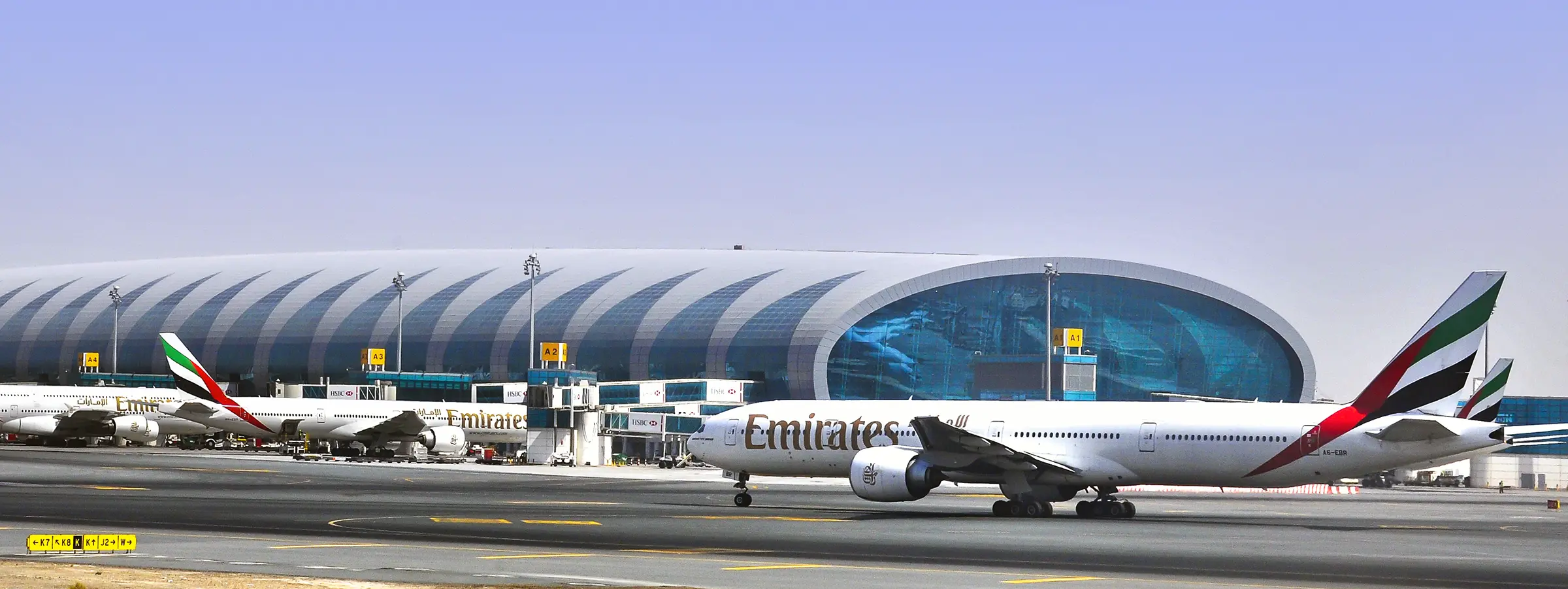
Imagine that as soon as you arrive at the airport you are met by a Talking humanoid machine welcomes you. It suggests that, so you have less to carry, you entrust your luggage to it. Next, the machine will read the QR code on your ticket or boarding pass and bid you a polite farewell, not without first asking if you have any questions to resolve. You will not see the machine again, but, without you noticing, it will have taken care of going to the relevant counter and checking in your suitcase securely, so all you have to do is collect it at your destination. The robotisation of repetitive tasks is a factor for improvement in more efficient airport operations, freeing up human staff for higher-value tasks and reducing errors in critical protocols.
Airports around the world are a perfect testing ground for evaluating the interaction between robots and people. The services and possibilities they offer are numerous.
This is just a sample of what some are already doing. robots in airports from all over the world.
The uses are many. As many as our imagination can reach. But the technology is already mature enough in many facets as to assign to various robots tasks of a certain complexity.
 Autonomous movement, localisation, code reading, facial recognition, voice recognition and synthesis, tactile sensitivity, obstacle detection, automatic calculation of routes and alternatives, etc. Many technologies have been developed independently in various sectors, but here, combined, they give these robots relevant capabilities to facilitate an innovative and effective service in airports. These technical capabilities are at the core of the advanced industrial solutions that AERTEC develops for the aeronautical industry: robotics, machine vision, autonomous systems and IoT.
And why airports? Many of these machines are subjected to intense testing initially in the research centres where they have been developed. But the right testing ground is an environment where they must carry out complex missions with multiple variables and interacting with people. Airports are suitable places for the implementation of cognitive systems. It is not only about the initial interaction with the interested party, but also about the accumulation of variables that can arise, such as people crossing paths, queues of waiting passengers, information desks, loose luggage, sudden changes in boarding gates, emergency situations, etc.
 Returning to interacting with people, this is possibly the most delicate ability because, although it may seem obvious, people We are not accustomed to trusting machines that act alone.. Precisely for this reason, most robots are anthropomorphic, in order to achieve the smallest possible initial rejection.
If we look at concrete success stories, there are almost a hundred airports that already use autonomous machines – anthropomorphic or otherwise – to provide different types of services to people.
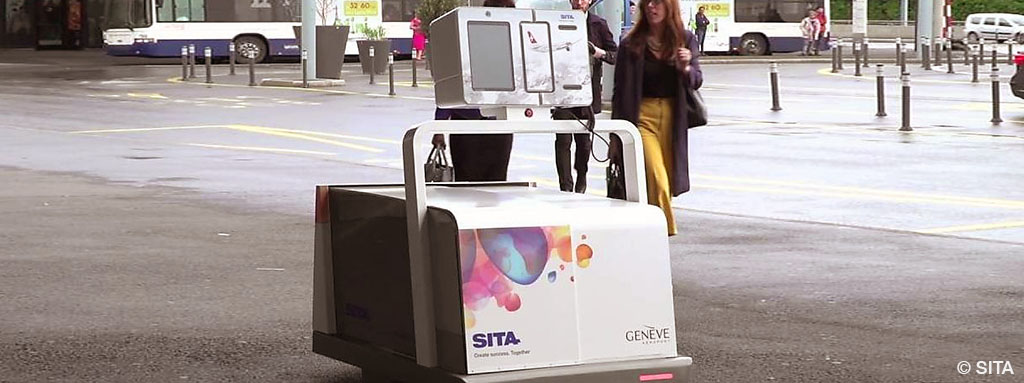
Spencer, for example, is an anthropomorphic robot (albeit without arms) that attends to passengers' needs at Schiphol Airport (Amsterdam) and helps them catch their flights on time. Leo, Meanwhile, is a robot that carries suitcases at Geneva airport, in this case certainly not very anthropomorphic. ASIMO He spent several weeks guiding passengers at Narita (Tokyo). At that airport, he is NAO, a robot that tells passengers about exchange rates around the world and manages their currency. Or in Beijing we might find Robot, designed to allow you to carry out surveillance and security tasks.
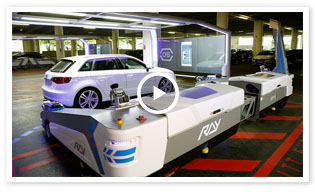 There are other robotic devices that lack a human appearance but have nevertheless been added to the range of services offered in some airports: Ray, for example, is a robot that takes care of parking your car at Dusseldorf Airport. Or, something further from the original concept, there are cobots Cyberdyne from Haneda Airport (Tokyo), designed for carrying heavy cargo.
The reality is that you shouldn't be surprised any longer when you're wished a good morning at the airport and, upon turning your head, see a strange-looking machine next to you. Don't hesitate, smile and return the greeting. Whether you make it to your plane on time or don't have to lug your suitcases might depend on it.