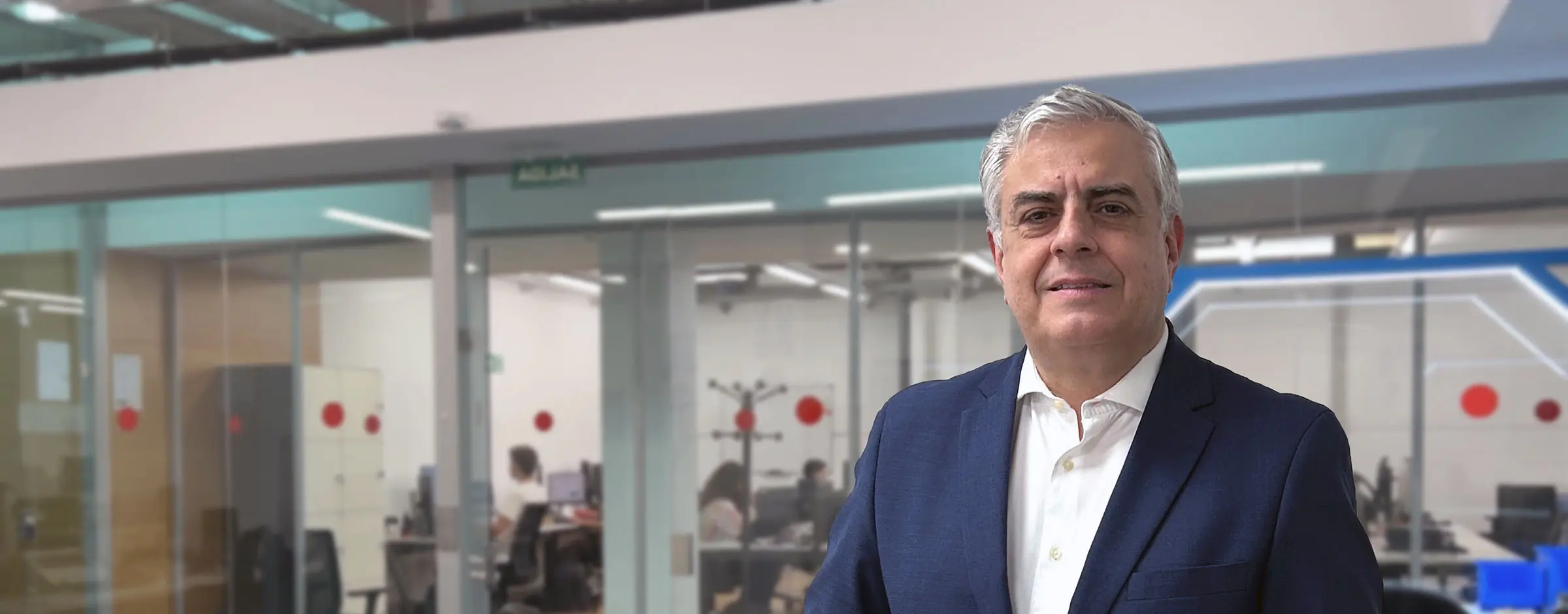
Professor Wilmer Arroyo is the Executive Director of the Puerto Rico Institute of Aeronautics and Space.
Aeronautical companies that establish in Puerto Rico have immediate access to the North American market and learn how to do business in the environment regulated by the FAA.


How and why did the idea of creating the Puerto Rico Institute of Aeronautics and Aerospace arise?
As part of the socio-economic development strategy, the Puerto Rico government has established the development and growth of a conglomerate of companies belonging to the industrial sector of aeronautical and aerospace technology. Although there are already important companies of this type established on the island, the flagship project of the Administration of Hon. Governor Alejandro García Padilla is the project that establishes a maintenance, repair and overhaul (“MRO”) operation with Lufthansa Technik as the anchor company. On the company side, Lufthansa Technik decides to make its first expansion in five years by establishing the Lufthansa Technik Puerto Rico operations division. There are three primary reasons why Lufthansa’s expansion in Puerto Rico is taking place: the island’s geographical position, which places it as a central point between three continents; the government commitment and the potential productivity of the local workforce; and thirdly, the relationship, prestige and commitment of the University of Puerto Rico System (UPR) to establish an institution specialized in aeronautical and aerospace technology.
Recognizing the need to adapt its academic offering and being that this is a national project, the UPR is joining forces with the Department of Education and the Industrial Development Company (PRIDCO) to establish an entity that will manage all the academic projects that may arise from this initiative and that, in turn, create an academic ecosystem that will support and help grow the country’s aerospace and aeronautical conglomerate in alignment with public policy and socio-economic development strategies. This entity is the Puerto Rico Institute of Aeronautics and Aerospace (IAAPR).
What are the training needs that IAAPR will cover to train future aviation professionals in the country?
The IAAPR will cover the training needs as dictated by the market and the conglomerate of aerospace industries currently on the island and those that will be established in the future. To this end, the IAAPR develops academic partnerships with higher education institutions to create academic programs leading to degrees that meet the highest standards of professional accreditation. Also, the IAAPR develops specialized certification programs at both the technical, engineering, and topics related to the management of aeronautical and aerospace companies levels.
What is the evolution of the aerospace sector in Puerto Rico? What are their short- and medium-term goals to position themselves in the constantly evolving Latin American market?
Currently, the aerospace sector is growing in Puerto Rico. To sustain this growth and to position itself in the Latin American market, the IAAPR is in the process of obtaining certification from the Federal Aviation Administration (FAA) and being able to offer the Aviation Mechanic certificate. This program is scheduled to begin in early 2016. Once this certification is obtained, the IAAPR will begin the procedures to obtain certification from the European Aviation Safety Agency (EASA). These two certifications position the IAAPR as an alternative study program for anyone interested in obtaining employment within the North American market, regulated by the FAA, and within the European market, regulated by EASA. In the case of the Latin American market, the option presented by the IAAPR is unique in terms of access to the United States market with the FAA regulatory environment combined with the opportunity to learn English while being in an environment where Spanish is spoken. Additionally, those interested have the option to learn EASA regulations, which the Latin American market favors for its processes.
What business opportunities and market niches does Puerto Rico offer to the aviation industry?
Aeronautical companies that establish in Puerto Rico have immediate access to the North American market and learn how to do business in the environment regulated by the FAA. In Puerto Rico there is a growing industry of design, research and development in the aerospace and related industries. It is important to note that apart from Puerto Rico’s geographic and geopolitical position, the country’s infrastructure provides a unique development opportunity with the largest landing strip in the Caribbean and at least 9 regional airports available for the establishment of companies that require this infrastructure, such as Lufthansa Technik Puerto Rico.
In the words of Puerto Rico Governor Alejandro García Padilla, “Puerto Rico produces more engineers per square meter than any other country in the world.” Has the training in aeronautical engineering changed in recent years? Do Puerto Rican youth choose this future profession?
The talent of Puerto Rican youth has always been dedicated to professional development that provides them with alternatives to demonstrate and put at the service of the international community., Creative ability and professional ethics. Like any high-tech discipline, aeronautical engineering is a field in constant change. In Puerto Rico, with the creation of the IAAPR, academic alternatives are being provided to young people in the country who are interested in this engineering to give them an opportunity to expand their theoretical knowledge and practical skills in this area of such growth. The IAAPR opens up an additional alternative for young people who want to explore the world of aviation as an alternative to developing a professional career.
What measures are being taken by the government to support the aerospace sector?
The concept used to support the business sector comes from the development of a conglomerate of these industries around various development hubs. The first of these hubs is to attract anchor industries in various areas and disciplines related to the aerospace industry. The second focus is to listen to the needs of these anchor industries and, in the first instance, develop the local supply chain to meet those needs. If these needs cannot be fully met by local companies, companies capable of meeting these needs are attracted and established in the country. The third approach is to integrate the academic ecosystem to provide the necessary human capital, fulfilling the standards and preparation required by both the anchor companies and the companies in the supply chain. Additionally, the integration of the academic ecosystem provides incentives for students to develop into local entrepreneurs to meet the present and future demands and needs of these industries. The fourth approach is to provide an attractive financial environment for entrepreneurs who establish themselves in the country or local entrepreneurs who create and/or want to grow their business focused on serving these industries. The fifth approach is to provide quality living alternatives for various lifestyles and an infrastructure that provides the development of high-tech companies in a safe, stable, and diverse environment for their employees.
How to position the IAAPR at the forefront of aeronautical and aerospace education?
To sustain the establishment and expansion of the aerospace sector conglomerate in Puerto Rico, the IAAPR is focused on developing three components: innovation through support for research, development, and the commercialization of products and intellectual property; infrastructure development; and the creation of an academic ecosystem with a diversity of alternative degrees and certification programs in the aerospace and related industries. The development of this academic ecosystem and the other components is done using the co-creation model. In this model, industry, academia, and government create and nurture growth of solutions together for the benefit of the country’s socio-economic environment. This benefit creates value and opportunities in the short, medium, and long term for all components of the various initiatives. The IAAPR, being the generator and promoter of the co-creation model, positions itself at the forefront of aeronautical and aerospace education on the Island.