Aeronautics companies tend to be made up of professionals from a wide range of backgrounds. This quality fosters a Multidisciplinary work environment in which we can all carry out our work while learning from each other. But the ultimate aim of a company dedicated to aeronautics is to devise and design solutions that are in keeping with that purpose.
A century ago, only four-engined aircraft initially dared to cross large expanses over inhospitable terrain such as deserts or oceans.
This is where my surprise came from when a colleague once commented that he had felt slightly uncomfortable crossing the Atlantic in a twin-engine plane. He was puzzled by this fact and seemed to distrust (as might seem logical) this situation. But the question is, Does crossing the Atlantic in a twin-engine plane pose any risks? The answer is, as it could only be, that in no way does this diminish security.
In 1919 British aviators John W. Alcock and Arthur W. Brown They were able to cross the Atlantic by plane for the first time without stopping, departing from Newfoundland on June 14th and landing in Ireland 16 hours and 12 minutes later. They made the flight in a modified Vickers Vimy (a World War I twin-engine bomber), and this feat earned them the £10,000 prize offered by the London newspaper, the Daily Mail. However, during the crossing, a cold front caused the air intake of one of the engines to become covered in ice, and they had to switch it off. Fortunately, they managed to restart the engine and make a successful landing.
What would have happened if the engine had been irreparably damaged on this journey? Clearly, we would not be talking about them here today. However, this fear caused four-engine aircraft only would dare, at first, to cross vast distances over inhospitable terrain like deserts or oceans. And in fact, in 1953, the American Federal Aviation Administration (the FAA) published a regulation stating that twin-engine aircraft They can never be more than a 60-minute flight away. from a suitable airport.
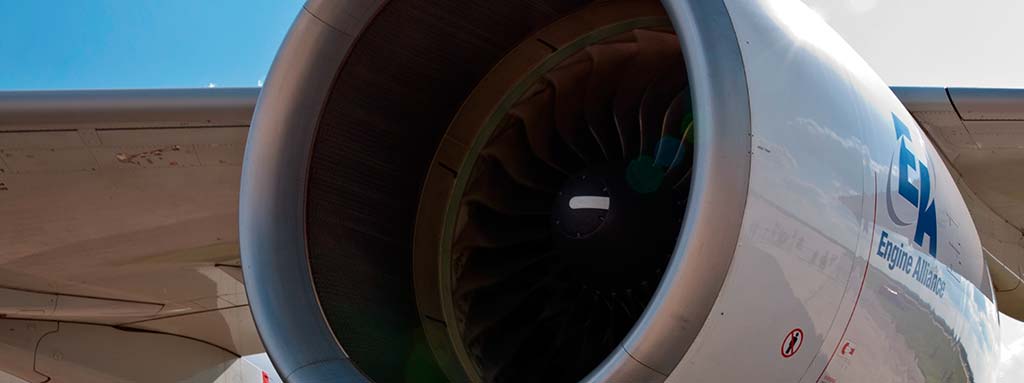
However, nowadays, many twin-engine flights crossing the Atlantic can be seen, such as, for example, the Boeing 767 or the more recent Airbus A-350. How is this possible? Well, thanks to the ETOPS Certificate Extended-range Twin-engine Operation Performance Standards «Operating performance standards for twin-engine aircraft on long flights»It is a certificate awarded by ICAO (International Civil Aviation Organisation) which allows certain aircraft, along with their engines, to fly for more than 60 minutes from a suitable airport. The time these aircraft are certified to fly with one engine out can be more than 300 minutes. But more significantly, this certificate is also awarded to aircraft that only have two engines.
This is why it should not surprise us today to see twin-engine aircraft crossing the Atlantic. Their engines have proven, outstanding Reliability and besides these planes are capable of flying for a considerable time on just one of their engines. This is the case, for example, of the A350-900, which even before entering service obtained ETOPS certification, allowing for a flight time of more than 180 minutes. Therefore, sit back and enjoy your flight, and ignore the joke that in English-speaking countries has been made for this certificate: Engines Turning Or Passengers Swimming.