The aerospace sector It is remarkably innovative and very advanced. What all aviation professionals pursue is the discovery of solutions that change the way society and the global economy function.
It has already been 150 years since it was founded Royal Aeronautical Society (Real Sociedad Aeronáutica) and it is a huge privilege to be its President on its one hundred and fifty-fifth anniversary. It is an opportunity to reflect on the many outstanding achievements of the last 150 years. The creation of the Society had its origin in the first aeronautical achievement, the airship, long before the «heavily loaded» flights of Otto Lilienthal and the Wright brothers. For our community, surpassing limits and challenging traditional logic is nothing new. There are other enlightened entities like us, and some more venerable than that Royal Aeronautical Society, But very few preceded most of the sectors of art and society for whose promotion they were established.
Pushing the boundaries and challenging traditional logic is nothing new for our community.
Today, our sector brings together, in impressive ways, many people thanks to the promotion of understanding between national trade and the transformation of global trade. At the same time, it promotes the projection of military forces to a power and scope that is more than instructive. In addition to commercial transport and military power, the aerospace sector and aviation have also fulfilled a wide range of scientific, humanitarian, sporting, and recreational purposes, not to mention the conquest of space.
As part of the celebrations of the 150th anniversary of the society, we are also looking 50 years into the future. Although it is impossible to predict exactly what will be crossing the sky, we can already see how the sector is changing.
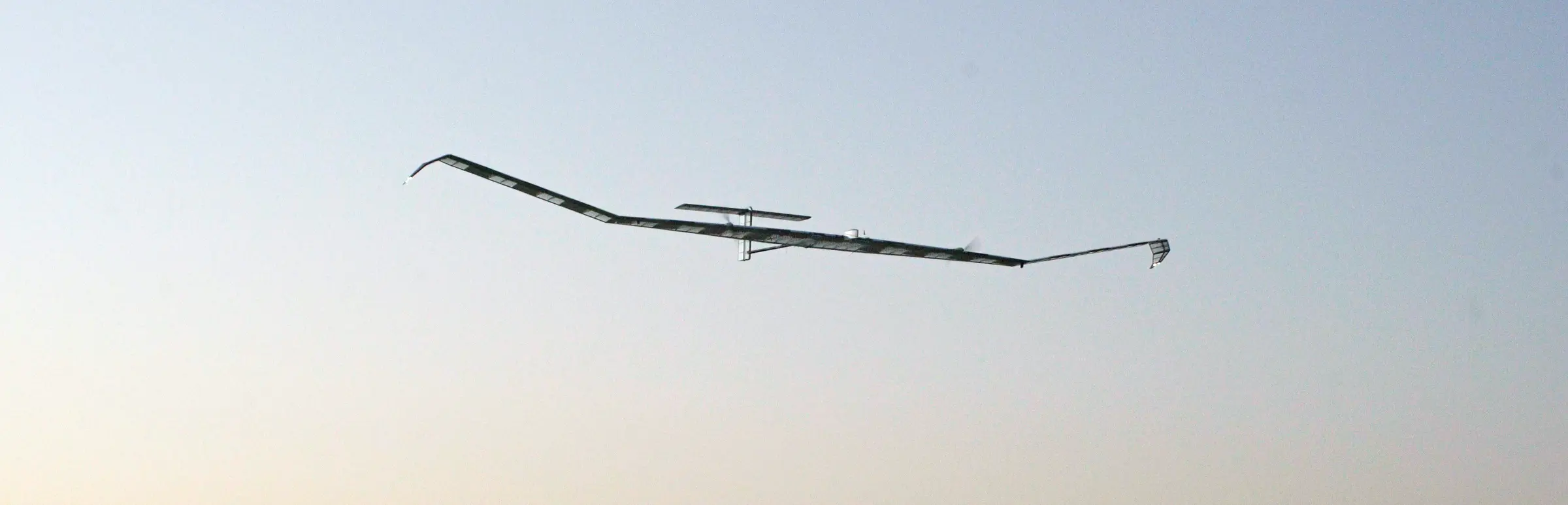
The systems without piloting They are still in a very early stage, but thanks to regulatory change and greater technological development, They could represent a revolution in a number of social functions related to agriculture, the maintenance and management of infrastructure, and emergency response, to name just a few.
Space is becoming less likely to remain the preserve of a few lucky individuals. Space tourism is becoming a quite realistic possibility. Technology is already at an advanced stage and the demand for this activity is maturing.
It is unlikely that the pressures to develop the sector will be lifted. environmentally friendly aerial systems And increasingly energy-efficient aircraft are quiet under regulatory and legislative pressures as well as the weight of public opinion. Nevertheless, on a small scale, electric solutions for aircraft are in increasing development. The technological barriers that limit the prevailing commercial application persist, but they are not insurmountable.
The immediate challenge will consist of ensuring the continuity of the experience and commitment of the people who work in the sector. The essence of the Royal Aeronautical Society It will build on our successes in turning information into knowledge, experience into best practices, values into policies, analysis into ideas, and enthusiasm into action.
In many ways, after 150 years, the end goal of society remains the same. Our role is to continue bringing together enthusiastic, expert, and experienced people who work together in an environment of independence and impartiality.
In short, we can be sure that history will repeat itself: we will achieve success if we manage to bring together great professionals and great ideas.