From June 2018 all IATA members, "International Air Transport AssociationThe "baggage tracking and tracing" resolution must be complied with. This is the so-called RESOLUTION 753: BAGGAGE TRACKINGwhich includes the following obligations:
- Proof of Delivery, of luggage when custody changes
- Demonstrate Reception of baggage when changing custody
- Provide a baggage inventory before departure of the flight
- Being able to exchange this delivery/receipt information with other airlines
Not only is it important to know what it is, but how does it affect me as an airport? How does it affect me as an airline? How does it affect me as a handling company?
By change of custody shall mean the following cases:
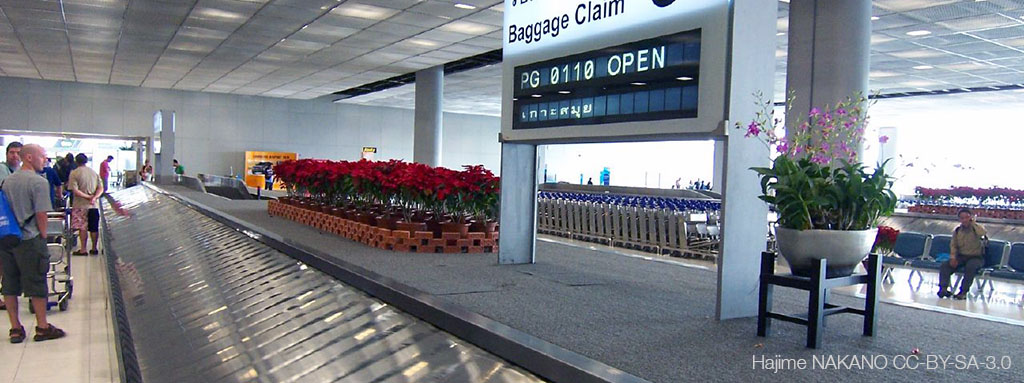
- Delivery of baggage to the passenger. Considering the delivery by the handling company and the capture of the information by the arrivals facility, be it a baggage reclaim belt or delivery to the passenger's home, etc.
- Boarding of baggage onto the aircraft. Considering the delivery by the handling company and the capture of the information by the airline.
- Delivery of the baggage to the airline. Considering the delivery by the handling company and the capture of the information by the airline.
Firstly, it should be remembered that baggage is nowadays always identified by means of a printed label and a computer record in the form of a message known as a bag source message (BSM) and which includes: date, flight number, destination, registration number and a unique bar code commonly referred to by IATA as a "License plate". This BSM message is checked against a common global database to confirm that the destination is correct.
The only check that was done until now was to certify that all checked-in baggage corresponded to checked-in passengers. If a passenger is missing, his or her baggage is disembarked before the flight.
With this new resolution, it must also be registered: when the handling company delivers it at arrivals (point 1 of the change of custody), when the handling company delivers it/embarks it on the aircraft (point 2 of the change of custody) and when the handling company unloads it from the aircraft (point 3 of the change of custody).
In conclusion, a series of possibilities are open to solve this new requirement that requires an infrastructure to collect information at points in the Terminal and on the apron or ramp. Therefore, it will be necessary to have technologies such as arc readers at the baggage drop-off point for passengers to pick up their baggage and portable guns or arcs to check in at the foot of the aircraft.
It opens the door to a new line of services by the airport operator than with a BRS (Baggage Reconciliation System) and an ATR reader arc system (Automatic Tag Reader) at baggage drop-off points for transfer or collection by the passenger can cover the new IATA requirements and thus support airlines and handling agents who need to comply.