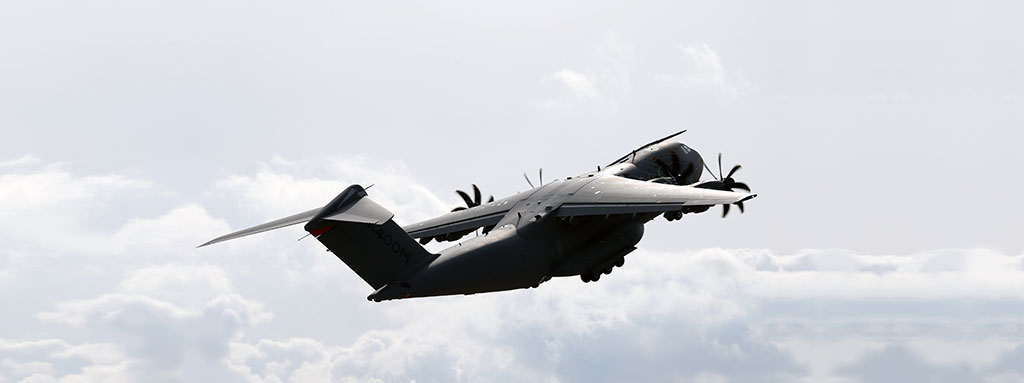
A military aircraft with its crew is a “active” air force very valuable in two main respects. On the one hand because of the possibilities offered by (transport, in-flight refuelling, air superiority, launching of supplies in areas difficult to access, etc.) and on the other hand by the economic cost (manufacture of the apparatus), of time and resources (crew and their education and training). It is therefore logical and necessary to safeguard these “assets” (crew plus aircraft) from potential threats as efficiently and effectively as possible during the performance of their duties.
The greatest threat arises from confrontation with other air forces and armies which, in the event of conflict, could use every means at their disposal to shoot it down. The most important of these are air-to-air missiles and surface-to-air missiles. The Defensive Aids Sub-System or DASS (from English Defensive Aids Sub-System) was developed precisely to counteract them.
In a very simplified way the DASS is a system with central intelligence that uses sensors to detect and classify potential threats and act accordingly..
It is worth clarifying at this point the concept of “guidance”, which is the means by which missiles locate the target and modify their trajectory to reach it. There are technologies such as infrared guidance, which is based on the heat signature left by the aircraft's engines, or radar guidance, which locates the target by bouncing off previously transmitted electromagnetic pulses. Thus, it is essential to identify the type of guidance of the missile in order to circumvent it.
This identification is carried out by sensors of various types strategically distributed throughout the aircraft, which inform the central intelligence system of the aircraft's existence of the threat, its type and, possibly, the direction from which it originates. With this information, the system alerts the crew and can also arrive at take action automatically such as, for example, the shooting of flares (flares) to deal with infrared-guided missiles or the launch of chaff for radar-guided ones. In both cases the underlying idea is the same: confuse to the missile showing a multitude of targets to its guidance system. In the first case, the flares are heat sources that hide the trail left by the engines, while in the second case, the fragments that make up the chaff produce a large number of ricochets that appear on the missile's radar as possible targets.
However, the above is only a simplification of the DASS containing other crew alert functionalities, The aircraft's radio transmissions can be silenced, such as suggesting evasive manoeuvres, for example, and automatically deploying countermeasures such as muting the aircraft's radio transmissions.
In short, DASS is a very effective tool for the protection and safety of aircraft and their crews when operating in hostile environments.