«SiRTAP will be a true collaborative program, in which we will work hand in hand with the entire aerospace and defense sector of Spain.»

Modesto Revuelta Gómez is the Director of the SiRTAP program, from AIRBUS, for the manufacture of a «Remotely Piloted Air System of High Performance».

In 2015, a project led by Airbus in Spain began to be managed for the manufacture of a tactical drone, which is now known as SiRTAP (Remotely Piloted High Performance System). What are its main features and those performance features that make it unique in its segment?
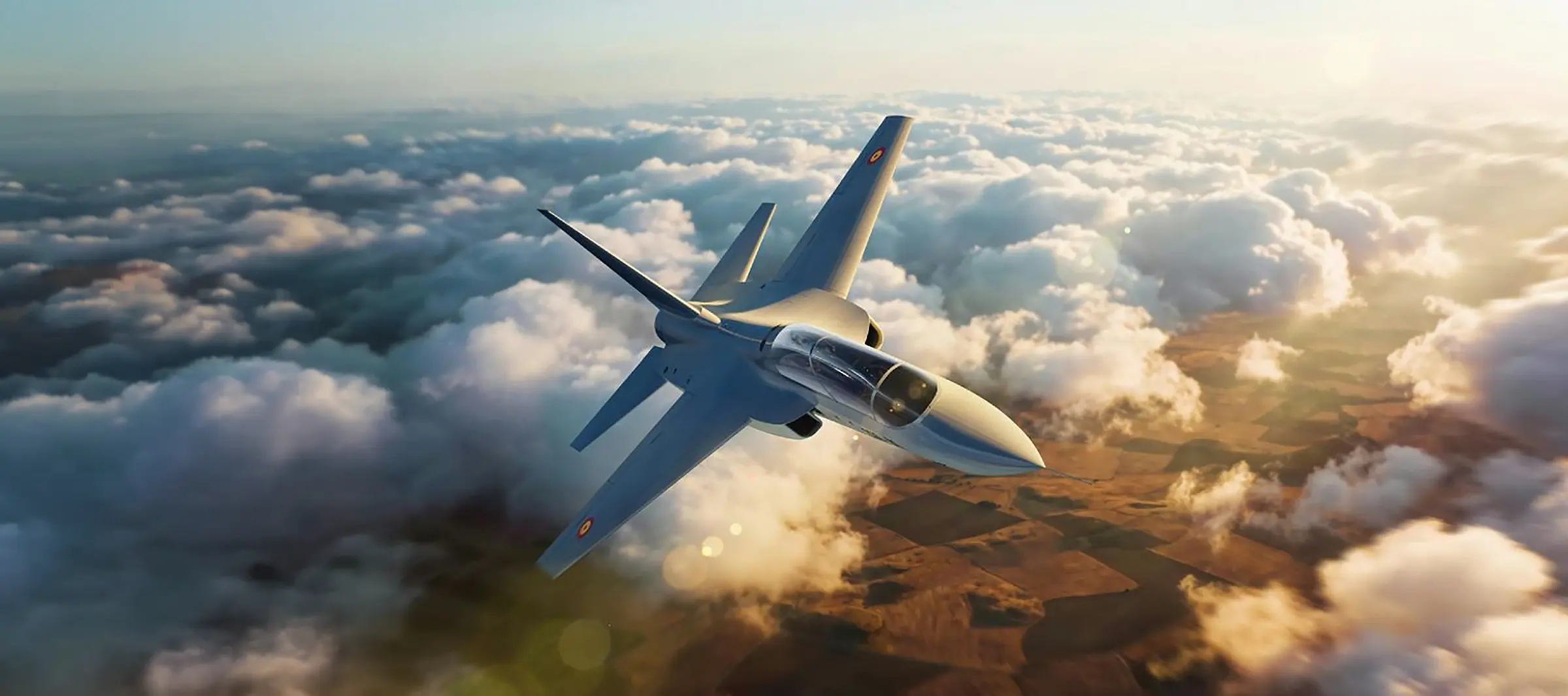
The SiRTAP is a tactical fixed-wing UAS with high performance and great autonomy that has extended range beyond the line of sight thanks to its satellite communication capability.
Thanks to its features, the SiRTAP can perform missions with a range of more than 2000 kilometers and a flight time of 20 hours without refueling, which allows it to cover the entire national territory (including the islands), while flying at a maximum altitude of more than 20,000 feet with a maximum takeoff weight of 750 kg and more than 150 kg of payload. The SiRTAP UAS is capable of operating in maritime, mountainous or desert environments and in the most adverse weather conditions, including rain and winds of up to 20 knots.
Given the changing nature of conflicts and the increasing involvement of the Armed Forces in supporting civil emergencies, the SiRTAP has a dual-use design, which expands the range of possibilities for the missions it can carry out.
The future-proof design of the SiRTAP includes a high and rapid growth capacity that allows adding next-generation sensors to meet future needs and expectations, as well as sharing the mission system with other existing platforms, making this UAS a perfect complementary asset in combination with other military or civilian assets.
As an exportable solution, the SiRTAP offers a classification not subject to ITAR regulations, as well as less restrictive manufacturing and assembly processes and easy installation in the territory of a potential customer from anywhere in the world.
What is the origin of the program and which countries are the ones it intends to cover?
With the need to replace the Searcher Mkll RPAS (IAI) of the Army of the Land for the end of 2025 or the beginning of 2026 and the intention to acquire platforms for the Spanish Air Force, and given that Colombia plans to replace its Elbit Hermes 450 drones within the same timeframe, Airbus launched an initial study phase in 2015 following a request from Spain, to which Colombia joined shortly afterwards in 2017.
With both countries being the de facto customers of the program’s launch, a Memorandum of Understanding was signed between the defense ministries of both countries in February 2019. The program’s momentum continued shortly thereafter, when in April the program was declared of national interest by Spain. In January 2021, Airbus submitted a formal proposal to the Spanish Ministry of Industry.
Regarding the requirements, Spain is considering nine systems that include 27 drones, while Colombia is studying six systems that include 18 drones.
As a result of the design, manufacture, marketing, and support of a UAS of these characteristics, what would be the impact on our country?
Airbus, as the leader of the program, has developed an industrial plan in which the main Spanish aeronautical and technological companies participate with the aim of having approximately 90% of the equipment and systems manufactured in Spain.
SiRTAP will be a true collaborative program, in which we will work hand in hand with the entire Spanish aeronautical and defense sector. This will allow small and medium-sized companies, as well as the main Spanish industries, to help develop fundamental skills that pave the way for successful participation in future UAS programs. Airbus will act as a driving force and provider of specialized knowledge, with more than 100 Spanish companies spread across 14 of the 17 Spanish autonomous communities.
We are dealing with a dual-use unmanned aircraft for both civilian and military applications. What needs does it serve and what will be its main missions?
From a military perspective, it is designed for advanced surveillance, intelligence, and reconnaissance missions both on land and at sea. This would include, for example, maritime surveillance, target identification, damage assessment, or convoy protection, among many other specific defense missions. It will also be equipped with satellite communications systems that will allow the SiRTAP to operate beyond visual range, although other types of sensors could be integrated thanks to the future-proof growth potential inherent in the design.
As for government missions, the scope of these includes monitoring illegal fishing and the trafficking of prohibited substances, natural disasters, forest fires, search and rescue in different environments, whether at high altitude or at sea level, monitoring migratory movements and border control, as well as the protection of the most important infrastructure.
Thanks to its dual-use design, the SiRTAP will be able to contribute to the protection and prosperity of society.
Has the pandemic affected the deadlines set for the development of the project? What is the current status?
Despite the impact of the COVID-19 pandemic, the timelines of the program originally planned have not been affected and we are able to provide the system 48 months after the contract is signed.
For now, the program is ready to be launched with all the guarantees provided by Airbus and with the indispensable collaboration of the most relevant Spanish companies.
Spain is a benchmark in the unmanned aircraft and aerial robotics industry. What are the main strengths of this sector in our country?
Airbus offers its expertise in the design and development of mission systems for airborne platforms and ground stations for UAVs, as well as its proven experience in the development of simulators, including those used by the Spanish Air Force’s Matacán base.
In the specific field of UAS, Airbus Defence and Space Spain has developed capabilities during the implementation of some of the most important European UAS programs and demonstrators, such as Atlante, Barracuda and Neuron.
As a leading company in the aerospace and defense sector, Airbus leads Spain's participation in the Eurodrone program and is part of the Technological Pillar of Remote Carriers (FCAS) of the future air combat system (FCAS).