ANALYSIS. The great debate: Heathrow or Gatwick?
The hottest topic in UK aviation at the moment is undoubtedly the head-to-head confrontation between the country's two main airports, Heathrow and Gatwick.
There is still a long way to go. The UK government faces opposition and indecision within its own ranks.
In July this year, after three years of reflection, the Davies Commission for Airport Expansion in the UK published its recommendations in its final report (you can read the report at here).
For those unaware of the situation, in September 2012, the UK government established an independent commission, chaired by Mr Howard Davies, to advise on how the UK should proceed with regard to expanding the capacity of its existing runways.
After a first round of work, three possible finalist options remained, and in the final report published this summer, the decision of Mr Howard Davies and his team was to support the construction of a new third runway at Heathrow.
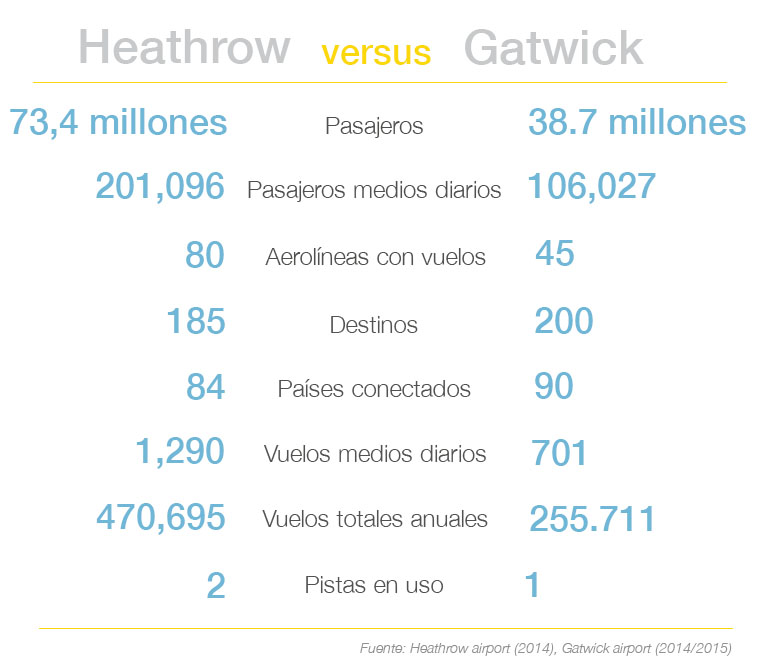
What is the Commission's preferred option?
The proposal backed by Mr Howard Davies involves the construction of a new 3500 m runway some 3 km north of the two existing runways, at an estimated cost of £18.6 billion ('25.1 billion). The other two proposals included the extension of one of the existing runways at Heathrow and also a new runway at Gatwick.
The argument in favour of backing this option was that the Heathrow project would create more jobs and generate more economic benefits for the country as a whole. It was seen as the best short-term option to help maintain the UK's level of competitiveness against stronger European rivals such as Charles de Gaulle in Paris and Schiphol in Amsterdam.
Fierce competition
From the outset, the rivalry between Heathrow and Gatwick has been intense, and both airports have deployed major marketing campaigns to support their different options.
Heathrow's campaign has focused on the benefits for the UK as a whole, with the slogan «Taking the UK further», while Gatwick has opted for a more direct approach and titled its campaign «Gatwick, of course».
http://www.gatwickobviously.com/
http://your.heathrow.com/takingbritainfurther/
Both airports have published images of what their proposals would look like, with detailed information available on the pros of their own options and, obviously, the cons of the others.
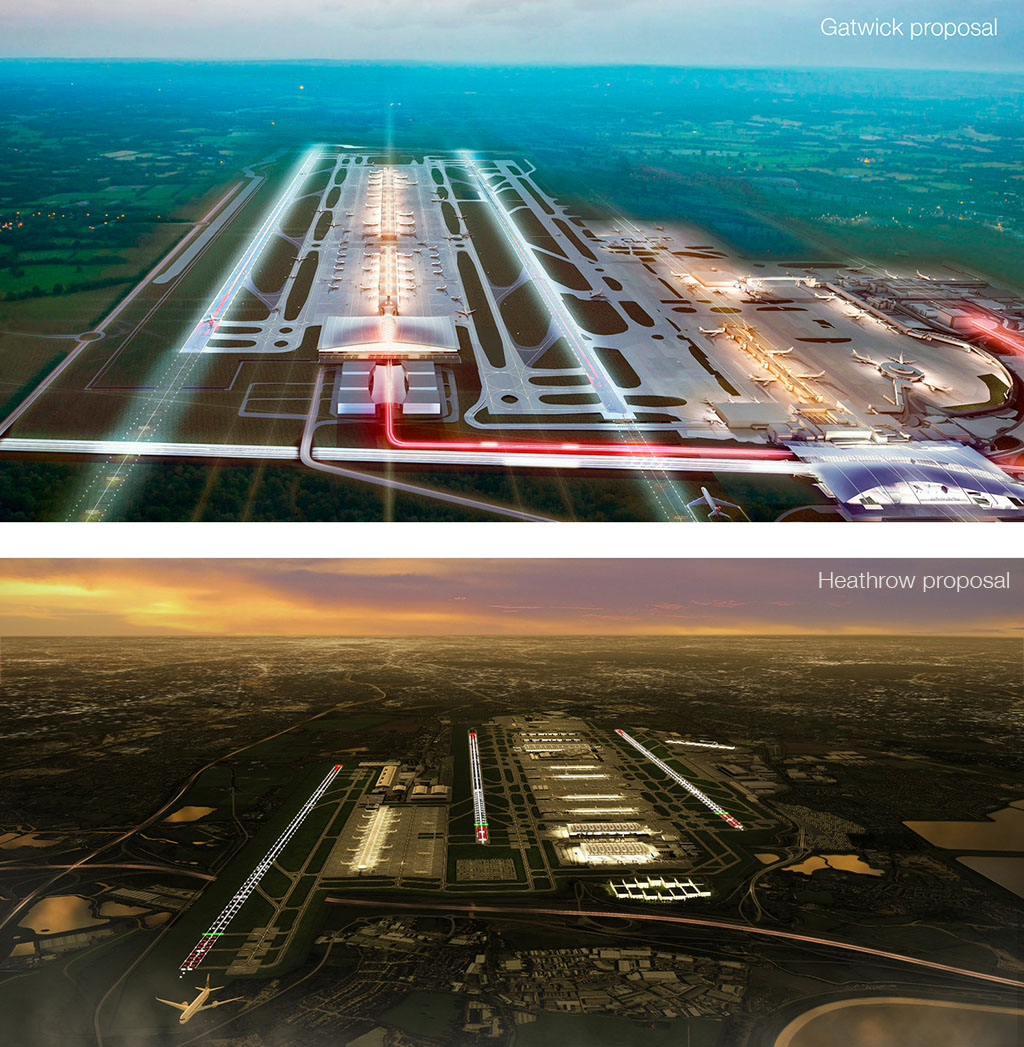 Recently, the debate has been hardened by Gatwick's increased lobbying of the commission's findings by making a number of compelling arguments against the Heathrow option, the main one being against Heathrow's air quality now and in the future. Last week, the Transport Secretary reportedly mentioned air quality as a «very important» factor to be taken into account in the decision, so is it possible that Gatwick has been given a leg up here?
British Airways also helped Gatwick's cause by making a series of strong statements against the proposal and defining the project as «unjustifiable». A surprising turn of events considering that Heathrow has long been the airline's hub.
Heathrow, on the other hand, appears to have adopted a more confident approach. So much so that a call for expressions of interest has already been launched for consultancy firms to be selected to offer their services for the third runway project. A Heathrow spokesman commented on the subject: «We need to be ready to launch Heathrow expansion as soon as the Government gives the green light, if it does, so this expression of interest in the project will help us to strengthen some core competencies ahead of a Government decision». Doesn't he seem a little confident?
What happens next?
There is still a very, very long way to go. We must remember that the Davies report is no more than a recommendation, and the more the Gatwick campaign heats up, the longer the final decision may drag on. The government faces opposition and indecision within its own party, something that will no doubt have to be resolved before any decision is taken.
The next step will most likely be a consultation launched by the government itself, more than likely within a few weeks, to protect against possible legal problems. However, it seems highly unlikely that the UK will see the opening of a new runway for at least another decade.
In the meantime, Heathrow and Gatwick's marketing campaigns will no doubt continue to make as much noise as possible.