Have you ever stopped to imagine what it would be like to get around your city without worrying about traffic, endless waits or complicated detours? Now imagine that becoming a reality, not on the roads, but in the sky. Unmanned aircraft systems (UAS), commonly referred to as drones and at a more technical level such as RPAS (Remotely Piloted Aircraft System) or other autonomous aircraft not only promise to revolutionise transport, but also to redefine how we understand urban mobility, goods delivery and even emergency operations.
Unmanned aerial vehicles are already demonstrating their potential: deliveries in minutes, assistance in natural disasters and real-time surveillance to improve public safety. However, behind this technological promise, important questions arise: How safe are RPAS or drones? Are we ready to see them take to the skies over our cities? And, most importantly, How do we get the population to accept and trust them?
In this post, we will explore not only how drones are changing the urban landscape, but also the challenges they face in fully integrating into our society.
Integrating the use of RPAS or drones in urban areas
In order for this vision to become a safe and functional reality, it is essential to have a strong regulatory framework that allows RPAS or drones to be efficiently integrated into our airspace. In this regard, countries such as the United States, through the Federal Aviation Administration (FAA), y Europa, con su enfoque en el espacio de baja altitud (U-space), están liderando la creación de normativas diseñadas paraensure safe operations in urban areas.
These regulations not only seek to minimise risks in densely populated areas, but also to ensure that these vehicles do not interfere with commercial aviation, a critical aspect, especially where airports are located in metropolitan areas. In addition, they lay the groundwork for drones to perform essential tasks, such as transport of medical supplies in remote areas or rapid response in natural disasters.
The balance between security and technological progress is the primary goal of these regulatory efforts. While the potential of RPAS is immense, their integration requires careful planning if drones are to fulfil their promise of transforming urban mobility without compromising the safety of the skies we share.
However, the security and privacy concerns persist. Recent studies indicate that the public is often reluctant to accept autonomous aircraft, largely due to distrust of the technology and fear of accidents or loss of control. As the use of drones grows, the industry faces the challenge of addressing these fears by transparency and educationThe event will provide the public with an understanding of what an RPAS is, how drone technologies work and the strict controls they undergo to ensure their reliability and safety.
The integration of autonomous drones in public space could revolutionise transport, but the acceptance of these RPAS will depend on a clear regulation and the building public confidence. Initiatives such as pilot programmes, citizen education and stringent safety testing are essential to achieve greater receptivity and facilitate a safe and efficient shift to this new era of autonomous air mobility.
Reluctance towards the implementation of RPAS/drones in public space, benefits and challenges
Common fears: security and privacy when using drones
The security is a major concern, as citizens fear accidents or technical failures in remotely piloted aircraft (RPAs), especially in urban areas where they could pose a direct risk to life and property.
Doubts about the accuracy of sensors and the ability of drones to react in adverse situations, such as severe weather conditions or navigation system failures, fuel this mistrust. Although concepts such as the "collection contracts"In order to improve the predictability and safety of these systems, these advances in AI will are not always known or understood by the general public.which contributes to a perception of insecurity in these emerging technologies (WIRED, NIST). Safety in the operation of RPAS is a growing concern as their use expands in various civil and commercial applications. According to a study published in 2021, the increase in drone operations has led to an increase in safety-related incidents.
In contrast, commercial aviation has consistently maintained high safety standards, which engenders confidence. For example, in 2023, the commercial aviation accident rate was 0.48 per million take-offs in Europe, an improvement on the five-year average of 0.77.
It is important to note that commercial aviation has been developing and refining its safety protocols for decades, while drone operation is a relatively new industry which is still establishing its standards and regulations. Therefore, although drones offer significant advantages, it is crucial to continue to develop and implement security measures to minimise the risks associated with its operation.
With regard to the privacyThe possibility of drones collecting visual and movement information has raised concerns about constant "aerial surveillance". Citizens fear that the data captured could be misused or, in the worst case, fall into the wrong hands. Such concerns are particularly relevant in urban areas, where privacy and personal freedom could be compromised. The development of privacy and data protection policies in autonomous mobility systems is crucial to gaining public confidence.
Apart from the direct risks, many citizens express mistrust of the control that companies and regulators have over autonomous technology. In part, this is because the current regulatory framework is still developing and varies from region to region. Agencies such as the FAA and the European Aviation Safety Agency (EASA) are working on regulations to integrate these aircraft into the airspace, but the lack of global uniformity and the perception that the technology is advancing faster than the laws contribute to a widespread mistrust. In addition, media reports highlighting incidents or accidents related to autonomous technology, such as driverless vehicles, reinforce fears and may discourage the adoption of drones in urban transport.
Advantages: RPAS efficiency and accessibility
Despite fears, drones and autonomous aircraft offer significant benefits. These RPA systems can reduce vehicle congestion in densely populated areas by transporting goods quickly and directly, freeing up land routes and reducing emissions.. In addition, their ability to operation in hard-to-reach areas or in emergencies (e.g. for the delivery of medical supplies or rescue equipment) represents an added value that could save lives and improve the quality of life in these situations.
As clear regulations are put in place and the industry strives to make these systems safer and more transparent, the potential for drones to transform transport could overcome barriers of mistrust. Public education initiatives that explain what RPAS/drones are and transparency in data practices are key to addressing fears and building more accepted and safer autonomous transport.
Challenges and opportunities in citizenship education: measures to improve acceptance and understanding of RPAS technology
For the use of RPAS or autonomous drones to be accepted in urban areas, citizen education is essential.
- Transparent Education Campaigns: Initiatives that clearly explain safety systems and privacy rules can mitigate fears. These efforts help the public understand what RPAS/drones are and how they respect space and safety limits set by regulators.
- Public Tests and Pilot Programmes: These projects allow citizens to see drones in action in a controlled environment. Public events and demonstrations, where users can see the technology up close, have proven effective in building trust and acceptance.
- Data Protection and Transparency: Data collection in drone use is a common concern. Complying with regulations such as the GDPR helps build trust in the protection of personal information, promoting transparency and ethical data handling.
- Education in Schools and Communities: Including content on RPAS/drone technology in educational programmes allows young people to understand their operation and benefits. This builds a foundation of confidence from an early age and allows the next generation to see drones as a safe and beneficial tool.
These measures will help to improve public understanding, making the deployment of RPAS and the presence of autonomous drones perceived as an ethical and beneficial technology for society.
International cases of RPAS implementation and drone use in cities
Example from China and other countries in aircraft certification and drone deployment
The use of drones in commercial and mobility applications is on the rise globally, with China leading the way in regulatory initiatives and the development of advanced RPAS. China has established a regulatory framework for integrating drones into its airspace through interim regulations that come into effect in January 2024, defining design, production and operational requirements. This framework also establishes flight zones and registration processes that seek to balance safety and operational efficiency in urban and commercial environments.
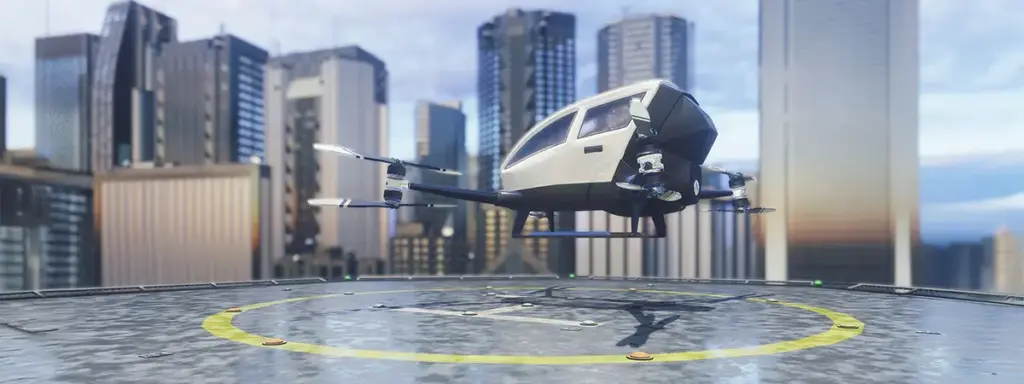
Among the most innovative projects in China is the company EHang, which has developed the EHang 216, an autonomous vertical take-off and landing vehicle (eVTOL) designed for passenger transport. This drone has conducted successful test flights in cities such as Guangzhou and Hefei, positioning it as one of the first autonomous aircraft certified for urban transport. This development represents a significant advance towards urban aerial mobility and has been presented as a sustainable mobility solution that could reduce traffic congestion in large cities.
Another example is Air White Whale's W5000, an unmanned cargo drone capable of carrying up to 5 tn and a range of up to 2,600 km, intended for the transport of heavy goods. This model is in the process of certification and is expected to enter commercial service in 2026, offering an efficient and economical alternative for cargo transport on medium and long routes.
Outside of China, other countries such as Japan and Singapore are collaborating with industry to create safe flight zones and set standards for drone operation in dense urban environments. These initiatives are designed to encourage the adoption of RPAS/drones in cargo transport and urban mobility, while regulating aspects such as safety and privacy, in response to public concerns about the expansion of this technology.
These examples show how different countries are leading the development and regulation of remotely piloted aircraft systems (RPAS) or drones in mobility and logistics sectors, with China leading the way in certification and large-scale deployment.