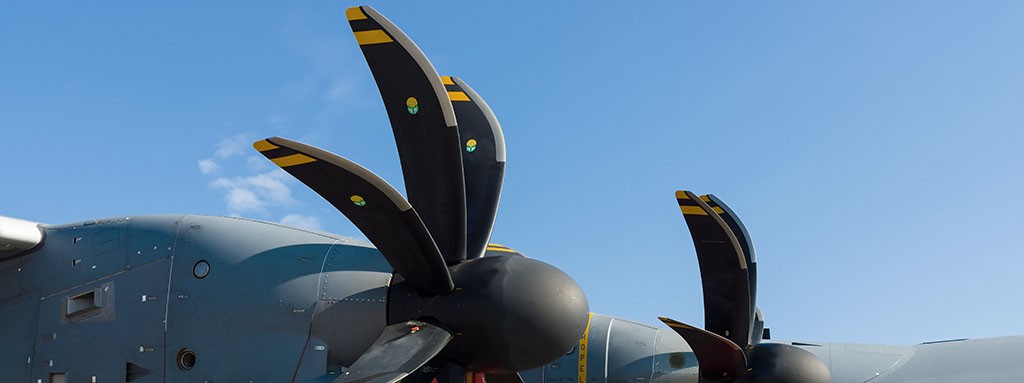
Ever since the first aeroplane took flight, the Flyer 1 invented by the brothers Wilbur and Orville Wright in 1903, the propeller engine has been present throughout the history of aeronautics and is still an optimal solution for powering modern aircraft such as the A400M.
Propeller engines still have some advantages over turbofan engines for some applications and are therefore still used today.
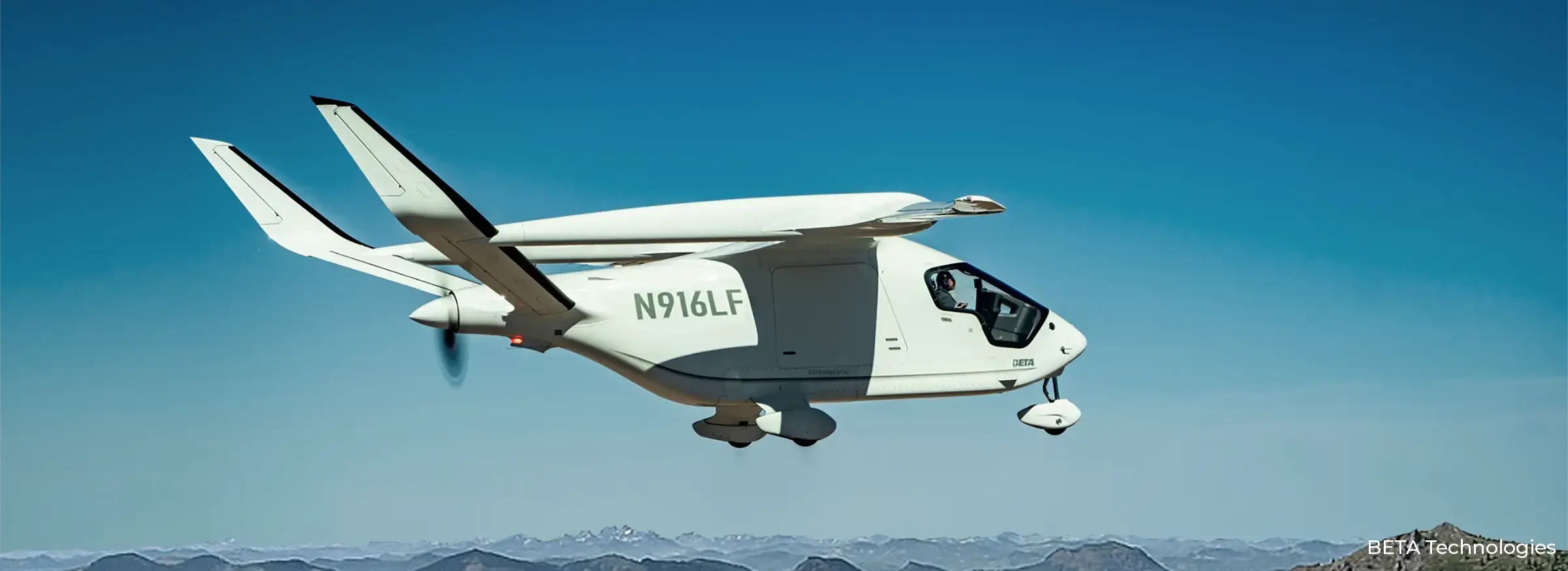
The propeller engine is based on the Bernoulli principle which explains how, by rotating a pair of blades with a curved surface, a perpendicular thrust force can be achieved due to the difference in pressures. In helicopters this force is applied vertically to overcome gravity, whereas in aircraft it is harnessed horizontally. to generate lift force on the wings in turnThe latter actually holds the aircraft in the air. In the case of the gyroplane, the engine function is similar to that of the aeroplane, but in any case, in this article I will focus on the use of the propeller engine in the aircraft itself.
The vast majority of aircraft have between 1 and 4 engines. More than this is strange, as the more engines there are, the higher the fuel consumption tends to be. The propellers in turn can have a variable number of blades, usually 2, 3, 4, 5, 6 or 8. The engines usually rotate in the same direction, the dextro-turn, but there are also aircraft with engines that rotate in opposite directions, such as the A400M, achieving greater efficiency at the cost of considerably increasing technical complexity.
Like lift depends on thrustBy definition, aircraft must be fast in the longitudinal direction. The aforementioned Flyer 1 flew at a not inconsiderable 48 km/h. The frenetic pace of innovation of the early engineers led to a rapid increase in the maximum speed of aircraft, so that the first commercial flight reached 100 km/h in 1910 and 250 km/h in the First World War. During the First World War, the challenge of mounting firearms on aircraft arose. As the propeller was then usually the leading edge of the aircraft, bullets would have to pass through it. The Allied forces' solution was to fit deflector wedges so that the blades could withstand the impact, while the more elaborate German solution was to create a synchronisation mechanism between the rotation of the blades and the firing.
With peace, racing aircraft began to be built with the sole purpose of breaking speed records that were being established. To name but a few, Curtiss aircraft reached 430 km/h in 1923 and Howard Hughes, the eccentric tycoon, reached 566 km/m in 1935 with an aircraft of his invention. Curiously, the speed records passed into the hands of seaplanes that reached 700 km/h, although it was in 1939, months before the outbreak of the Second World War, that the experimental Me 209 aircraft set a record that would finally stand for some decades, 755 km/h.
During the war, jet engines were developed with the aim of increasing the maximum available speed, which was achieved by exceeding 800 km/h from the outset. Propeller engines, which had hitherto used piston technology, took advantage of the new technology and the turboprop enginesThe most important of these are the ones that endure today.
In any case, the limitation of engines with blades lies in the fact that their efficiency stops when they reach the speed of sound.. However, it is still possible to improve performance somewhat by using counter-rotating blades, where two propellers are placed one after the other and rotated in opposite directions to each other. This increases efficiency by 15%. With this technique, the Russian Tupolev Tu-95 holds the speed record for propeller-driven aircraft with 920km/h.
Despite this restriction, propeller engines still have some advantages over turbofan engines for some applications and are therefore still used today. For example, allow high power to be obtained from the start of take-off making it feasible to use shorter runways, making them ideal for military aircraft. Their fuel consumption is lower for shorter distances, as the turbofan becomes more efficient when it can reach higher altitudes and speeds.
So, the next time you fly in a propeller plane, remember that even with its long history, it is still a fully current and practical technology. Enjoy the journey.