One of the most remarkable fields of aeronautical fashion today is undoubtedly that of drones. These devices have been developed progressively from World War I to the present day, although it is only now that it seems that they are and will be used for much more than spying on the enemy.
In Spain, since the first Royal Decree to regulate the use of drones was passed in 2014, there has been a steady increase in the use of drones. increasing the number of registered operators and pilots in the State Aviation Safety Agency (AESA) to the point of homologating university courses and masters offering licences to fly drones with the limitations required by current legislation, such as not allowing flights over urban areas, crowds of people or at night, although a new regulation is expected to regulate and condition some of these restrictions.
Evolution does not stand still and drones will surely become part of our lives.
Anyone can buy a drone in the toy section of shops. There is a wide variety of shapes, sizes, configurations and features.
The practicality of these unmanned aerial vehicles (UAVs) is being put to the test with a multitude of applications. One of the applications that is beginning to be tested is that of transport and delivery of parcels. CORREOS welcomes this idea and has already carried out some tests in Spain. In the US, there are several related projects involving the delivery of food and medicine by drone. Meanwhile, Rwanda is studying the possibility of building a drone base for medicine delivery. In addition, the UK government has allowed AMAZON to test drone delivery, and France and Switzerland are testing drone mail delivery, although they still have to resolve air traffic and other issues.
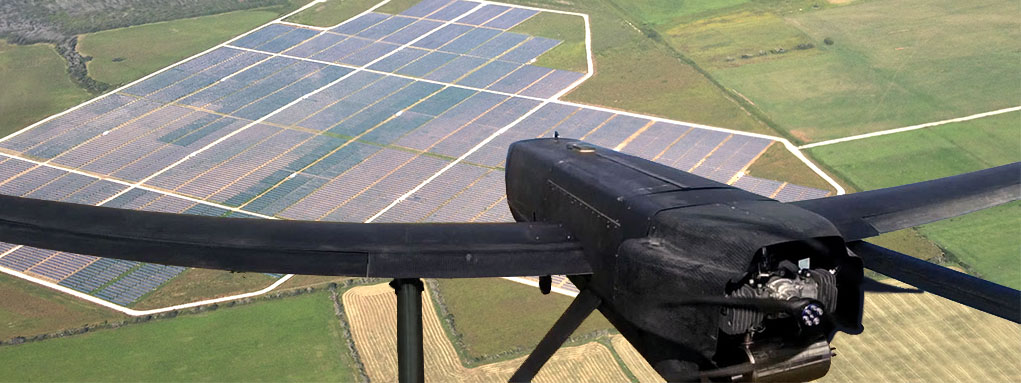
Drones can move quickly over uneven or difficult-to-access terrain and overcome any kind of obstacle by providing bird's eye view images and other information collected by different sensors.
In the agricultural sector The use of drones also appears to be very useful. They have been tested for scouting and terrain mapping, fire control, fencing and herd monitoring, aerial spraying and conservation assistance (including pest and weed locating), as well as a number of other functions.
There are also drones that are used to assist with archaeological research. Others are used for geological collecting samples from inside volcanoes, or with motifs of meteorologicaldrones, taking temperature and humidity indices to forecast inclement weather more accurately. In addition, there are drones that are used for health reasons, such as taking pollen samples to combat allergies, or even for urgent health care, which can considerably reduce the reaction and intervention time of health authorities.
Drones can be categorised according to their massThe following categories of children: those under 2 kg, those between 2 kg and 25 kg, and those over 25 kg.
The biology is also grateful for the existence of drones. They have been used to map bird routes, to study whales without intruding into their habitat, and even to monitor coastlines in order, for example, to prevent and reduce shark incidents.
Drones are still robotsThey are therefore also used for the tasks hazardous to humansThe drones have been used to handle, clean and study materials that are harmful to people's health. In Japan, more precisely in Fukushima, drones were used to obtain a precise view of the interior of the nuclear reactor in order to draw up a plan for clean-up and prevention of future leaks.
Large companies such as NASA and AIRBUS are studying the possibility of solar drones performing some of the functions of satellites, such as creating internet networks in areas without coverage. On the other hand, some governments use drones for fiscal control of land, border surveillance, traffic control and to search for people by locating the position of mobile phones.
Drones already exist that can take off from underwater, a capability that opens up a vast new range of possibilities, such as launching them from a submarine or studying currents and marine species.
The commercial and perhaps most popular use of these devices is for capturing images and videos at events. Drones open up a whole new range of possibilities for photojournalists and filmmakers. But the use of drones for leisure purposes, whether for entertainment or racing, is also becoming increasingly popular. Drones have reached the maturity necessary to succeed in many fields. And because where there is speed, there is competition, these spectacular races are gaining more and more fans.
And there is still a long way to go. BOEING has registered a patent that would enable the in-flight drone recharging through recharging terminals suspended in the air via a cable connected to a power supply on the ground. This concept would serve as a pillar for the progress and development of this sector. It is clear that drones are here to stay, and their uses seem to be increasing every day, both for civilian and scientific purposes. We are experiencing a boom in creativity in the functions and applications of these devices, which seem truly infinite.
The advantages derived from the use of drones are obvious, but until legal regulations are in place, it will be difficult to hear the drone of one of these devices delivering the mail, the newspaper or a pizza to our doorstep. In any case, evolution does not stand still and, in the long term and with a solid basis for their use, drones will surely become part of our lives.