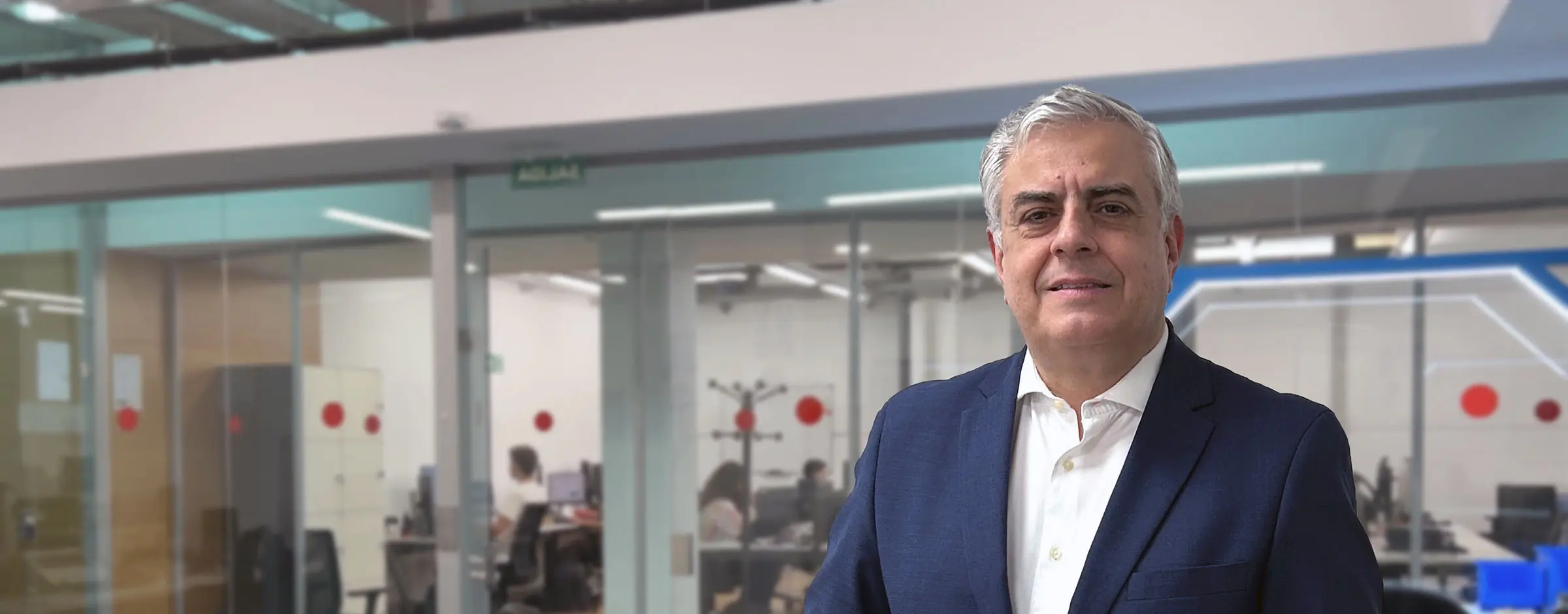
Olivier Jankovec He became the general manager of the European region of the International Airport Association (ACI EUROPE) in September 2006.
He joined ACI EUROPE in March 2006, as Director of Strategies and Communications. Olivier has more than 18 years of experience in government affairs and influence groups: he worked for Alitalia (2002-2006), Air France (2000-2002) and the European Commission’s Directorate-General for Air Transport (1994-2000). Just before joining ACI EUROPE, Olivier was the Director of Institutional Relations at Alitalia. There he was responsible for governmental affairs at national, European and international level. At that time he also served as chairman of the policy committee of the Association of European Airlines.
In 2006 and 2007, he participated in the High Level Group of the European Union on the future of air regulation in Europe, and is also a member of the advisory board of the World Tourism Forum.
“One Much of what we do is to represent and defend the interests of the airport industry collective.”


ACI Europe was founded in 1991. It has been defending the interests of European airports for 25 years. How has the association’s work evolved over the past 25 years, and what have been the biggest challenges it has faced?
Their work has changed considerably, especially in two closely related aspects. The first is that our sector has experienced a spectacular evolution over the last 25 years. In the past, airports were mere providers of infrastructure. They focused on the interests of national airlines, many of which were funded with public resources. There was not too much private investment. In short, we could say that 25 years ago airports were not companies. Today we have experienced a huge transformation: now airports are fully-fledged companies; public funding is disappearing and numerous private investments have been made in European airports, especially in Europe. Moreover, they no longer only provide their services to national airlines: they have to cater for any airline, and there is enormous competition between airports.
I believe that the transformation of this business has been reflected in what we do, and in how we do it. First of all, because when the Association was founded in 1991, there were not too many regulatory actions affecting airports at the European level. At that time, the main objective was the liberalization and the creation of an intra-European air market, but focusing primarily on the airlines. Since then, the European Commission has included infrastructure providers and airports in its European aviation policy. So, if you look at the regulations that affect our European members, 80% of them originate from Brussels. In 1991, ACI was more of a club or a space that served as a reference for airports, so that they could network and exchange knowledge. At that time, we focused primarily on enhancing and promoting best practices in airport management. Over the years, and due to the rise of regulatory interventions and the transformation of this business, influence groups have become much more important in our work.
Today, much of what we do is to represent and defend the interests of the airport industry collective, and to ensure that lawmakers understand that in our sector, airports are fully-fledged businesses, and that regulations should not focus on excessively benefiting other stakeholders in the aviation sector, such as airlines.
We have had to get involved in numerous matters that we did not have to deal with 25 years ago, such as the economy, airport rates or security measures. And that is because 25 years ago, security was a matter for each country; there was no common framework at European level. Then there is the issue of the environment, of course. It has become a matter of the utmost importance for the aviation sector and airports over the last 50 years. In short, substantial changes have occurred in numerous aspects. We could say that today, the regulations cover a large part of the matters related to the management and development of airports. And as regulations have increased, so have our responsibilities as an association: we have developed our own technical expertise, working closely with our members to ensure that they agree with our positions.
The second aspect is that, in my opinion, 25 years ago many European airports did not hesitate for a second to become members of the association. I believe that at that time they did not question the value of belonging to the Association, that is, what they obtained in return for the fee they paid. So today, due to the economic transformation that the sector has experienced and the increase in competitiveness among airports, we cannot expect an airport to become a member of ACI just like that. Now our members demand something valuable in return, and I believe they are absolutely right, because that is the goal of our association: to offer our members something valuable.
With over 18 years of experience in European aviation, especially in government tasks, do you think the different states are in favor of imposing regulations in an industry that generates so much business?
I'm afraid that, unfortunately, they have been in power for a long time, yes! We are a sector that needs many regulatory actions. I believe that the origin of these regulations lies in the agreement created after the Second World War in the Chicago Convention to regulate aviation, since it was considered a state activity. And it is clear that, to a certain extent, we still retain this idea that aviation needs regulations. But if you look at the bases of these regulations, especially in terms of commercial or economic activities, or the bilateral agreements on air services between states that regulate the rights of traffic between them, none of them have been created for commercial purposes. Basically, they were designed to organize the market and prevent competition.
So in reality, our challenge today is to liberalize, or regulate in a way that allows the sector to follow a normal development process. The aviation sector needs to be freed from all these regulatory interference, which always depend on politics. Almost never do they benefit the economic interests of the various participants in the sector. Or at least they benefit some parties at the expense of others. But what surprises me most is that none of these legal frameworks take into account the interests of the consumer, the passenger. And I think this prevents the sector from offering more advantages in terms of air connectivity, economic benefits, and jobs.
To be honest, I think we have made a lot of progress, and there is no doubt that the EU has been fundamental in this: since 1993, it has put a lot of pressure to liberalize the intra-European market. I believe that without the EU, it would surely have taken 20 more years for this to happen.
That liberalization has allowed airports to accept any airline, and it has been crucial for airports to evolve and establish themselves as companies.
We are no longer in 1946, of course. But I think we have done a good job if we look at the legal framework for intra-European air services. However, if we look abroad, with the exception of our relations with the USA, Canada and, potentially, Brazil, we will see that our air services relations with the rest of the world still depend on these very outdated bilateral air services agreements. I very much doubt that this benefits the business or the consumer in any way.
So there is still a lot to be done…
Last December, the European Commission presented a new aviation strategy with four priorities: positioning the EU at the forefront of international aviation; reducing the fragmentation of the European market; maintaining high-level safety, environmental, social and passenger rights standards in the European sphere; and advancing in terms of innovation, digital technology and investment. What is being done to implement this strategy?
I have to admit that we have noticed a significant change in direction in the current European Commission thanks to this new aviation strategy. For the first time, there has been a move to align aviation policies around this positive externality. They have tried to reorient aviation policy towards the consumer and the development of air connectivity, due to the role it plays as a mainstay of the economy.
I think there is now a new mindset, at least within the Commission. The problem lies in meeting these goals, and in all the member states moving in the same direction.
This strategy is something we have been calling for for several years, so we are very pleased that the Commission has listened to us. It was one of the major priorities of this new Commission. And all of its priorities have to do with promotion, growth, employment, and investment. So it was very important for us that aviation was among them. Commissioner [Violeta] Bulc has done an excellent job by including aviation in the broader framework of the EU Commission's new policies. The difficulty now lies in translating this aviation strategy into the external market. How are we going to export or replicate the benefits created by our intra-European market?
Europe and North America are losing their historical supremacy. Emerging markets are growing, and they represent an increasingly important segment of global growth. Although there has been a slowdown in recent times, this great rebalancing of the world economy—which is actually the greatest global economic transformation of the modern era—will continue. The emerging markets are experiencing problems at the moment, but this rebalancing is actually a very long-term phenomenon.
In that context, Europe now depends more on foreign trade, which in turn depends more on air connectivity. Therefore, they have realized that a new aviation strategy is needed that is oriented towards the economic agenda. The difficult part, of course, is implementing that strategy. The member states must implement what the Commission proposes to them by negotiating new aviation agreements with other markets, such as the Gulf States and Turkey, in order to try to liberalize market access and introduce a common legal framework between those countries and the EU. This is actually the great added value of this aviation strategy.
But we are seeing divergent attitudes among the member states, so moving forward is not going to be easy.
Maintaining the growth rate of the sector while reducing the environmental impact seems a difficult goal to achieve. The accreditation of carbon emission levels at airports, an initiative of ACI Europe, has become an international program. What are its main challenges in the short and medium term?
I have to say that we are very satisfied with the success of the program.
When we presented it seven years ago, our goal was for the industry to commit to reducing carbon emissions and moving towards carbon neutrality. We discovered that in Europe alone, with its nearly 500 airports, it would be very difficult to reach an agreement among its members. As is logical, each airport progresses at its own pace when it comes to carbon management. So we reversed the logic and decided not to set a deadline for achieving carbon neutrality. Instead, we opted for a general commitment to ensure that our industry reduced its carbon footprint. We chose to create a tool or instrument that would allow our members to move towards that commitment in a quantifiable way. And so the accreditation of carbon emission levels at airports was born.
Today, 155 airports around the world are implementing it. If I remember correctly, it first started in Europe, but we are very pleased that other regions of the ACI and their members have quickly become interested in accreditation, and that the program now has a global reach.
I believe that today we cover 33% of global passenger traffic through airports that have this accreditation, which is a great result. In Europe we cover 65% of passenger traffic, an even better result. Now we have 105 airports in Europe. And the interesting thing is that 20 of them have already achieved carbon neutrality. That encouraged us to move forward, setting a date for the first time. Last December, we committed to having 50 European airports carbon neutral by 2030.
So our challenge is to increase the program’s penetration, especially in terms of its implementation in smaller airports. As you know, regional airports do not have many resources, and among their primary objectives, climate change is not usually one of them. Usually, they are more concerned with increasing their traffic than controlling their ecological footprint. So I think we have to make great progress in that direction.
Certified airports are almost always the largest. There are some smaller ones, but we usually attract larger or medium-sized airports by far.
So another of our challenges, as we continue to accredit more airports, is figuring out what the end of the program will be. It’s something we’re already considering. Will it evolve at the same pace as the industry? Maybe we’ll reach a point where we have to decide what the ultimate goal of the program is. Obviously there’s still a long way to go, but I think it’s important to think long-term to ensure that the program continues to play a key role.
Air connectivity is a fundamental issue in the aviation sector. A recent report published by ACI Europe echoed the lack of connectivity between EU and non-EU airports, and called on the EU to adopt more liberal policies. What is ACI Europe’s position on this matter?
Several years ago, there was much discussion in Brussels about air connectivity and its importance. The concept was on everyone’s lips, but we realized that no one had defined it clearly. So we decided to study this issue: measuring and analyzing air connectivity. And in this way our reports emerged. We obtained a lot of information thanks to them, and this allowed us to identify the different trends.
The first is that the global financial crisis of 2008-2009 marked a turning point in the development of connectivity, because before the crisis, traffic and connectivity figures were growing in parallel. But since the crisis began, the figures have diverged. Passenger traffic is now growing satisfactorily, it has recovered very well. But there has not been a similar recovery in air connectivity.
The second thing we discovered is that, although our larger European terminals occupy a good position in terms of overall connectivity, they are losing ground in the field of intercontinental connectivity as a result of the growing competition from Gulf terminals. The first problem we identified clearly is that regional airports have been much worse off in the financial crisis. This fact has led us to try to solve this issue through external relations, along with the issue of aviation liberalization. Our opinion is that the way to solve these problems is not to close our air market. In fact, the solution lies in opening it even more, because we are seeing emerging markets grow extraordinarily, with large terminals and giant global airlines. We have detected a significant increase in air connectivity between emerging markets, although some have rather restrictive bilateral agreements. Therefore, we believe that we could gain an advantage if we move ahead and liberalize access to these markets before they do so themselves. In this way, we will have more opportunities to protect our market arrangements and maintain Europe’s global position.
How can Europe improve its competitiveness when there are still tariffs in the United Kingdom, Germany, France, Italy and Austria? Is the European Single Sky about to become a reality?
The European Single Sky occupies a prominent place in the Commission's new aviation strategy. More specifically, the lack of a European Single Sky. They have made all the necessary proposals to make it a reality. The problem is that the member states are not following their example. The Commission has proposed a package of measures to boost the European Single Sky, but it has been blocked in the Council because the member states do not want to move forward. I am not very optimistic about it.
In the aviation strategy, the Commission also raised the issue of aviation fees. It questions the logic of these fees, if our goal is indeed to allow aviation to contribute more to economic growth. But once again, this is not a matter for the EU but rather for the member states: they should act in a more logical and rational manner and end the aviation fees.
I believe the Commission has taken the right direction: it has proposed a strategy, but by emphasizing a series of actions that are necessary, with the help of the Member States, to turn that strategy into reality.
This is what worries me to some extent, because there are quite a few frictions and tensions between the EU member states. I see that the overall atmosphere is becoming more and more complicated when it comes to promoting a common EU agenda and making Europe stronger. It is clear that the political environment is not helping our sector. We need more Europe, not less.
However, one aspect of the European Single Sky that I am most optimistic about is its technological program. I am referring to the SESAR program. It has entered the phase of implementation, and I believe that we are seeing very promising new technologies, and that new operational processes are going to be developed. The way the implementation of SESAR is being managed is very positive, because it is driven by the sector. We hope that this will be carried out in a synchronized manner, which is fundamental for the implementation of SESAR to be profitable and effective from an operational point of view.