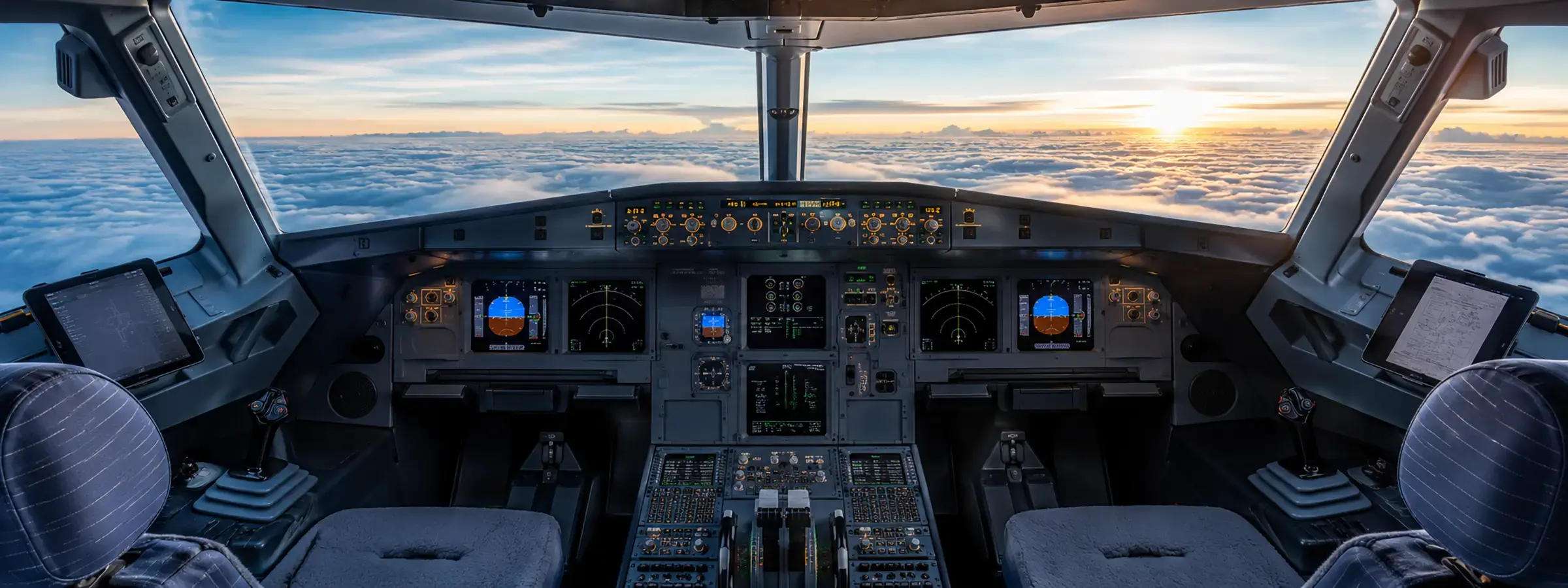
Representatives from INTA, Airbus, and Moeve have exchanged views on the present and future of efficiency and sustainability at a meeting organised by AERTEC.
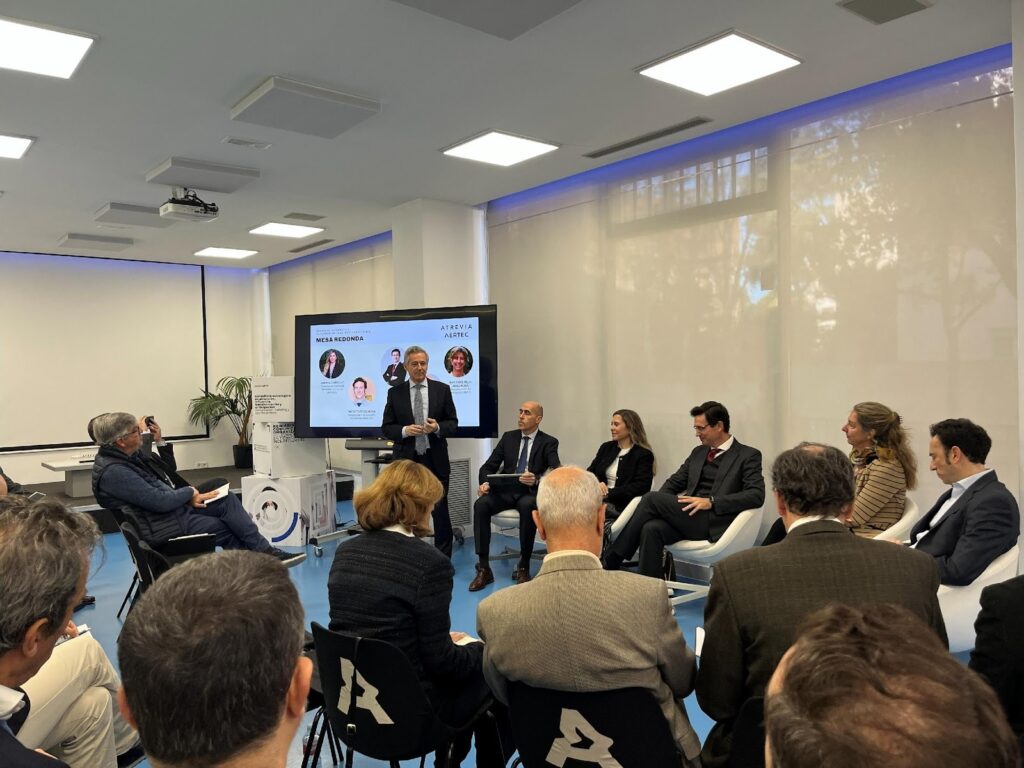
From left to right: Antonio Goméz-Guillamón (AERTEC), Pedro Becerra (AERTEC), Susana Carballo (Airbus), Carlos Berenguer (AERTEC), Pilar Argumosa (INTA) and Vicente Pérez (Moeve)
AERTEC gathers industry leaders in Madrid to analyse the future of aviation efficiency and sustainability
AERTEC, a global company specialising in aerospace technology, hosted a breakfast briefing in Madrid on Wednesday, bringing together leading professionals from the aeronautical sector for a meeting aimed at Analyse the implications that technological, energy, and regulatory transformation will have on the aviation of the future. Representatives from the National Institute of Aerospace Technology (INTA, Ministry of Defence), Airbus, and Moeve have presented their visions for the present and future, and renewed the firm commitment to net zero emissions by 2050 before an audience composed of delegates from the Ministry of Science and Innovation, the Ministry of Industry, TEDAE, industry professionals and specialist press.
The session, which was titled «The future of sustainable aviation», it began with a welcome from Antonio Gómez-Guillamón, CEO and co-founder of AERTEC, in which he reviewed the projects and commitments that the Málaga-based company has been undertaking for years from an engineering perspective. This was followed by a round table discussion composed of Susana Carballo, Engineering Director at Airbus Commercial Aircraft in Spain; Vicente Pérez Mena, Head of Commercial Aviation at Moeve; María del Pilar Argumosa, from the Propulsion Department of the National Institute of Aerospace Technology (INTA); and Pedro Becerra, General Director of Aerospace and Defence Systems at AERTEC. The table was moderated by Carlos Berenguer, Director General of Aviation at AERTEC.
The speakers covered a significant number of topics such as The social and political importance of aviation sustainability, the history of the sector in its pursuit, materials, fuels, the challenge in Europe and the rest of the world, timelines or regulatory frameworks. During his/her/their initial intervention, Carlos Berenguer (AERTEC), He regretted that there is a sense that “Aviation is presented as the climate enemy of the 21st century. Air travel is perceived as a quick way to heat the planet. However, there is a clear commitment to achieve net-zero emissions by 2050. Sustainability is not an option, it is a necessity", he sentenced. “New technologies, changes in the industry and joint commitment will allow us to achieve it. No other sector better represents the balance between progress and sustainability than aviation,” he stated, before thanking the speakers in advance for “explain how we are going to overcome that challenge”.
Picking up that invitation, Susana Carballo (Airbus) stated that “It seems we talk about sustainability because we're driven by headlines, but it's nothing new. In the last 35 years, we've managed to reduce emissions by 50%. We've made progress thanks to better aerodynamics, more efficient engines, and advanced materials, in which Spain holds a leading role. We haven't just started now. The essential thing is that we have a short, medium, and long-term plan. Carballo reviewed Airbus's projects in search of greater efficiency and sustainability for aircraft, among which he cited a new wing project, efficiency improvements, Natural laminar flow, the X-wing design and the use of hydrogen.
For its part, Vicente Pérez (Moeve), spoke of State of research around SAFs (Sustainable Aviation Fueland recalled that it is expected that “65%% of the reductions planned for 2050 will come from new fuels. Innovation is essential, especially that which allows for the optimisation of technological pathways for obtaining SAF, including achieving the production of synthetic fuel (eSAF). It is important for regulations to progress and incentivise the use of these products. And the involvement of the entire chain is necessary, including the participation of airlines, corporations and end-users.”, he stated.
When asked by the moderator about the innovations she believes are key to achieving the 2050 target, Pilar Argumosa (INTA) stated that, in his opinion, “There are already many technologies, and they have existed for some time: such as more efficient engines and conventional and unconventional solutions. It is true that lately we are looking for more disruptive options. And we are aware that to have them in the long term, we must start working on them now. Technologies like the electrification of civil aviation or hydrogen as a fuel are possible. We must start with small aircraft, where we can already reduce emissions from the outset.”, pointed out.
For its part, Pedro Becerra (AERTEC) pointed out that the current generation of aircraft is “much more efficient than previous ones. The configurations are also more efficient: the load factor has been greatly reduced. Interesting and much-needed innovations are already being developed for the coming years, both in propulsive and non-propulsive systems. We are talking about the electrical part: high-voltage direct current subsystems, which make it possible to overcome difficulties, reduce weight and improve fuel efficiency”.”. Furthermore, he considered that "The use of AI and the improvement in traffic and air operations management would allow emissions to be reduced in the very short term”. On this last point, the optimisation of traffic, routes and operations, all participants agreed it was a necessary step.
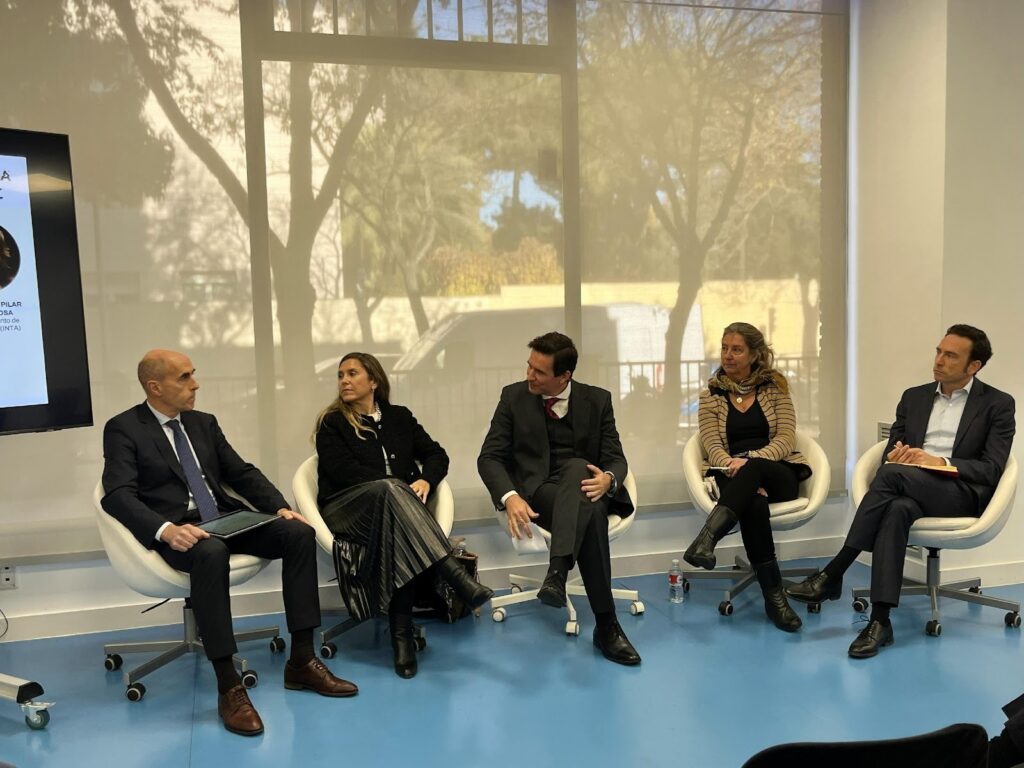
The participants were also asked about the challenges facing the sector in becoming sustainable. In that regard, Susana Carballo believes that “we have to start almost from scratch regulatory terms, because current legislation is based on the aircraft we know. Furthermore, with new energy systems, we need the operation – for example, refuelling times – to be similar to what we know today so as not to disappoint passenger expectations.”. Vicente Pérez wished to state that, in terms of biomass for SAFs “a complete, efficient chain must be designed, ending with refuelling, but it must include waste collection and its optimisation, among other necessary steps.”. Pilar Argumosa expressed, with a somewhat positive tone, that to achieve the 2050 objective, “...we just need time – we can't yet load liquid hydrogen onto an A320 – and money, because that research comes at a cost.» Finally, Pedro Becerra lamented a restriction: “humanity, which has brought about a geopolitical situation where defence could end up draining resources for this research. To provide a positive counterpoint, Becerra admitted that “Many things can be done and are being done. The restrictions are many, but the opportunities are enormous.”.
The meeting concluded with a general call from the speakers for collaboration from all sector stakeholders to advancing in aviation sustainability. Also with an active session of public interventions, in which representatives from the Ministry of Industry and the Ministry of Science, TEDAE and specialised press, among other attendees, participated. It covered the added difficulty of intercontinental flights, the exclusive European legislative frameworks, new fuselages and the development of SAFs in Spain.