AERTEC is committed to optimising airport construction processes to make them more sustainable.
AERTEC, the multinational engineering and consulting firm specialising in airports, aerospace and defence, is presenting its vision for achieving more sustainable and environmentally friendly airports at Technology Week 2015, an event currently being held in Bogota, Colombia, which is analysing technological innovation in various sectors related to construction.
The company has been invited to participate with a conference at this event, organised by the Universidad Piloto de Colombia with the aim of creating a space for academic and technological exchange and the presentation of new trends in the field of architecture and sustainable construction by innovative companies that are leaders in the country and the international market in general. Specifically, AERTEC Solutions has been chosen to address the situation of the airport sector from the point of view of sustainable construction, thanks to its experience in the design and construction of airport facilities in different countries.
Sustainable construction in the airport sector involves comprehensive work that allows for the planning of all construction aspects, minimises environmental impact and makes better use of resources.
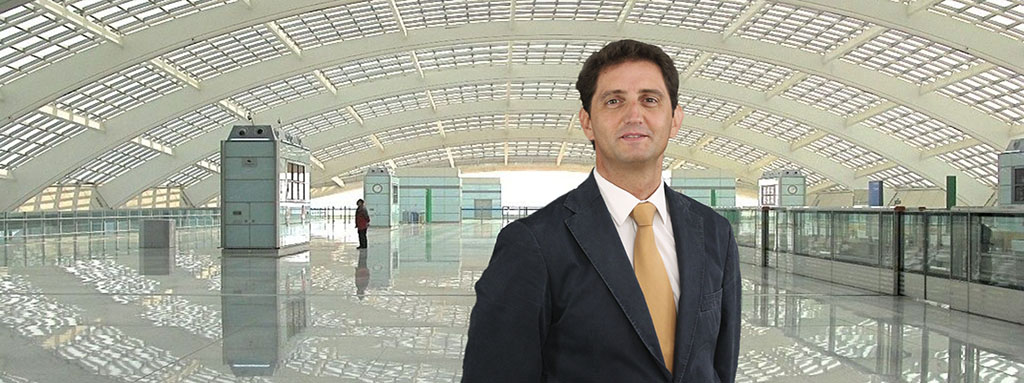
At the conference, entitled ‘Sustainable Architecture in Airport Environments,’ Alejandro Martín Cardinaal, head of the architecture department at AERTEC Solutions, discussed some of the areas in which the company is working to increase sustainability at airports, particularly with regard to the construction and building of facilities.
In this regard, he emphasised that ‘the introduction of new technologies and renewable energies or the installation of smart systems to achieve greater energy efficiency and passenger comfort are some of the tools that are increasingly being implemented to improve sustainability at airports, but other aspects related to the construction process are equally or perhaps even more important.’
Aspects such as minimising the environmental impact of earthworks before starting construction of the airport, optimising material transport processes during construction, and achieving the best possible layout for the facilities in the surrounding area. "Decisions on all these traditional construction aspects are fundamental to achieving sustainable construction at airports. There is no point in having the most advanced, highly efficient air conditioning or lighting equipment if the facilities then receive little light, which would require a lot of energy consumption. Or if the airport has been designed to have large spaces that require more effort to cool or light. This is also the direction our philosophy in airport design and construction is taking, towards planning and optimising the entire process," said Alejandro Martín Cardinaal.
During his speech, the AERTEC Solutions executive cited some of the projects in which the company has participated, such as the control tower at Charleroi-Brussels Airport (Belgium), the cargo terminal at Malaga Airport (Spain) and Al Jubail Airport (Saudi Arabia).
Alejandro Martín Cardinaal closed his talk by pointing out that ‘sustainable construction in the airport sector goes beyond technological innovations; it involves much more: comprehensive work that allows for the planning of all construction aspects, minimises environmental impact and makes better use of available resources to achieve true overall efficiency.’
Technology Week is an event organised by the Universidad Piloto de Colombia through the Technology Laboratory of the Architecture degree programme. It aims to share experiences between professionals from the academic and business worlds in order to provide new knowledge to the nearly 2,000 university students who are trained in its classrooms and strengthen their academic development. The conference will feature university professors and experts, design and construction companies, engineering firms, institutions linked to the sector and other university centres, who will address technological innovation in construction through five thematic blocks: ‘Bogotá sustainable construction’, ‘Integrated BIM (Building Information Modelling) design’, ‘Structures, materials and digital manufacturing’, ‘Sustainable construction’, ‘BIM in the region and its benefits in terms of applicability’.