Although some technological challenges remain to be solved, the main difficulties in making AAM a reality lie in legislation, policy and social acceptance.
When, a few years ago, we heard the news about the immense expectations of drones for long-distance delivery of goods, this was always linked to companies such as Amazon, Google or DHL, which took care to ensure that the media coverage was significant. Even the forecasts for the implementation of huge aerial distribution systems using drones had lead times of only a few months, according to many "gurus".
Over time, we have seen that the reality is quite different. The distribution of goods by drone is still in development and has some time to go before it can get off the ground, beyond mere pilot tests or propaganda actions.
It is true that as far as the delivery drones themselves are concerned, the technological challenge is adequately solved in most cases. There are some areas where further improvement will be made, such as the battery lifethe noise reduction or the signal coverage between operator and drone. Even so, the reality is that we are already talking about a fairly mature technology.
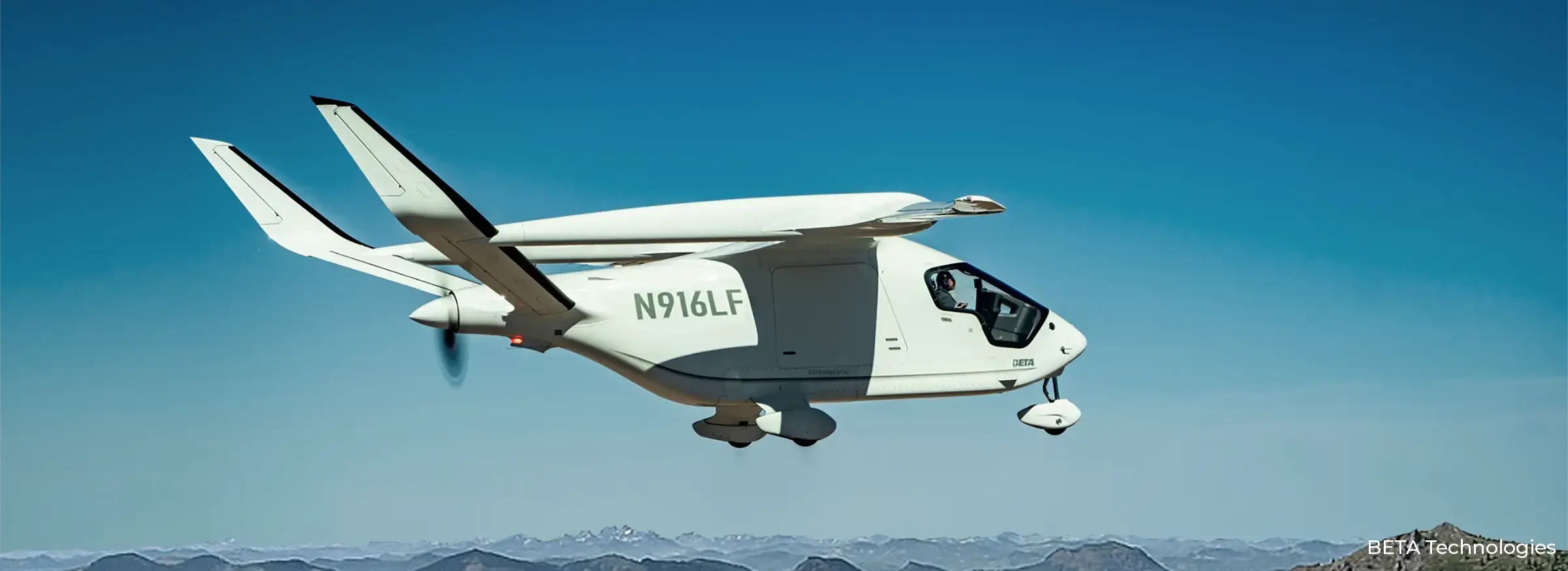
Another issue, however, concerns autonomous aerial systems for the transport of persons or larger loads. The e-VTOL (electric Vertical Take Off and Landing), of which there are already a number in development around the world. In these cases the security component is more critical because the integrity of people requires much stricter criteria. Even so, we have already seen them flying with passengers. It is clear that solutions to the current limitations are on the way and will be resolved in the short term.
However, even if the technology of the aircraft themselves had already solved all the challenges posed by the safety and performance of all types of UAS and e-VTOLs on the market, there are some barriers that prevent us from already seeing hundreds of drones delivering goods or aircraft transporting passengers.
There are three main obstacles: the technology necessary for the automatic management of urban airspace, the development of autonomous systems and the legislation on the use of urban and interurban airspace.
Under the conditions of use envisaged in the context of AAM (Advanced Air Mobility), urban and inter-urban airspace requires an automated management system that allows all airborne systems to coexist efficiently and safely. Unlike ATM (Air Traffic Management), the atomisation of air transport in the urban environment, with thousands of aircraft operating simultaneously, will not allow the possibility of having people coordinating each flight on a personalised basis. In addition, it will be necessary to ensure sensitive issues such as the continuity of communications and network security to avoid network breaches.
The second challenge to be solved is that of in-flight operational autonomy. In an urban airspace where hundreds of aircraft will coexist, it is unrealistic to think of air traffic with pilots at the controls of e-VTOLs. It is advisable to keep the human factor out of this delicate equation and to opt for automatic systems from the outset. A different matter is the out-of-town traffic, where this may be feasible.
Automatic flight is, in fact, something relatively simple and widely used in the most advanced companies. However, real-time decision making by the system itself in the event of any flight contingency that affects its safety is a pending issue. Let us bear in mind that aircraft shall have the ability to make their own decisions in the event of unforeseen circumstances and, in addition, their actions have to be compatible with the routines or decisions taken by other aircraft nearby at the same time.
The third barrier is not technological, but inevitably human. It will be necessary to build a new regulatory framework to allow aircraft to operate in city airspace and their environments. In addition, it will be necessary to regulating services to provide in each case or to provide for the conditions of construction or configuration of the spaces so that they can be used as vertiports (a prerequisite for the necessary certification). In addition, the regulation will have to be compatible with current laws and practices in each area of flight. It is true that the major international aviation regulatory bodies are already making progress in this field, but so far no one has addressed the necessary integration with the bodies that will ultimately have legislative responsibility: the municipalities. It is this same legislation that should serve as a framework for the aforementioned certification of installations to be related to urban air services.
The authorities for the safety of air operations (and especially EASA in Europe) are making an effort to regulate this field, but there are some aspects that are still pending. Everything related to the requirements for operators, pilots or aircraft have already been regulated since 2021 and now it is the countries that are adapting the regulations to each specific case.
The new regulatory framework will come into force in January 2023 but "something more" will be needed to manage delivery drone traffic in an automated and integrated way with urban air passenger transport.
This concept is what is known as U-SpaceThe "Unmanned Aircraft Operations Centre", which we could define as the set of services and procedures that will enable unmanned aircraft operations, especially those of greater complexity, in an orderly, smooth and safe manner.
Legislation is, in fact, the main barrier that this sector has encountered in its development. There is no doubt that we will have a legal framework sooner or later, but the dependence on technicians, civil servants, politicians and various institutions only slows down a path which, as we have already mentioned, is very advanced from a technological point of view.
It is not surprising, given this scenario, that the companies that announced their drone-based approach to the distribution sector in the media have stopped along the way to wait for favourable winds.
Once again, tradition in the behaviour of societies has also worked against us, as we have seen that legislation lags behind technology.
However, this regulatory problem becomes more lax when addressing initiatives of humanitarian interest in areas where legal barriers are lower or, at the very least, surmountable.
There are already many examples of UAS and drones being used to deliver medicines, emergency goods or packages to hard-to-reach areas. They are success stories that have brought an immediate benefit to society and that have have solved traditional problems caused by the isolation of some communities.
Already in December 2018, one of the first real and relevant experiences in this regard took place when UNICEF was able to deliver vaccines to a remote community using a drone. This was on the island of Erromango, in Vanuatu (South Pacific), where a drone travelled some 40 kilometres through mountainous and jungle areas to bring vaccines to a population in Cook Bay, with no land access or electricity. The drone carried a cooler with a dozen doses of vaccine, which were released (protected by Styrofoam) at an agreed point and could be used in optimal storage conditions. It has been several years since that delivery...
There is consensus that all this will come. The use of drones in the delivery of goods has proven to be effective and productive. for companies that have carried out pilot projects in this area. The same is true for the transport of people by air in interurban and urban environments. The question is how long it will take to see it become widespread.