Superplastic... it is not a global solution to eliminate this annoying residue of human activity, nor is it a new material with impressive qualities, but it does not mean that it is the only one of its kind in the world. superplastic forming is a less spectacular technology than its name suggests.
The superplastic forming of titanium, together with diffusion welding, allows us to obtain highly complex parts with excellent mechanical characteristics.
Superplasticity is a extreme ductility property that some metallic and ceramic materials exhibit under certain grain size and temperature conditions. In essence, they have the ability to develop large permanent deformations without breaking, This makes it possible to manufacture parts of complex shapes through a continuous deformation process. The material subjected to this technology stretches far beyond the plastic deformation limit under normal material conditions, sometimes reaching 8000% (80 times its original size).
The term superplasticity was invented by two researchers from the former Soviet Union, Bochvar and Sviderskaya, in 1945 when they investigated properties of Zn-Al alloy under certain conditions.
There is a material that, because of its hardness, high temperature resistance and low weight characteristics is widely used in the aerospace industry: it is titanium and their alloys.
But classical machining and welding with titanium is very complex, and sometimes achieving complicated geometries is practically impossible.
The superplastic titanium forming avoids these problems and achieves geometric solutions that are almost impossible with other types of forming. If we add diffusion welding to this, we obtain highly complex parts with excellent mechanical characteristics.
But where do they work with superplastics? At NASA perhaps?
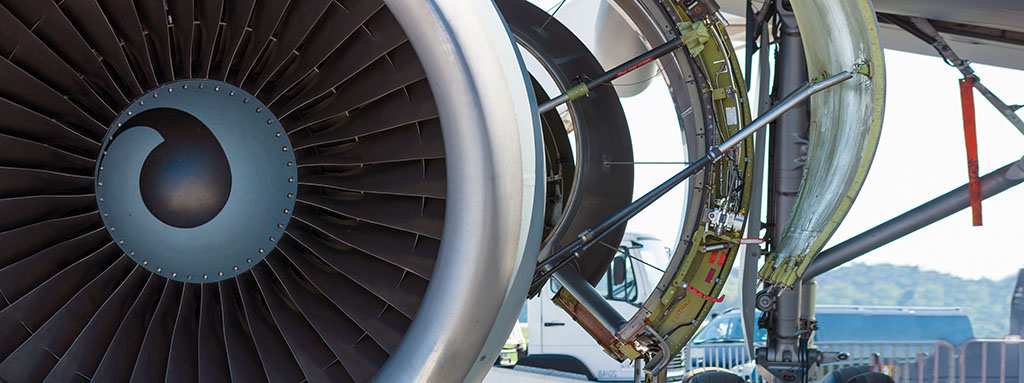
No, you don't have to go that far. At the Airbus plant in Puerto de Santa María (Cádiz) there is a superplastic forming manufacturing area, where, among other parts, they produce leading edges for the Airbus A400M super transport aircraft and fittings for the famous fan cowls (coating of aircraft engines), built almost exclusively for Airbus and Boeing by this plant.
Superplastic forming has problems that prevent its widespread use on a larger scale. The costly preforming operations, The preparation of materials with fine-grained structure and heating to the desired forming temperature is one of these issues. In addition, because the speed is controlled and limited, at low speeds it makes the relatively slow and unfavourable process to be applied in the high-volume production of automotive components (for example). However, the technique provides a unique tool for forming light alloys and, despite the obstacles and challenges along the way, it still offers notable advantages and merits over conventional forming techniques.
Today, superplasticity does not have a fully defined theoretical context and is still under investigation, but there is no doubt that it is already providing solutions in many aspects of the aeronautical industry.