How the disruptive technology of blockchain works and how it has established itself in different applications related to the airport world.
What is blockchain?
The Blockchain is a technology for the safe and secure transfer of data through an encryption system. What is really new about Blockchain is that there is no need for the use of an intermediary for the data transferThe information is distributed along different nodes, all independent of each other, which are responsible for validating and registering it.
The Blockchain The system was developed around a system that facilitated the distribution of information digitally, through a decentralised ledger in which all the transactions that took place were recorded. This ledger cannot be modified or altered by any participant, which guarantees confidentiality. This means that the Blockchain cannot be counterfeited, which makes the exchange of assets much safer.
De este modo, cuando la información se introduce, ésta ya no puede borrarse, y lo único que se puede hacer es añadir más información en forma de nuevos registros. Esta información se legitimará y se verificará una vez que todos los nodos se hayan puesto de acuerdo y la hayan procesado.
A fundamental step when talking about Blockchain is the transactionIn other words, there must be two parties interested in exchanging a unit of value, be it a cryptocurrency or another asset. Such a transaction is sent together with other transactions and gives rise to a blockThis in turn is sent to the network of computers that make up the system. The system computers se encargan de verificar las transacciones a partir de cálculos matemáticos, cuando se acuerde que son válidas, las transacciones serán verified. Each block of transactions already verified is closed with a hash cryptographicThis allows the unit of value to be exchanged to go from one 'recipient' to another.
Blockchain in airports
The Blockchain ha pasado a ser una tecnología de referencia de los aeropuertos y las aerolíneas de todo el mundo, tal y como se refleja en un informe de SITA. De acuerdo con este informe, Blockchain can be used in a variety of ways at airports, whether it is for identify the passenger; issue tickets; track assets; manage programmes or help industry members cooperate better together. The real benefit of the Blockchain technology is that it allows you to have multi-enterprise applications, de forma que estas ejecuten los datos de manera conjunta, mediante bloques, en vez de tener aplicaciones aisladas que ejecuten los datos de manera individual.
At present, more than half of the airlines have programmes for Blockchain y han invertido en su implementación a lo largo de 2021. El uso más recurrente que se espera del Blockchain The airline industry has a long history of exchanging information between different stakeholders. The airline industry has a long history of exchanging information between different stakeholders. Blockchain can mean a before and after, since thanks to the biometric identification systems the passenger will be able to travel without having to show his or her passport to any official, thus speeding up the process much more.
This will be possible through the use of mobile phone and identity verification systems via fingerprint or facial recognition. This verification will allow access to the application that manages their identity and will share the data with the parties concerned. This eliminates the verification processes that have been in place to date and which can be cumbersome, inefficient and time-consuming: identification at the time of booking a ticket, identification for the check-inat the security checkpoint...
With the biometric systems antes de que llegue el pasajero, a través de su teléfono móvil, debe compartir sus datos personales con la aerolínea y el servicio de aduanas del país al que se dirige. Cuando llegue a dicho país, tan solo deberá pasar por el sistema biométrico que escanee su cara o compruebe su huella dactilar para el contrast of information via Blockchain again via his mobile phone.
In addition, another of the things that passengers will be able to benefit from through the use of the Blockchain technology is to check your luggage. Often, after checking in the luggage, the passenger is left with the doubt and fear of whether it will get lost on the way or whether it will make it to the destination country with him. Well, with the Blockchain junto con un dispositivo de localización del equipaje, el viajero podrá deshacerse de todas estas preocupaciones. Tan solo deberá adherir el dispositivo tecnológico de la empresa emergente Bagtrax a su maleta, para tenerla localizada en todo momento a través de su teléfono móvil. En caso de que esta se extravíe, se garantizará la compensación inmediata a través de Blockchain encargada de conectar a todas las empresas con el cliente: aerolíneas, gestión de aeropuertos, aseguradoras…
Blockchain, COVID-19 and airports
However, the technology Blockchain is not only useful for screening passengers and their luggage, but also for protecting data such as public health data, at a time in history when the Covid-19 pandemic has affected all countries. Faced with a global situation of uncertainty in which it seems that little by little a certain lost 'normality' is being recovered, airports and the different airlines want to guarantee passengers maximum security, which is why they have implemented technology that allows them to share data on the health of the different assets, always guaranteeing maximum discretion and confidentiality.
El primero en implantar esta tecnología para controlar la incidencia del coronavirus en aeropuertos y viajes fue el aeropuerto de Frankfurt, el cual estaba utilizando tecnología blockchain de IATA para proporcionar estadísticas sobre la salud de los pasajeros. Se configurará un pasaporte sanitario que se encargará de almacenar y actualizar el estado de salud del pasajero a través de una aplicación móvil que registrará su estado de salud, las pruebas Covid-19 y las vacunas que se le han puesto.
It is therefore a digitised passport module that updates information regarding laboratories, the application itself, vaccination centres and health requirements for passengers travelling internationally.
The provider of this type of technology is Ubirch el cual desarrolló la infraestructura: «Certificado de prueba de corona digital». A través de este certificado digital, el sistema Ubrich asigna una huella digital anónima en una red Blockchain through which the passenger can be checked by the airline at the departure gate, and at the entry gate of the country to which he/she wants to travel. This is achieved through the escaneo de un código QRThe passenger's specific health data is not visible on the network at any time, ensuring maximum confidentiality.
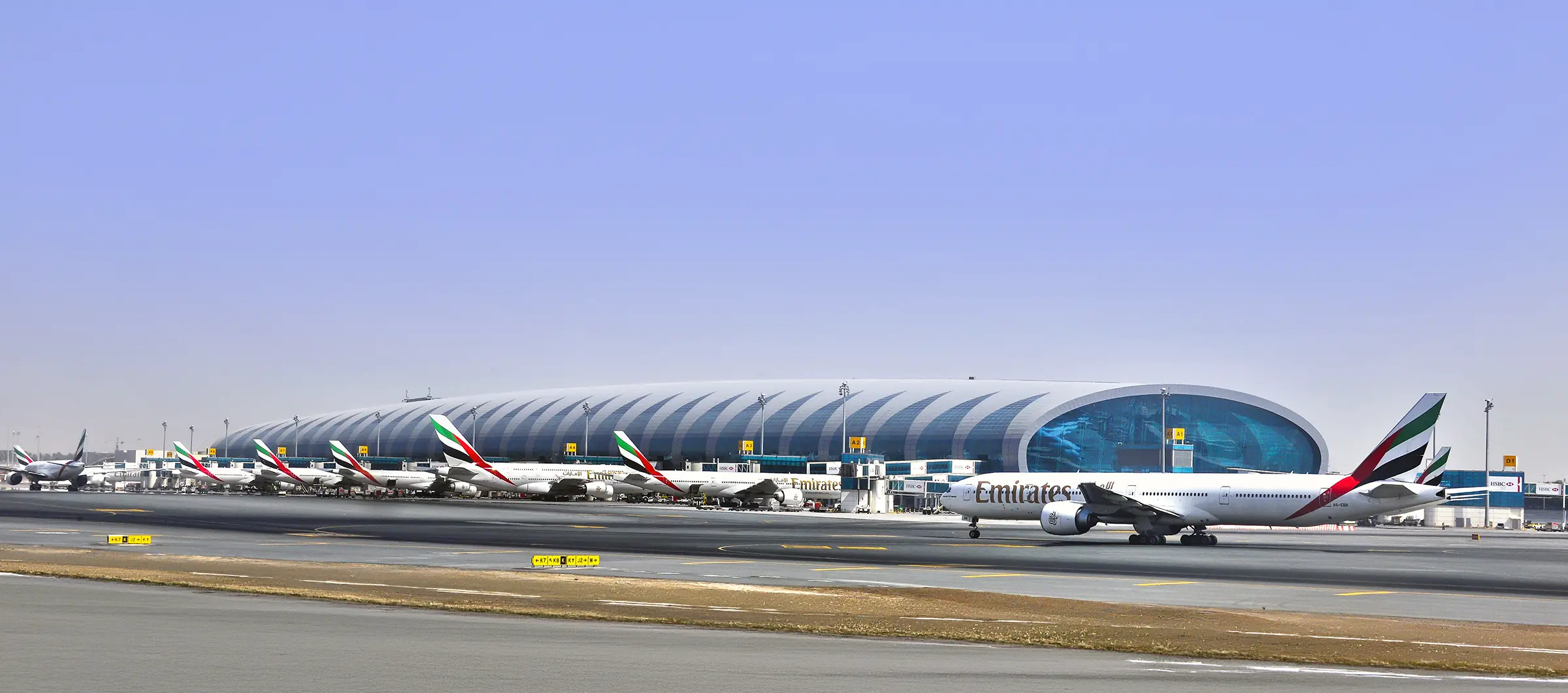
Another example of the use of Blockchain in airports es el caso de la Zona Franca del Aeropuerto de Dubái, en la cual se ha apoyado la regulación de criptomonedas y bitcoins para dicha zona aérea. Esto supone que se podrán intercambiar criptomonedas obteniendo así una licencia en la Zona Franca de Dubái. A través de esta novedosa medida, lo que se pretende es optimizar la experiencia de los viajeros extranjeros dentro del ecosistema de las criptomonedas.
With all of the above said, while the expectation for the Blockchain is real and more and more airports and airlines are implementing these technology systems, it is expected that the Blockchain technology will reach maturity in four years' time, i.e. around 2025. According to a report by Credit Suisse, at the moment the Blockchain technology is in full emergency mode, with 58 % of entrepreneurs expecting blockchain to account for 10 % of global GDP by 2025.
In sum, and as already discussed above, although Blockchain surge de la criptomoneda, sus usos no se limitan simplemente a estos ámbitos, como bien se ha podido observar en algunos de los ejemplos proporcionados acerca del control de pasajeros y los datos de salud.