Since the launch of the first communication satellite, the Telstar, in July 1962, much has changed. Today, the direct link between communications and development is more than evident. And if communications over the earth's surface are important, the possibilities offered by the development of new aircraft The needs of the populations to be met are immense.
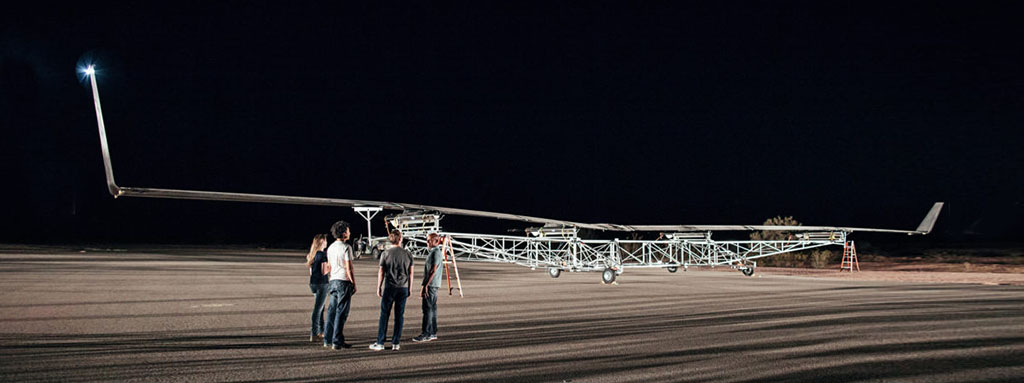
At an altitude of 18,000 metres, the unmanned aircraft "Aquila" makes possible a different way of connecting the world.
Mark Zuckerberg, founder of Facebookis a strong advocate and contributor to ensuring that all people have access to the network. The fact that there are currently more than 1.6 billion people living in remote locations without access to mobile broadband networks is his main motivation for creating an aircraft to provide them with Internet via radio linksIt is also connected to the rest of the network via a high-speed laser satellite connection.
The first test flight of the new aircraft, called "Aquila", capable of transmitting tens of GB of information per second over a distance of more than 15 km, has been completed. The flight was initially planned to last 30 minutes, but was later extended to 90 minutes.
The rationale for this connectivity project is based on to create a network of such solar aircraftThe following are placed in a geostationary at high altitude (around 18,000 metres). In principle, and apart from the development of the aircraft, the biggest problem Facebook will face will be legal, rather than technical, as the use of drones is not standardised in most countries and regulations on the radio equipment that will be mounted on the aircraft vary from one country to another.
The main uniqueness of the aircraft is its solar panel coatingThe aircraft's four electric motors are responsible for producing electricity for its four electric motors during the day while charging the batteries so that it can continue its flight at night. It has a wingspan similar to that of an Airbus A320, about 34 metres, and weighs around 400 kilos.
This project is part of Facebook's initiative called "Connectivity Lab"Through which all research is done and new technologies are being built for global Internet access. This includes the development of aircraft, satellites and wireless communications systems.
In order to reach the goal of bringing the network to 60% of the population that does not yet have internet connectivity, they must be able to fly through a remote region and provide connectivity for a time of three months, so they will have to break the world record for solar-powered unmanned flight, which currently stands at two weeks.
Given that aeronautics is an innovative and constantly evolving industry, this does not seem to be the biggest problem. In fact, it is a new challenge.